
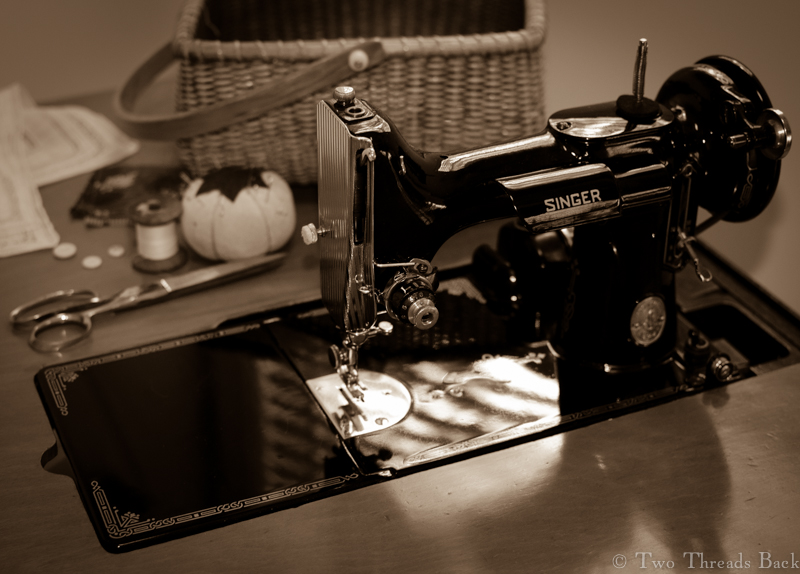
I suspect I’ve got just as many ancestors as anyone else, but mine weren’t notable for leaving closets and attics full of heirlooms. The oldest thing I’ve got is my DNA. However, that doesn’t mean I don’t have some treasures! One of my dearest is my grandmother’s old Singer sewing machine. Yes, me. The hand sewing monomaniac loves a machine.
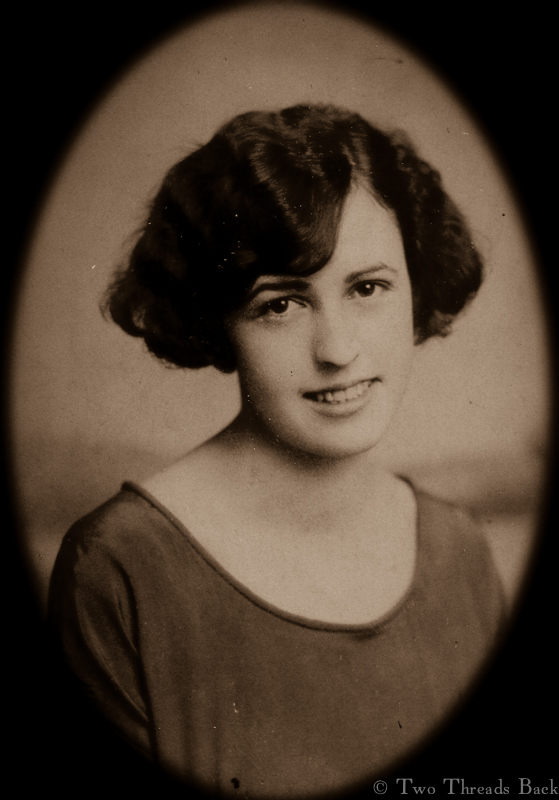
She (the machine) was born Christmas of 1948. My grandfather bought it as a present for my grandmother that year. I don’t suppose anyone knew that the featherweights would become classics.
She (the machine) had already earned retirement by the time I welcomed her into my home, but nope, I kept her going. She only does straight stitch, can you imagine? Why would anyone, some quilters excepted, want a machine that doesn’t do fancy stitches? Not even zigzag?
Weeell, just ask a featherweight fanatic. Simple, small, light, reliable, long-lived. What more could you ask? I wish the same could be said about me – well, maybe not the simple. If you have time, take a look at Singer Instructions for Art Embroidery & Lace. The possibilities using an older machine, even treadle, are dazzling. It’s hard to believe anyone could do such elaborate work without today’s technology. It was published (1911) and republished, and can be downloaded free in a variety of formats. So don’t underestimate their potential, between the attachments and techniques, a seamstress could really do just about anything with an old Singer.
Notice I said “a seamstress”in that vague and distant not-me sort of way. Because just about all I’ve done is use the basic set up and a couple of attachments. Even the buttonhole kit remains in its sarcophagus, waiting for the day I’m brave enough to resurrect it. Although I do have Grandma’s buttonhole samples resting under the presser foot, like they always did.
For my birthday last year, I had the machine restored to her original condition. I found an expert who did a superb job and a talented friend who did the table. My little champion sewed beautifully before, but now she’s a dream to use. Even if only for plain (machine) sewing!

 Two Threads Back