Not in Kansas Anymore

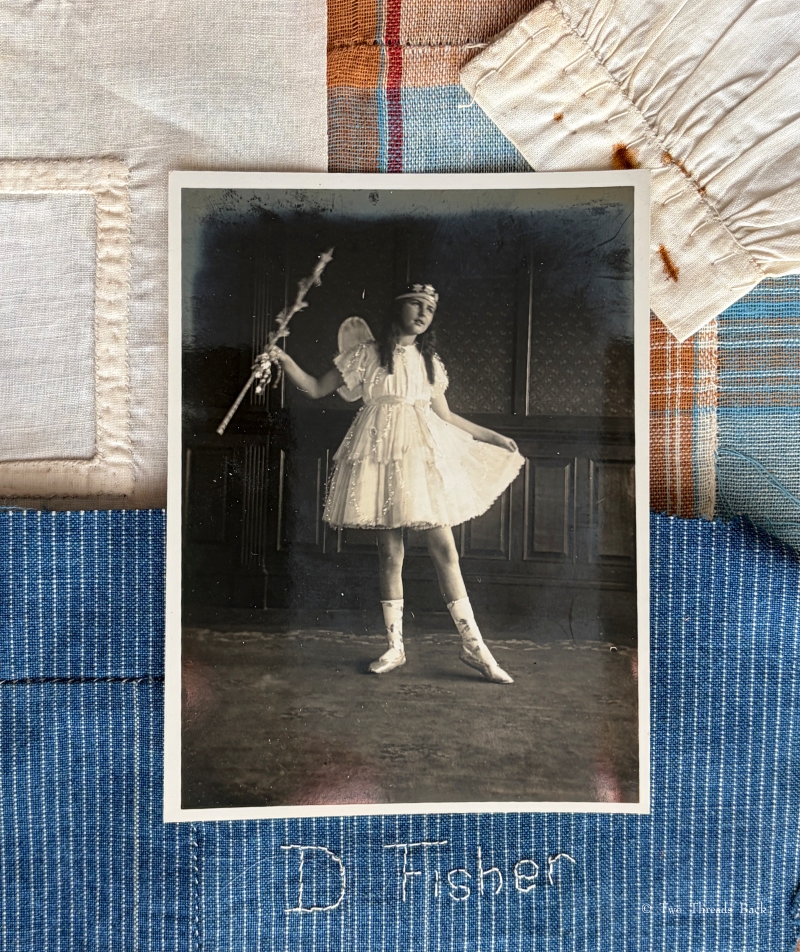
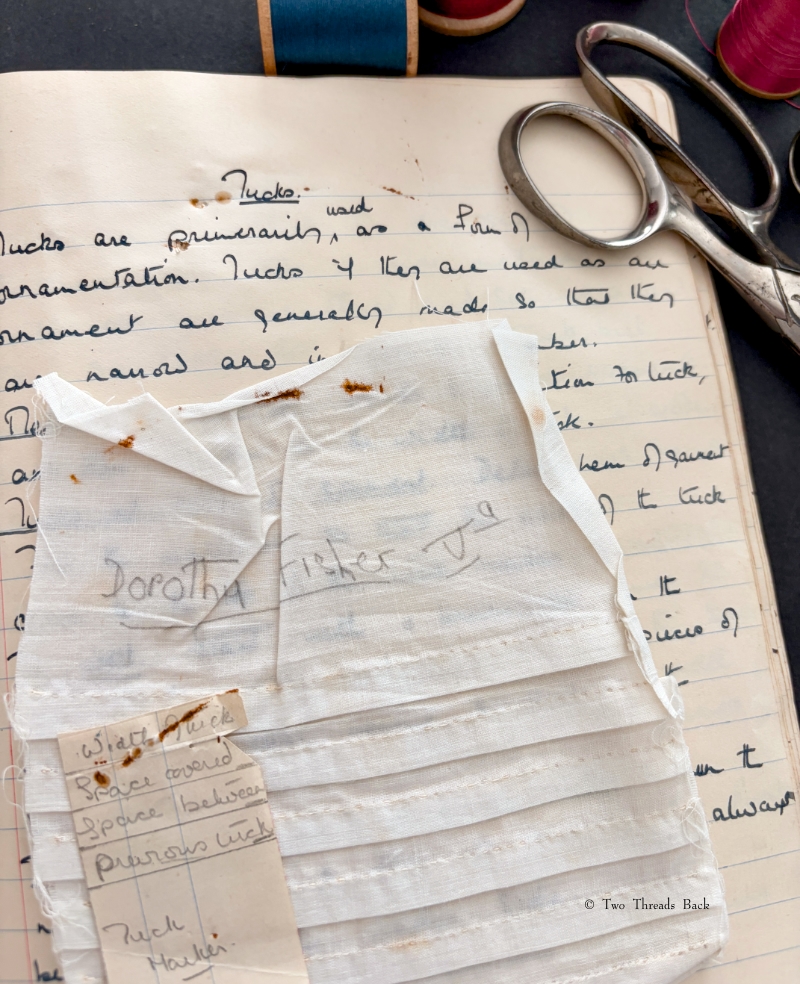
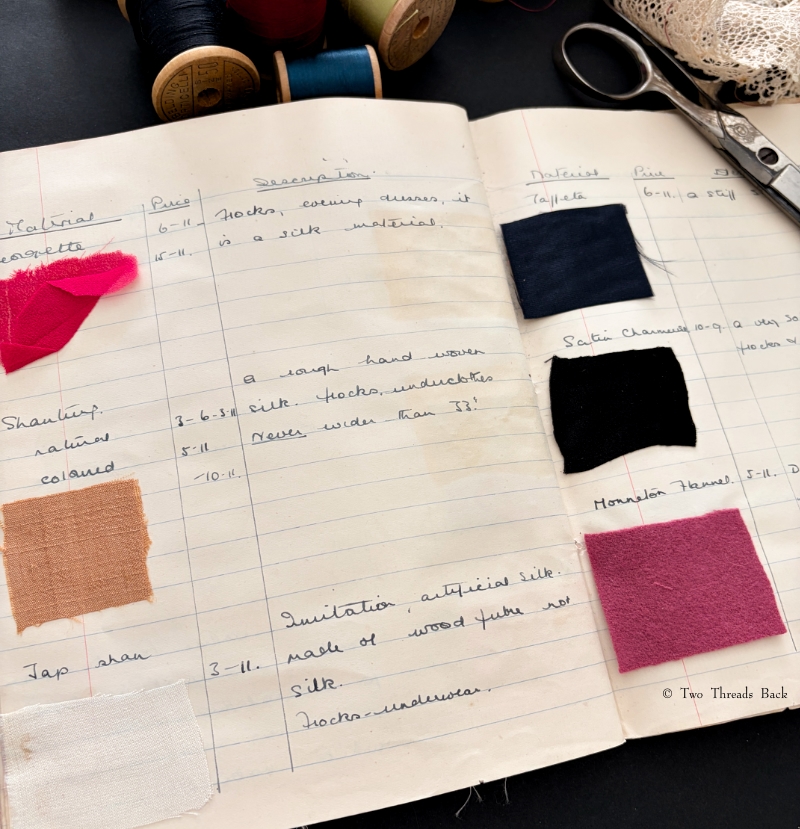
Dorothy’s sewing book.
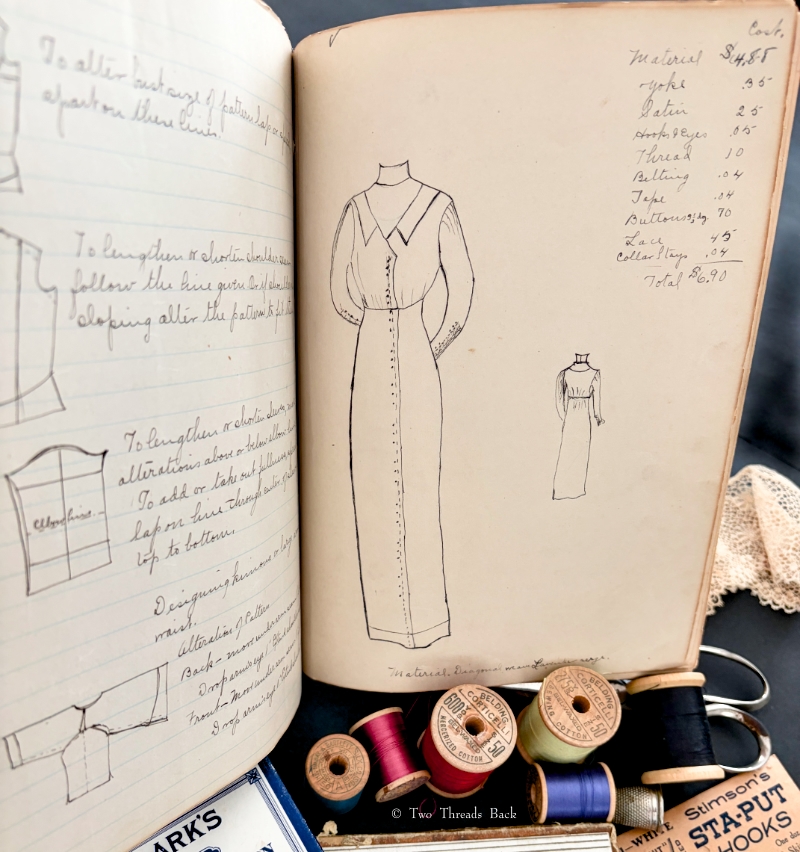
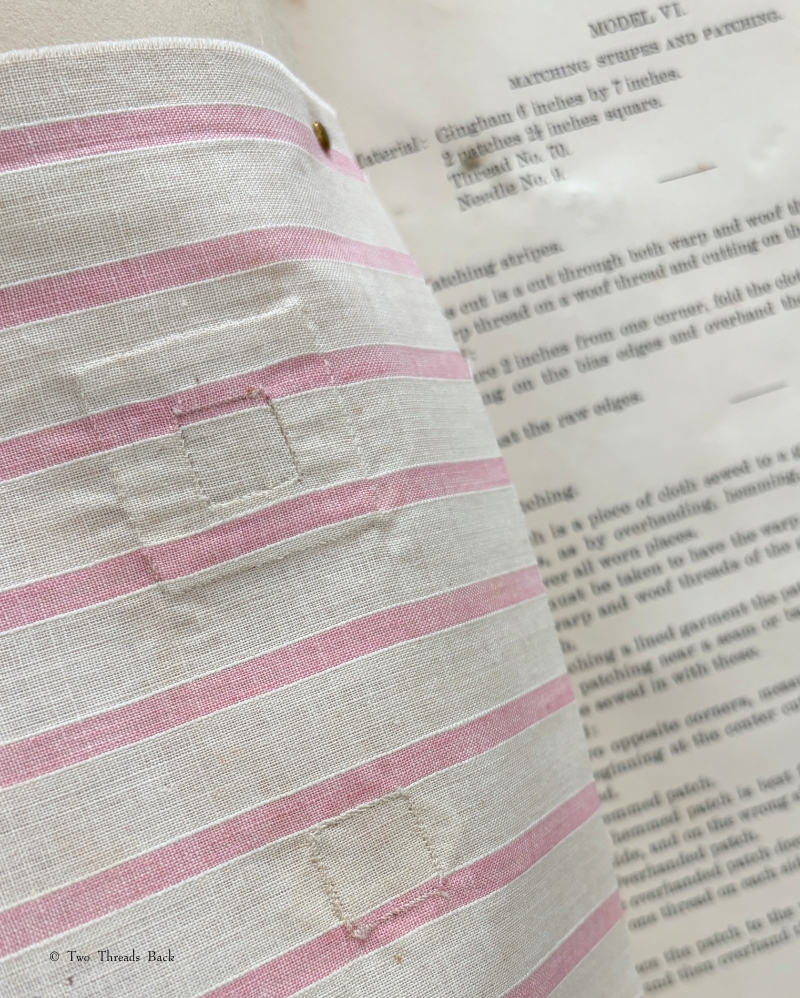
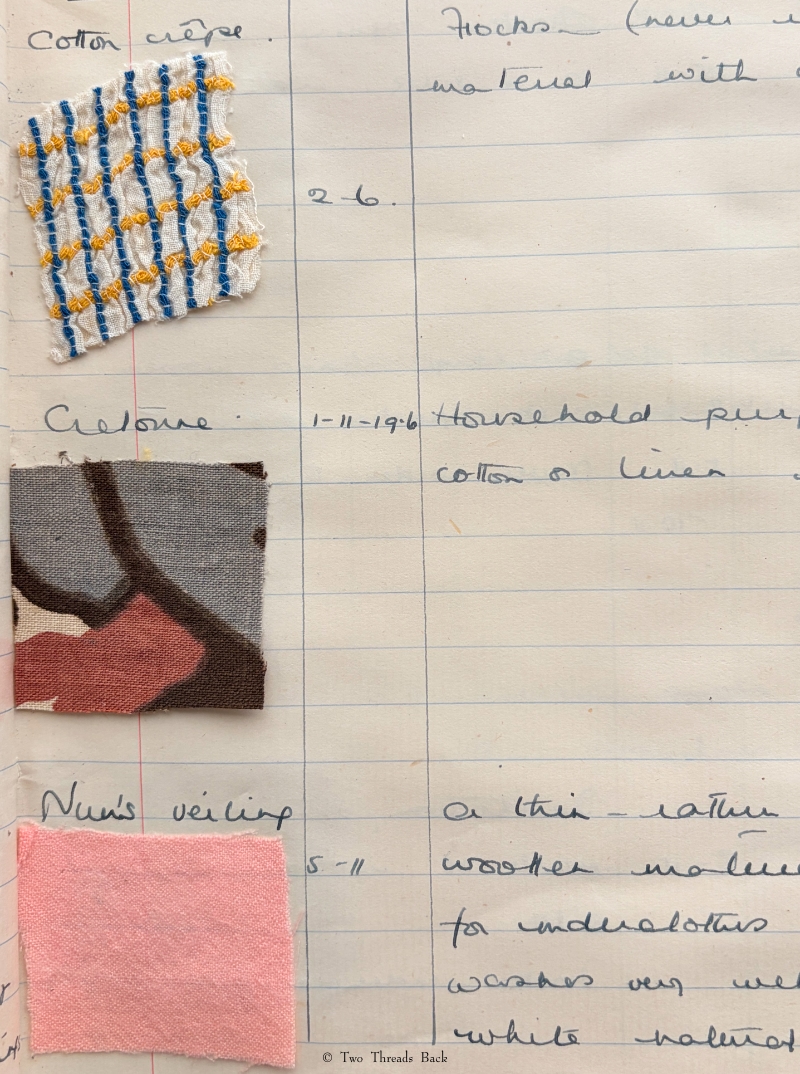
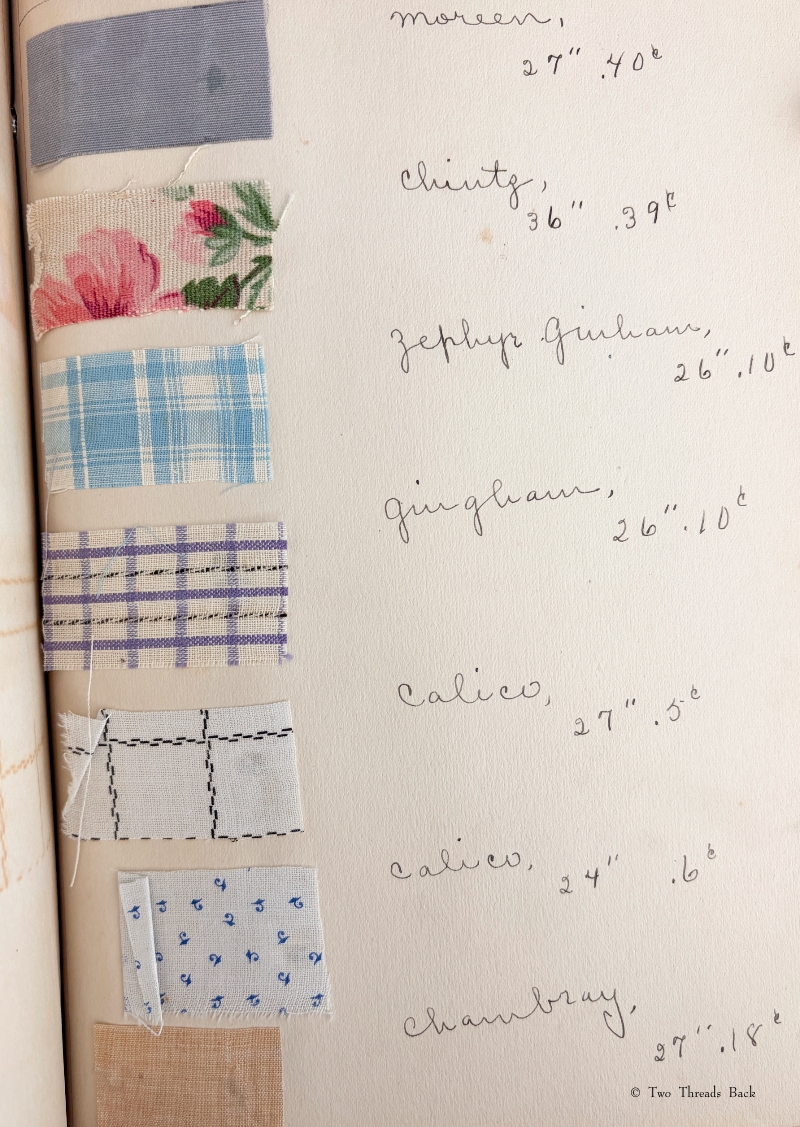
Eliza’s sewing book.

Well, one never was in Kansas and the other isn’t now! Here are two sweet sewing books. The one made by Eliza is American, from Kansas. The one made by Dorothy, who reminds me more of Glinda the Good, is from England. Besides the Wizard of Oz connection (I admit that was a stretch) they have other things in common.

TIME. Eliza’s book is dated 1912-1913, and was compiled during her Home Economics Housekeeper’s Course at Kansas State Agricultural College. Dorothy’s book isn’t dated, but assuming the photo is of her and taken around the time she attended the class, it was probably made soon after Eliza’s. It seems they studied sewing at different ages, however. Dorothy was obviously still a young girl, while Eliza was over 30 when she completed her course, as census records show she was born in 1881.

TECHNIQUES. Both cover the basic hand sewing stitches and seams, and they included samples of them in their books. They also learned patching, darning, and making plackets. Dorothy’s work is all done by hand, but Eliza has samples made by hand and machine.

Dorothy obviously put effort into her work, but compared to others I’ve seen, I don’t think sewing was her favorite subject.
Eliza’s work is more precise. However, she was older and likely more experienced when she took her course.

TEXTILES. Thrift was a virtue! Learning to make clothing economically was considered an important part of their education. Students needed to be familiar with fabric types and know which ones were appropriate for different garments. Truth in advertising could often be … well, elusive. And illusive. (For how to promote sales the right way, you can see some extravagant 1892 marketing here.) Textbooks practically encouraged suspicious shopping, and gave hints on how to distinguish good goods from bad goods. Both Eliza and Dorothy included swatches of fabrics in their books, a feature that became common after 1900.

Dorothy noted prices and purpose. Some of the fabrics are the same, or at least they go by the same name, today: georgette, shantung, taffeta.
I wonder if Dorothy was allowed to sew with any of these? I suspect not.
Eliza’s book has 3 pages of cottons, in addition to wool and silk!

The fabric samples are my favorite part of early 1900s-era sewing books. “Extinct” (or nearly) names appear in catalogs, journals, and books from those days, and while research and historians provide helpful descriptions, there’s nothing quite like seeing and touching a tiny bit of the textile for myself. Tarantulle is longcloth – who knew? Not me. A dictionary defines nun’s veiling, and yes, you can still buy it today (I checked), but it’s so much more fun to see a pink snippet from 1915. Textbooks tell me that albatross was wool, but Eliza had a nice cotton specimen. I can’t imagine asking for albatross at a fabric shop today! Well, if there were any fabric shops left today. There aren’t any near me. Maybe they’re still in Kansas?

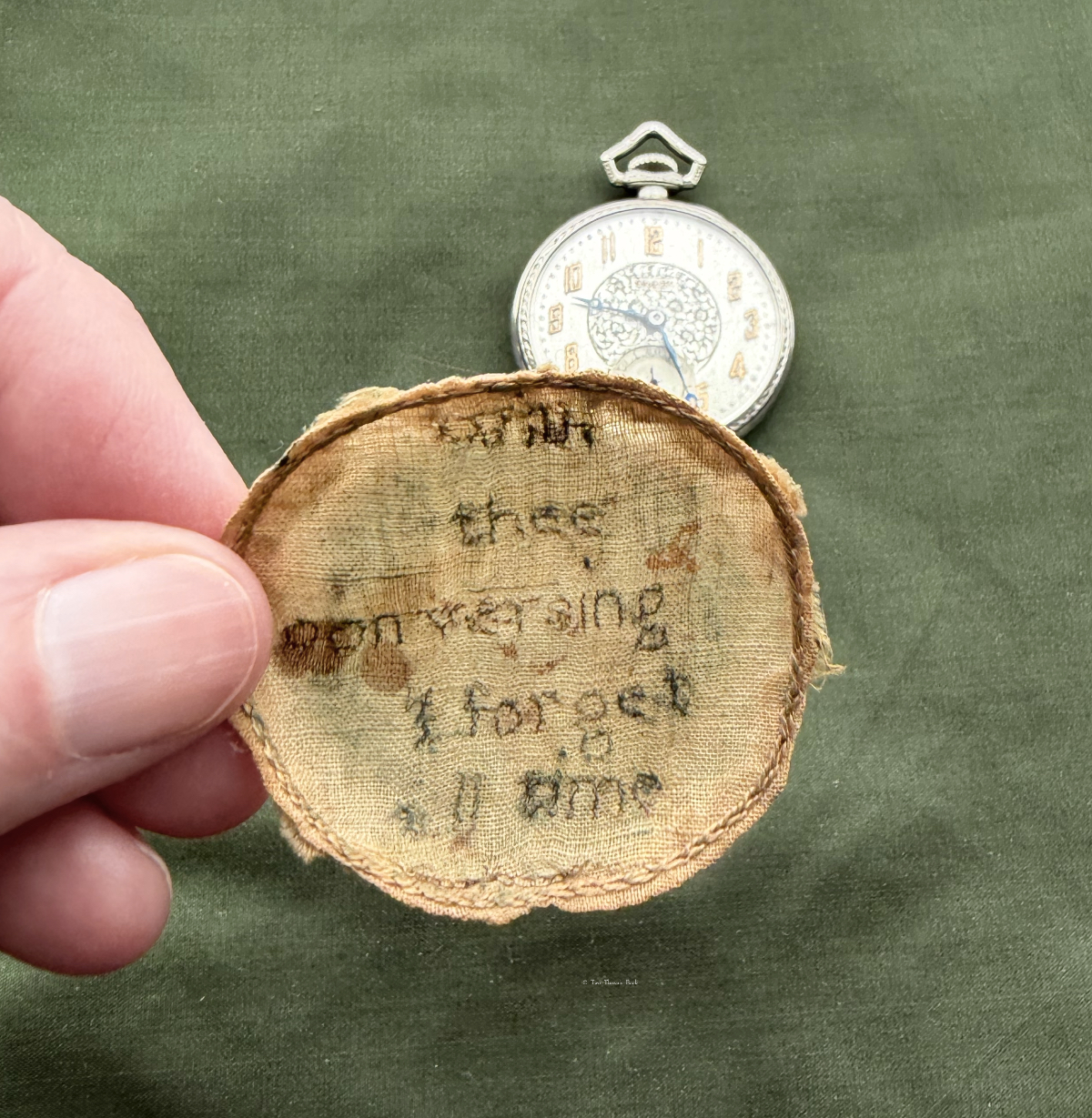
Small Talk

“With thee conversing I forget all time”

PS You’ll find more on the history of these tiny treasures online, and lots of pretty ones to see (Pinterest or auction sites) if they catch your fancy. PPS This one will be available on my Etsy site soon, as I continue uncollecting!

Nanny’s Lace-making

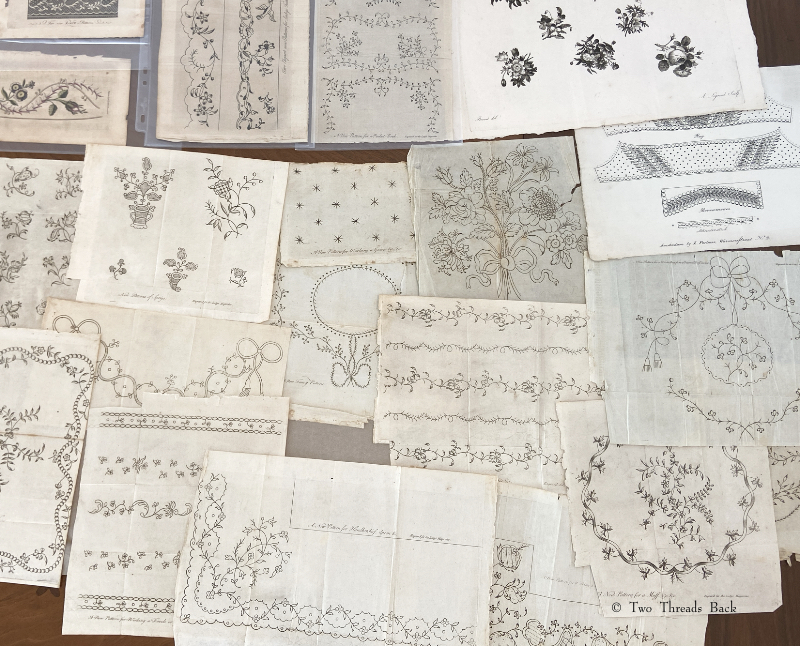
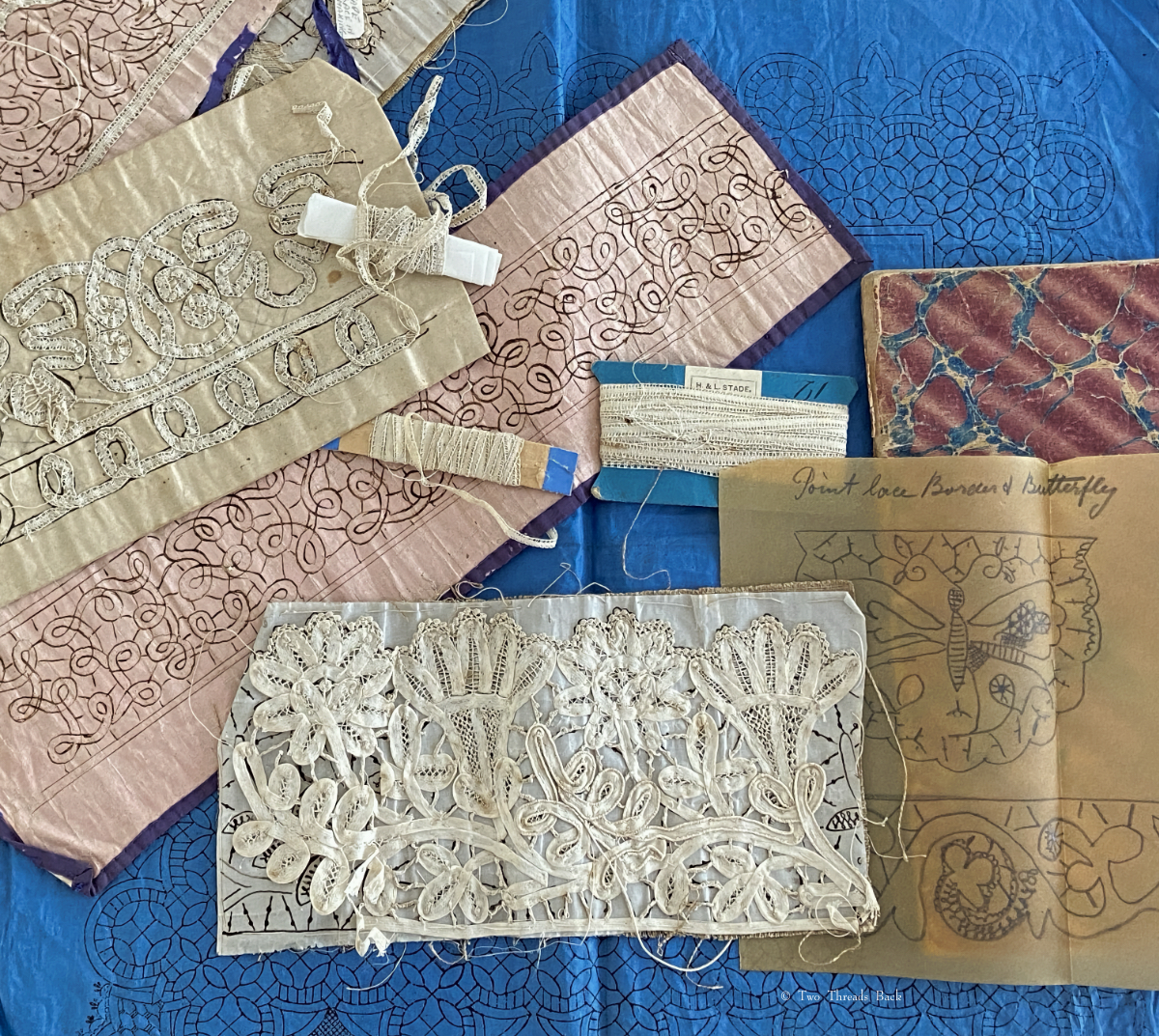
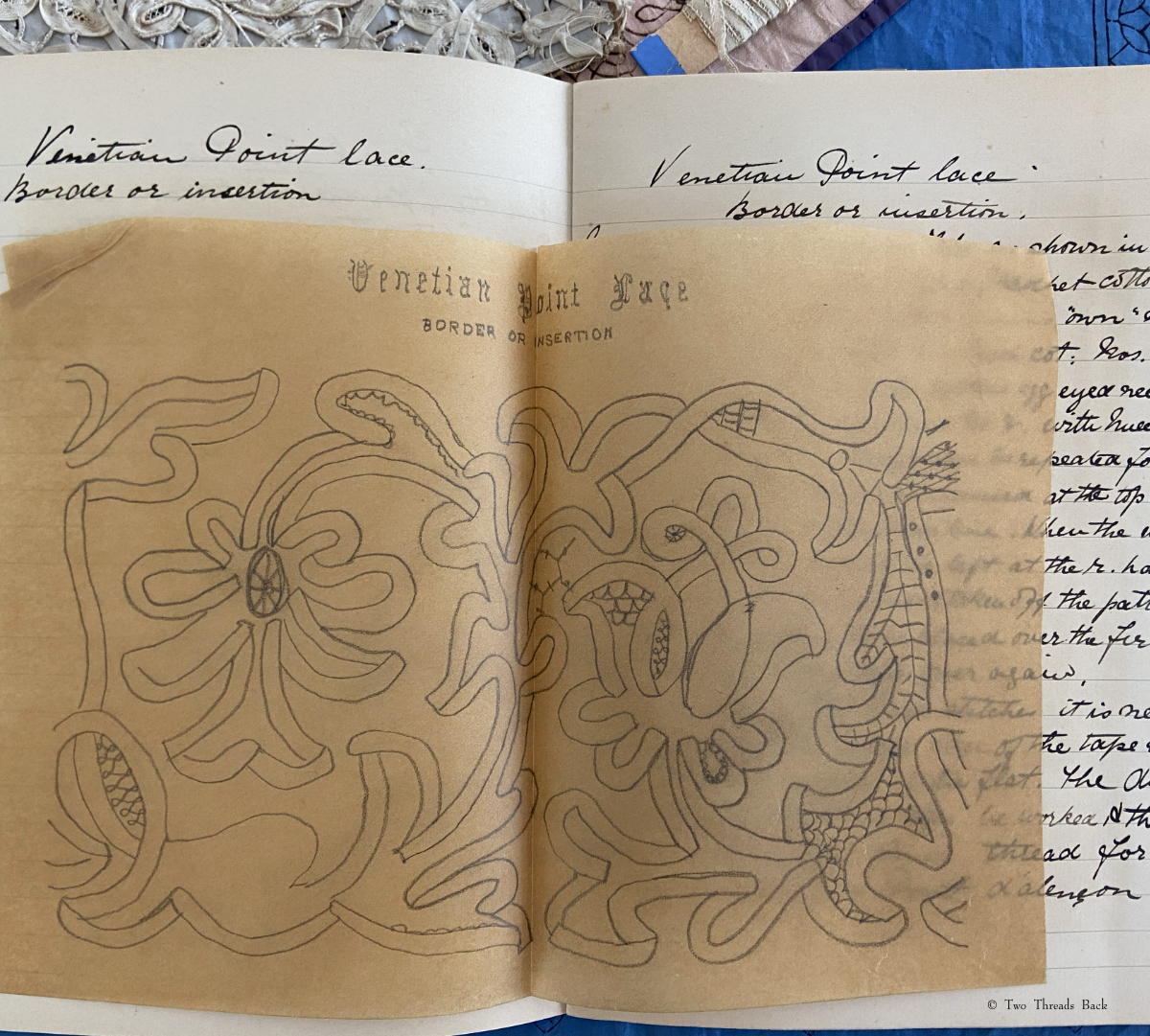
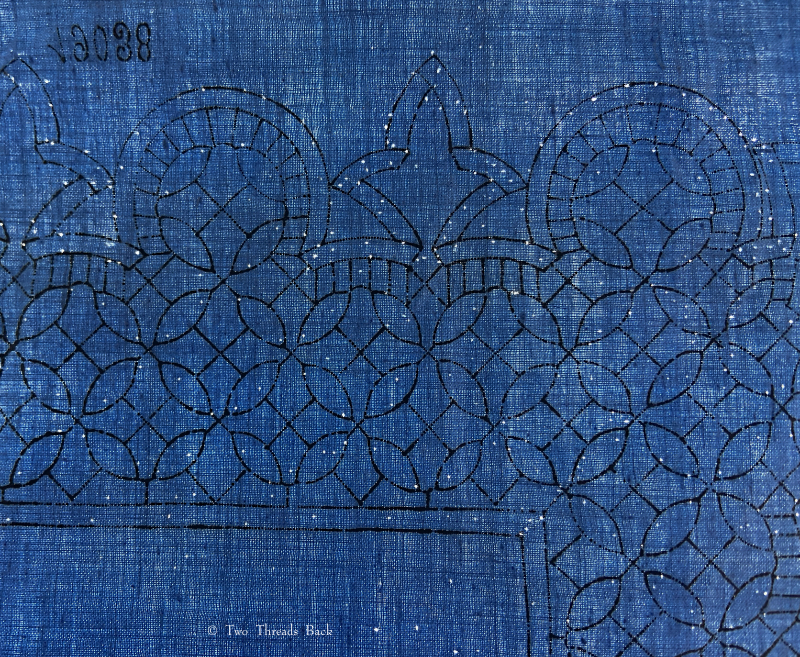
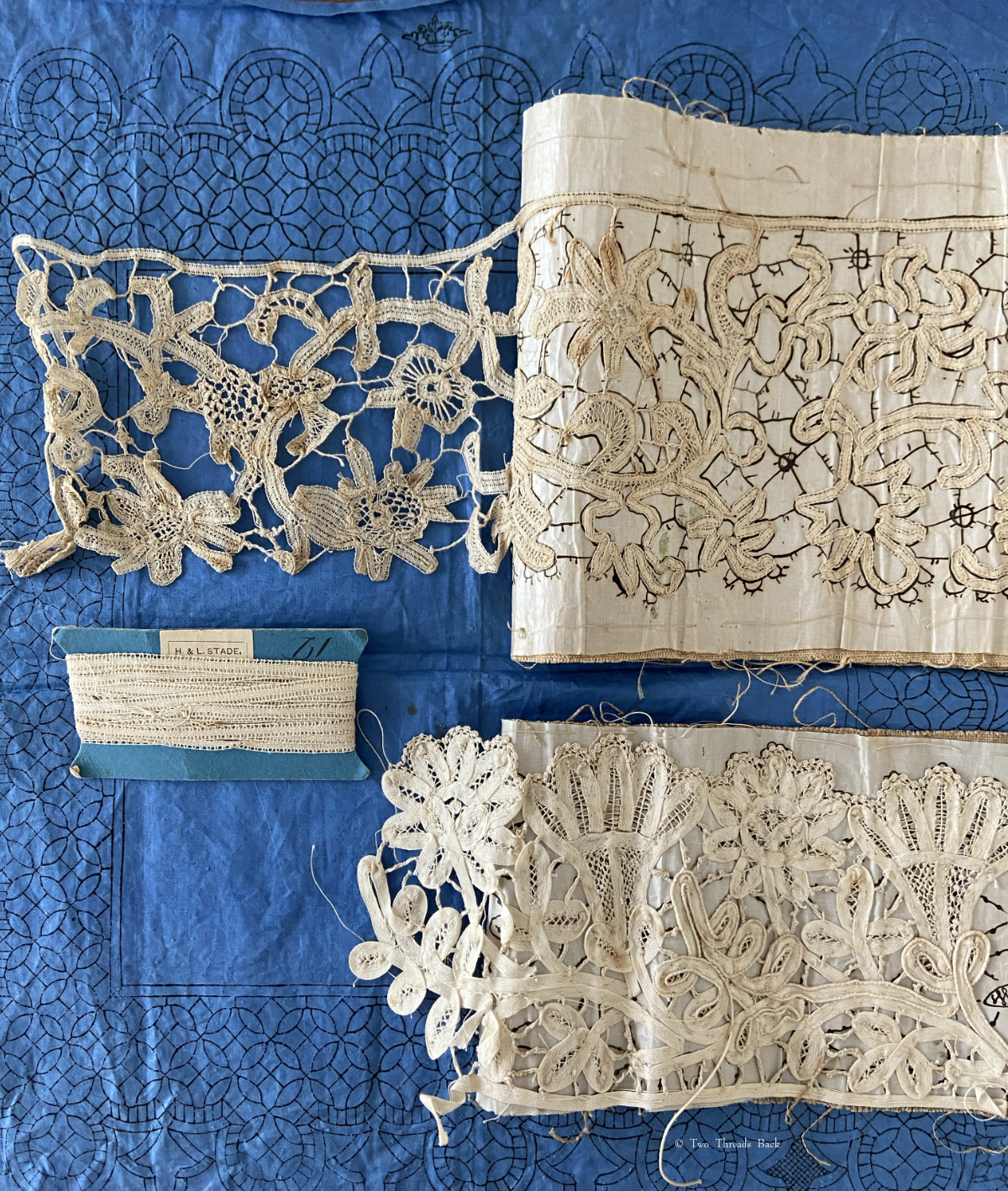
A large tissue pattern for a border or insertion of Venetian Point Lace.

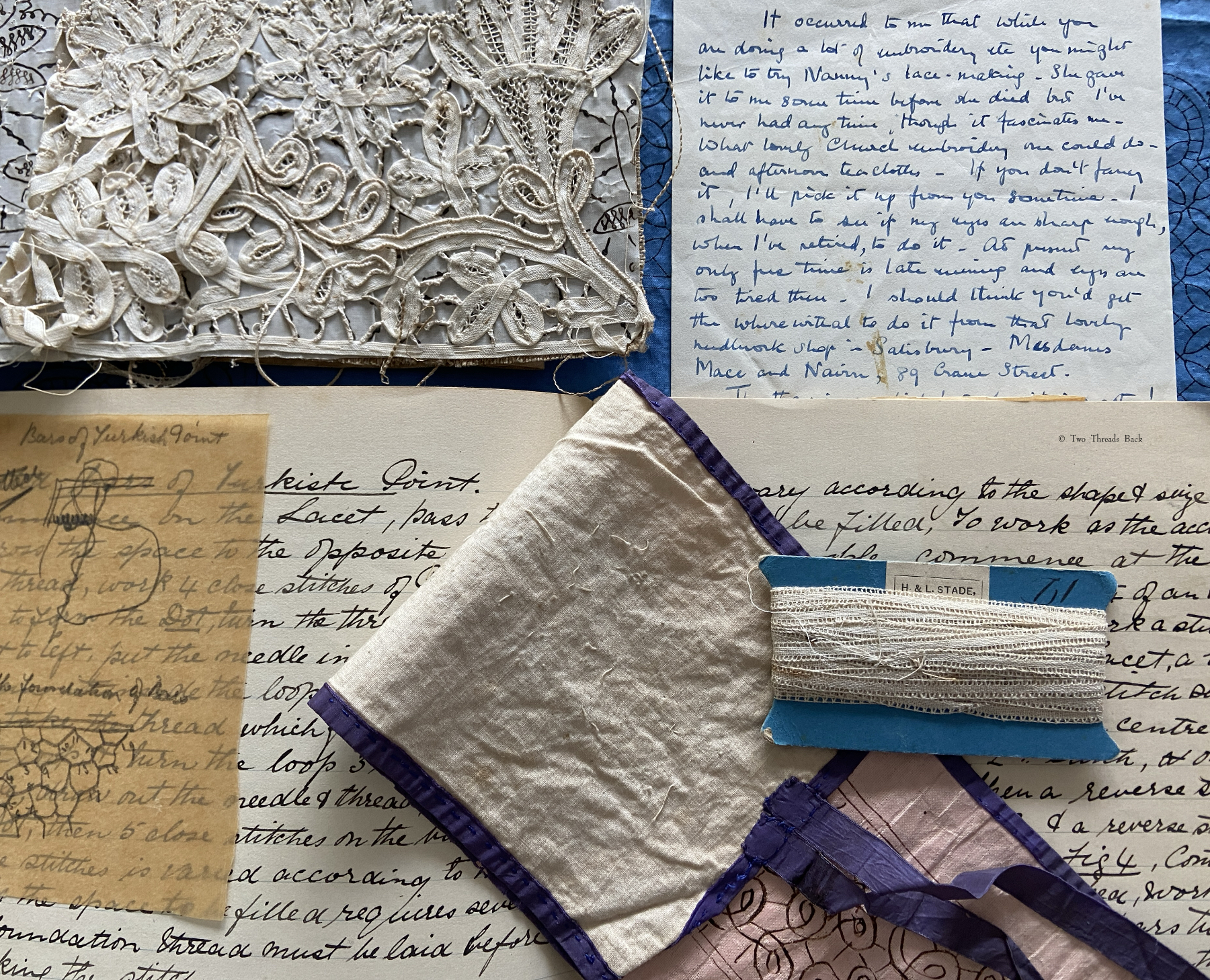
In a 1960s letter, a previous owner of the lace work recommended a needlework supplier, Mesdames Mace and Nairn, that may still be supplying embroiderers today!
A deep blue pattern with bright points of light shining through the old tacking marks – like a starry night!
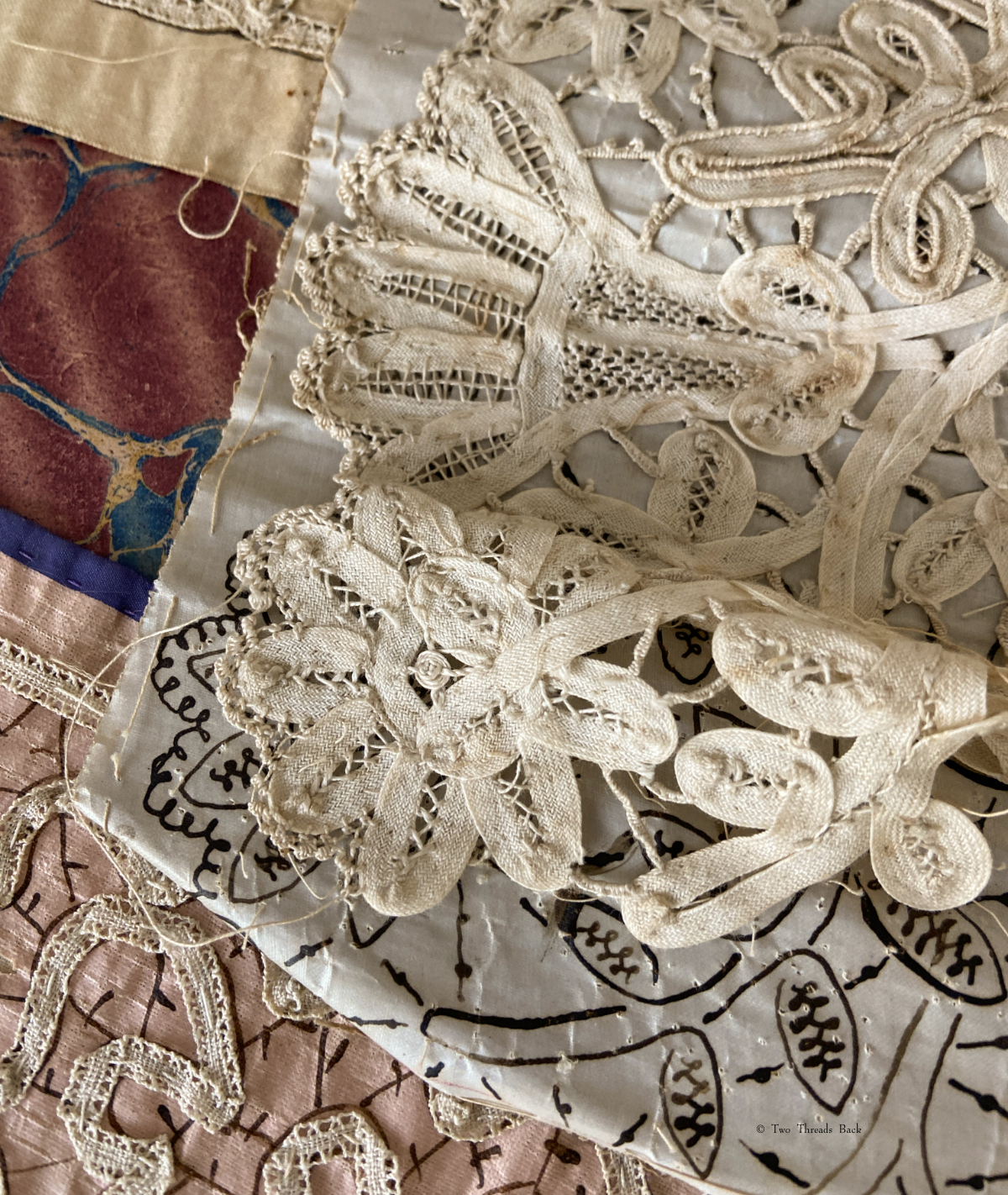
A closeup of the fine work that she did. Apparently the instructions gave her no problems at all!

True Taste and Correct Principles

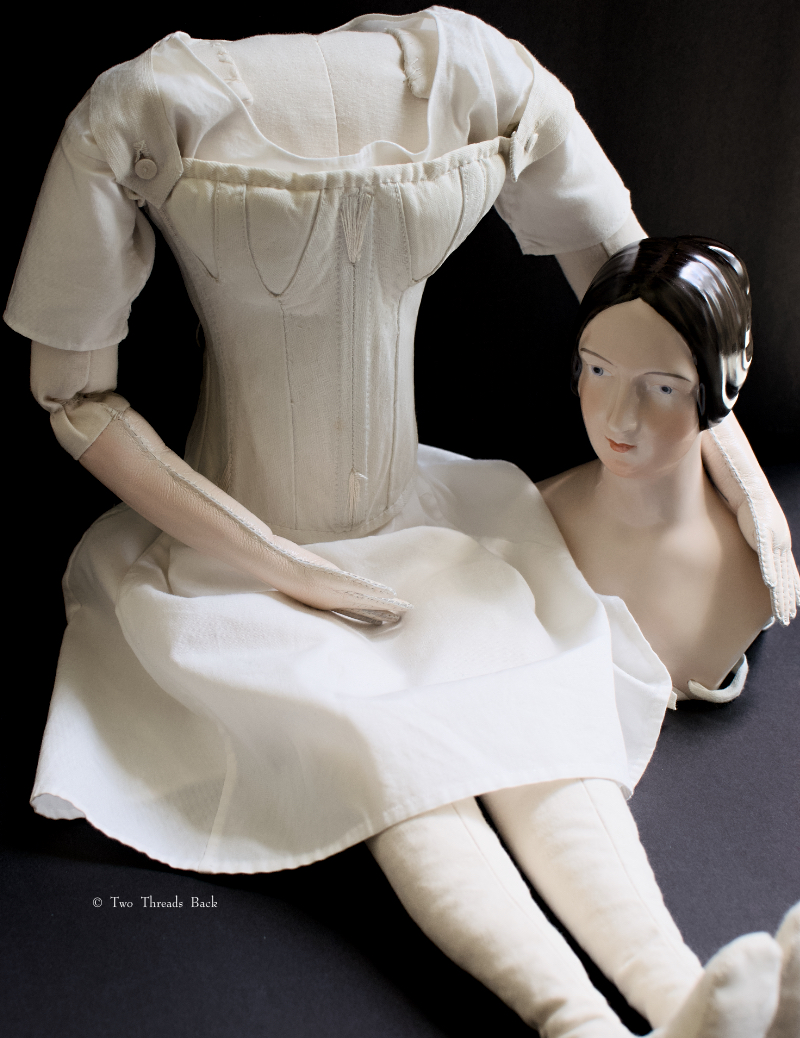
I made the body with 2 layers of fabric so the sawdust wouldn’t leak through. It’s dyed with tea to match the complexion of the head which was reproduced by Royal Copenhagen in the 1970s from the original molds. Warning: if you make skinny ankles out of muslin and sawdust they will flop. Solution: orthopedic surgery with wooden dowels. That wasn’t fun for either of us, although termites might have enjoyed it.
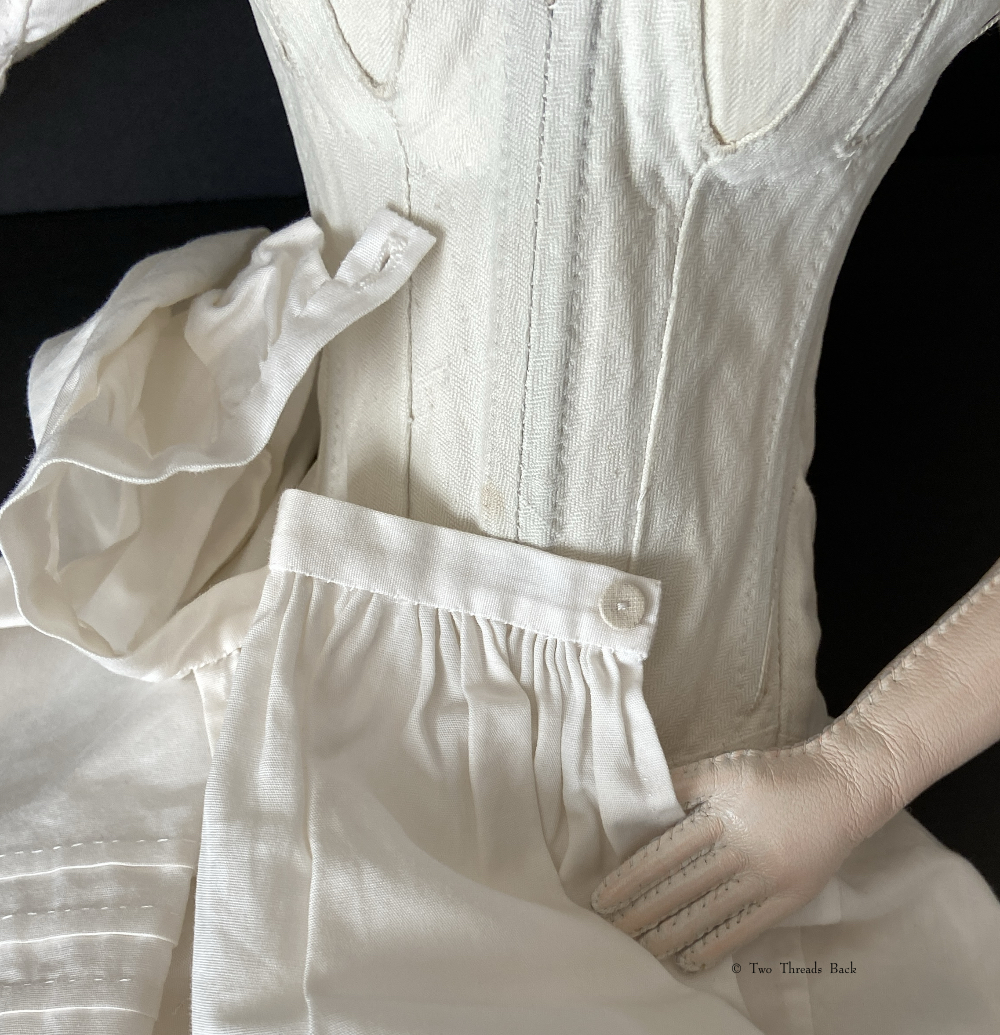
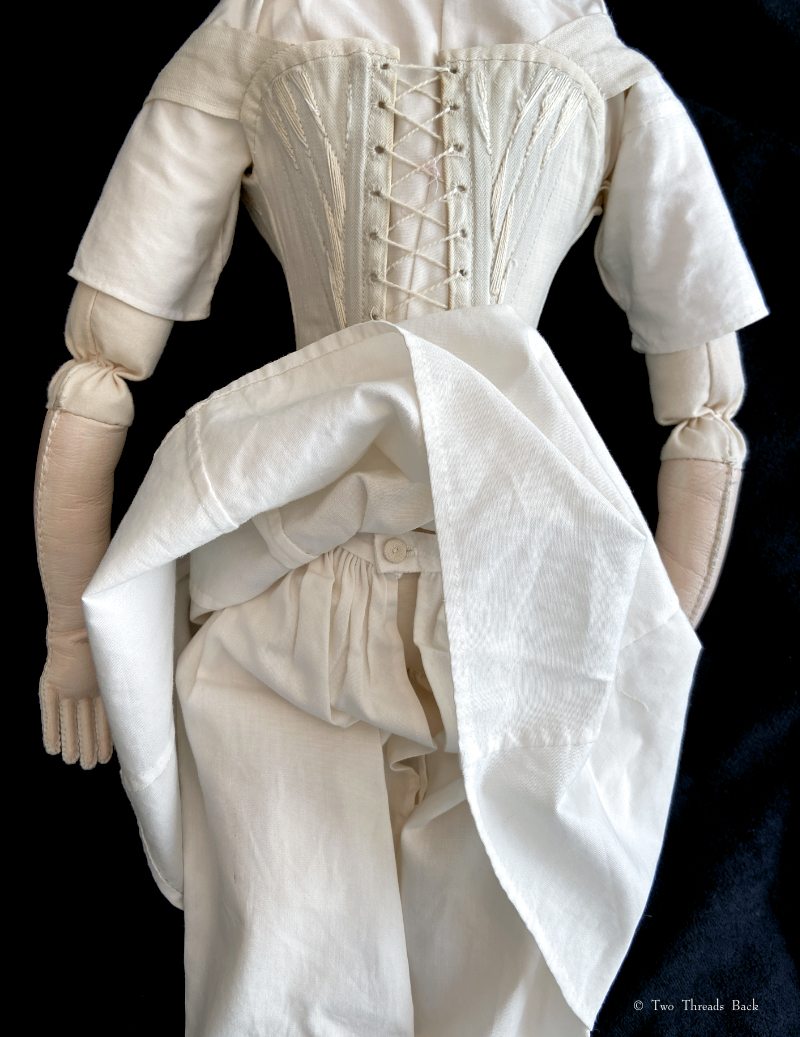
The arms were custom made of leather by a doll-making pro (it’s why they look so good) and then colored by me to match her complexion (it’s why the color doesn’t). Her chemise is pretty standard, similar to my other dolls’, which are gores, gussets, and rectangles pieced together. Her drawers are “open” style and they close with antique linen buttons – also used on the straps I added to her corset. You can see the outline of the whalebone busk down the corset’s center.
She also got plain tucked and corded petticoats. The corded one needs some alteration because I didn’t like how the cords showed through the muslin. Which is why it didn’t make the photo shoot.
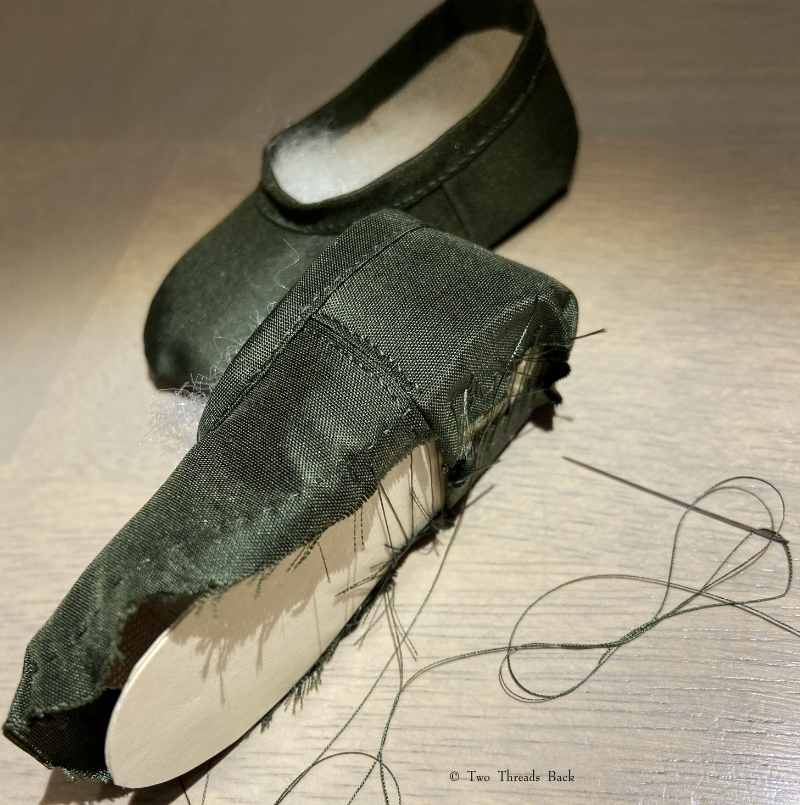
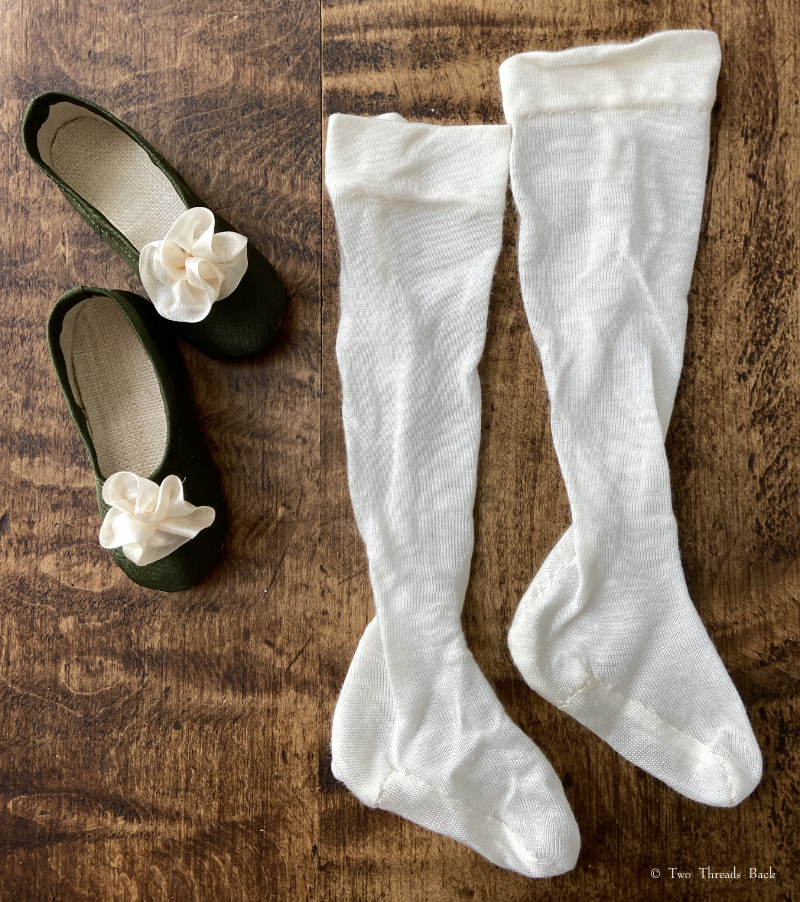
Her green silk shoes weren’t as hard to make as Pharaby’s because she has (dare I say it?) not-dainty-feet.
The shoes were lined with glazed linen which was excruciatingly difficult to do.The silk knit stockings were custom made by a pro. I knew there was no way on earth I could make them myself to fit the awkward combination of skinny ankles and not-dainty-feet.
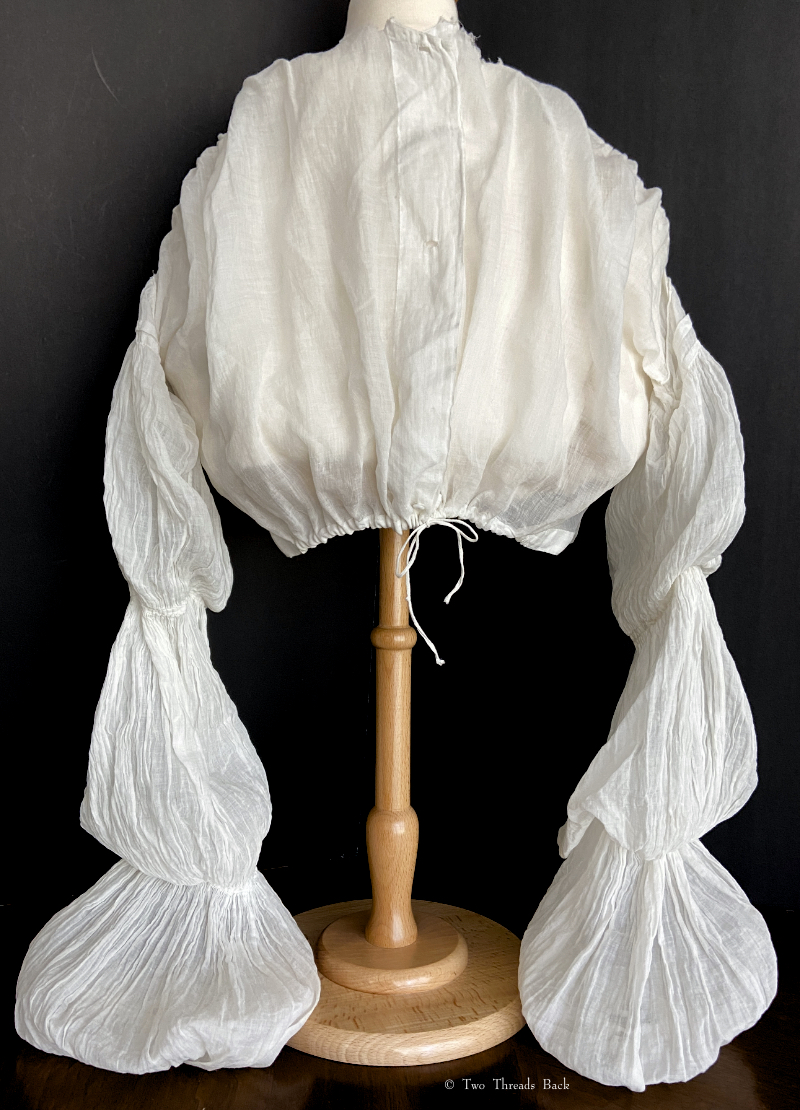
We had to have sleeve supports! Those ginormous gigot sleeves that were so fashionable couldn’t stand on their own. Ladies of the era contrived a way to save sleeves from collapsing by wearing supports resembling little pillows or cages. If you’re already wearing a dozen undergarments, a couple more can’t hurt. I stuffed them with wool instead of down. The sawdust was messy enough. Me with feathers? Unthinkable.
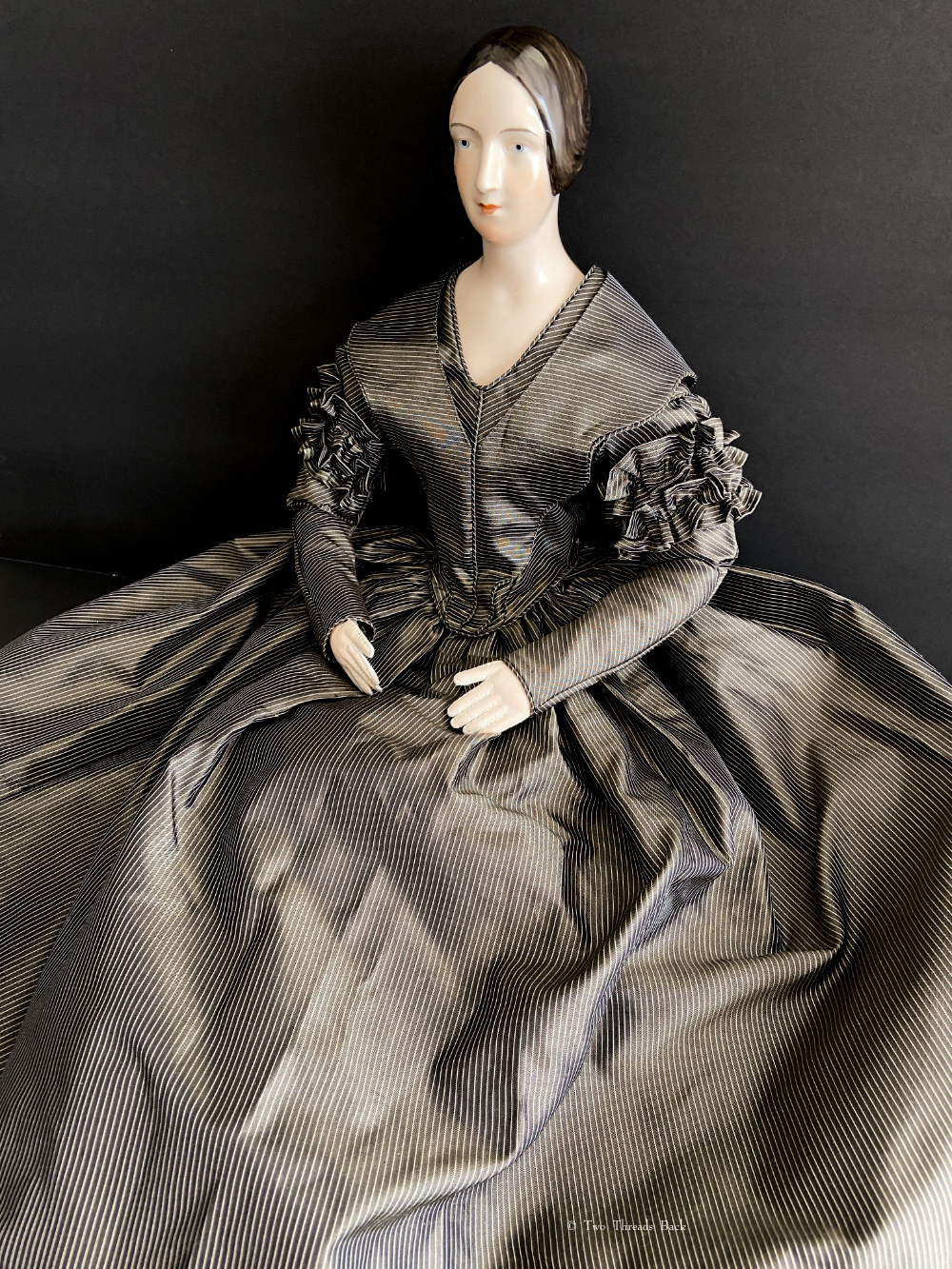
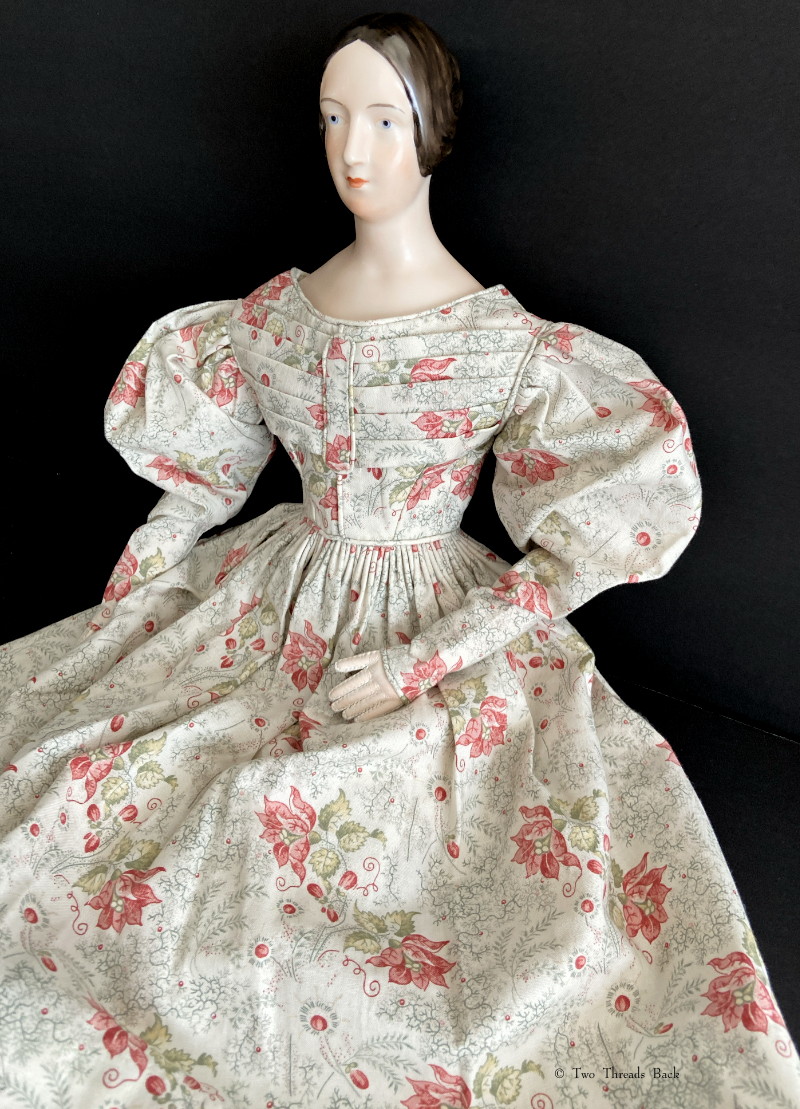
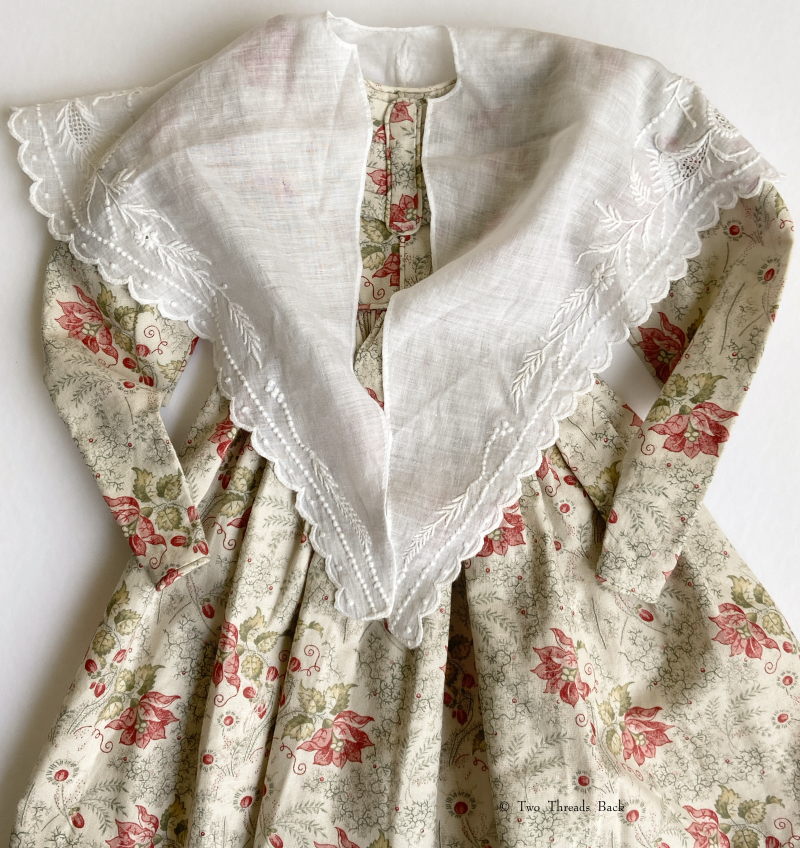
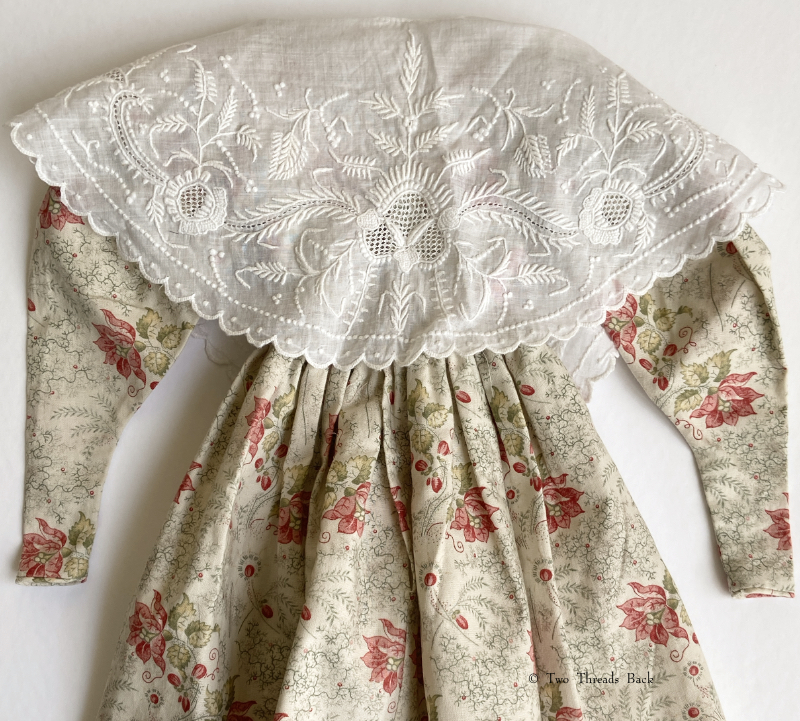
This was the first dress I made. I love the historical cotton prints available for quilting, but bemoan the weight. It won’t shape and drape like period calico did, and that’s especially evident in doll clothes.
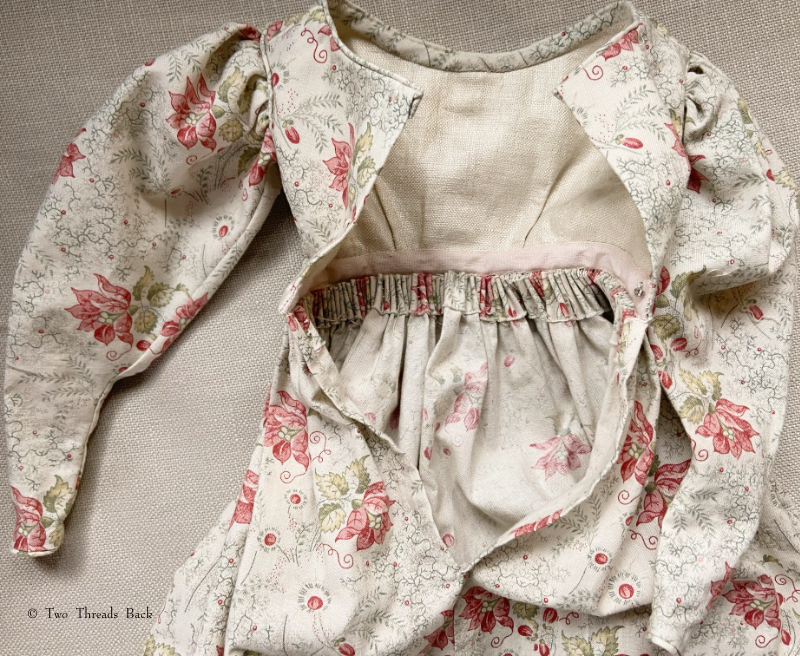
The bodice is lined with vintage glazed linen and the waist is covered with vintage tape. I’ve forgotten how many tries it took to get the skirt gauging (gathering) to fit. Suffice it to say more than one.
Of course every lady needed a pelerine or fichu or canezou or whatever name this ethereal embroidered kerchief was called. This one is refashioned from a rescued/repurposed vintage bit of whitework.
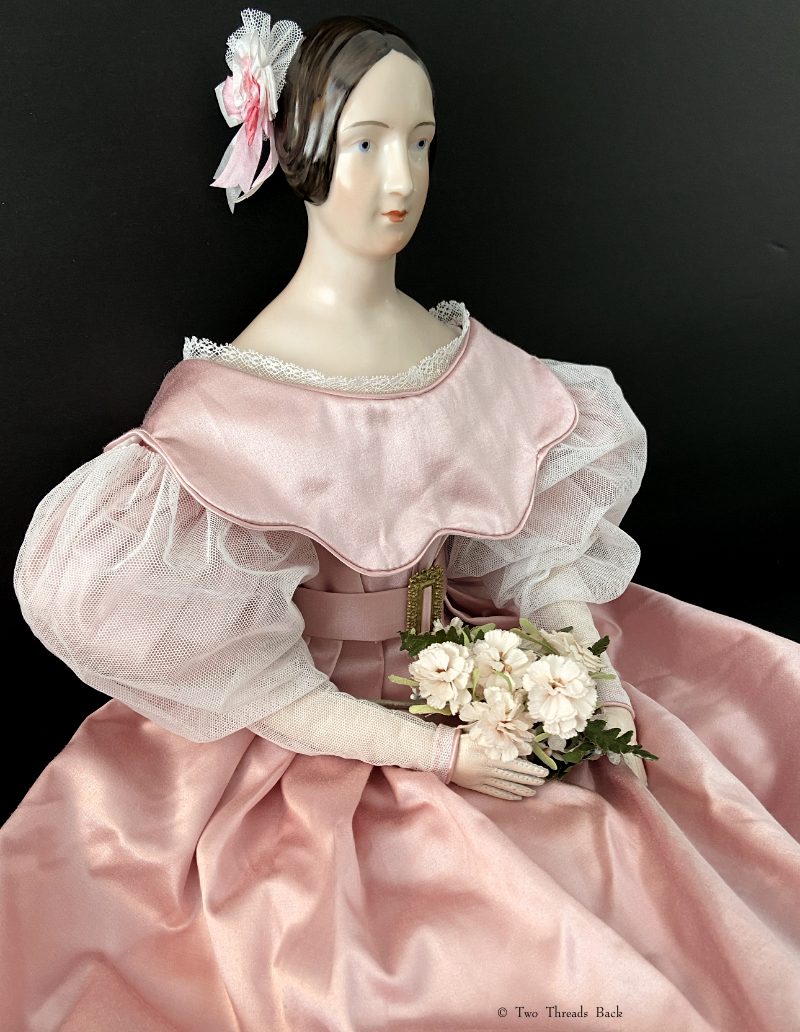
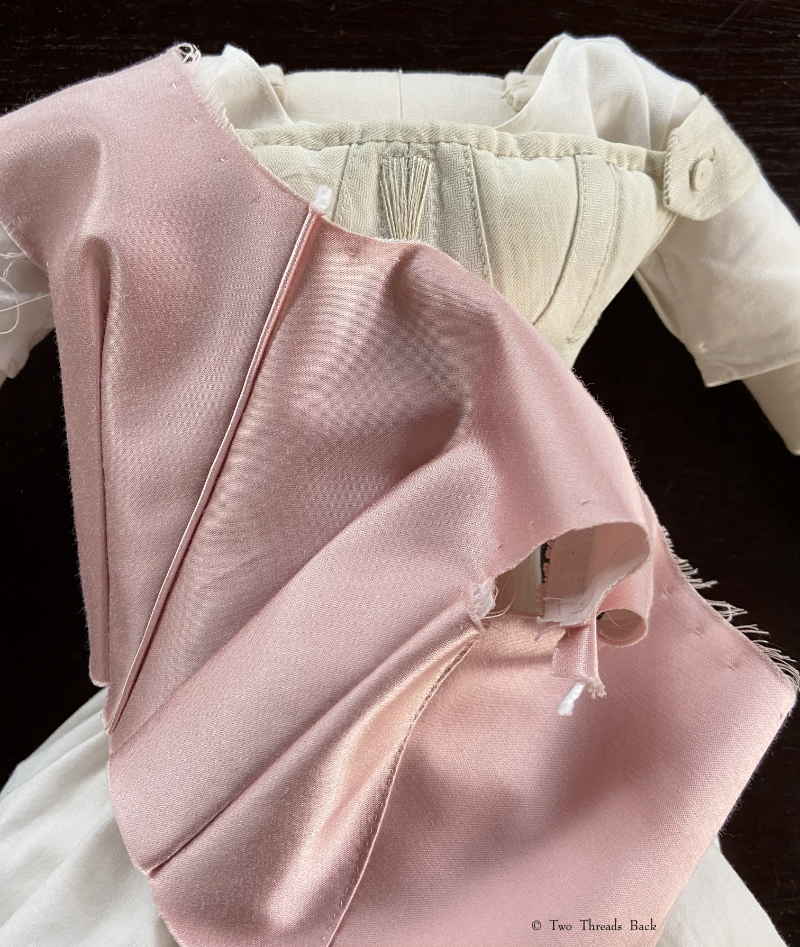
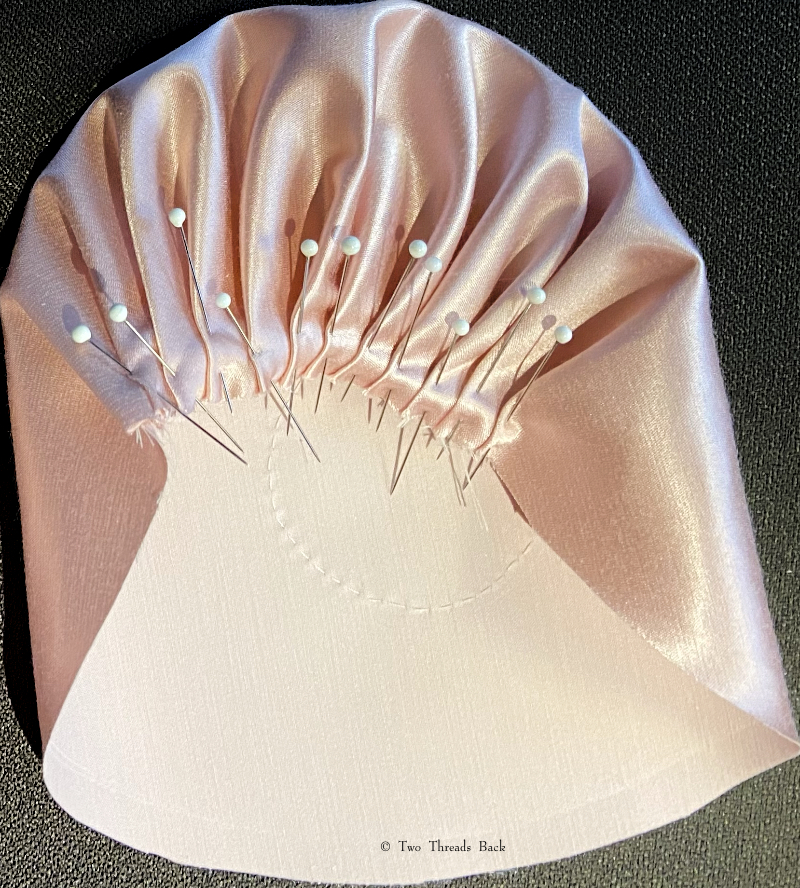
The next dress was an adventure in pattern making; I was aiming for an early ’30s ballgown that would work with sheer oversleeves and I had pink silk satin that was begging me to use it. The scalloped collar (see the first image) was an ordeal – making it fit and lie properly on the shoulders and then meet like it should in the back – arrghh!
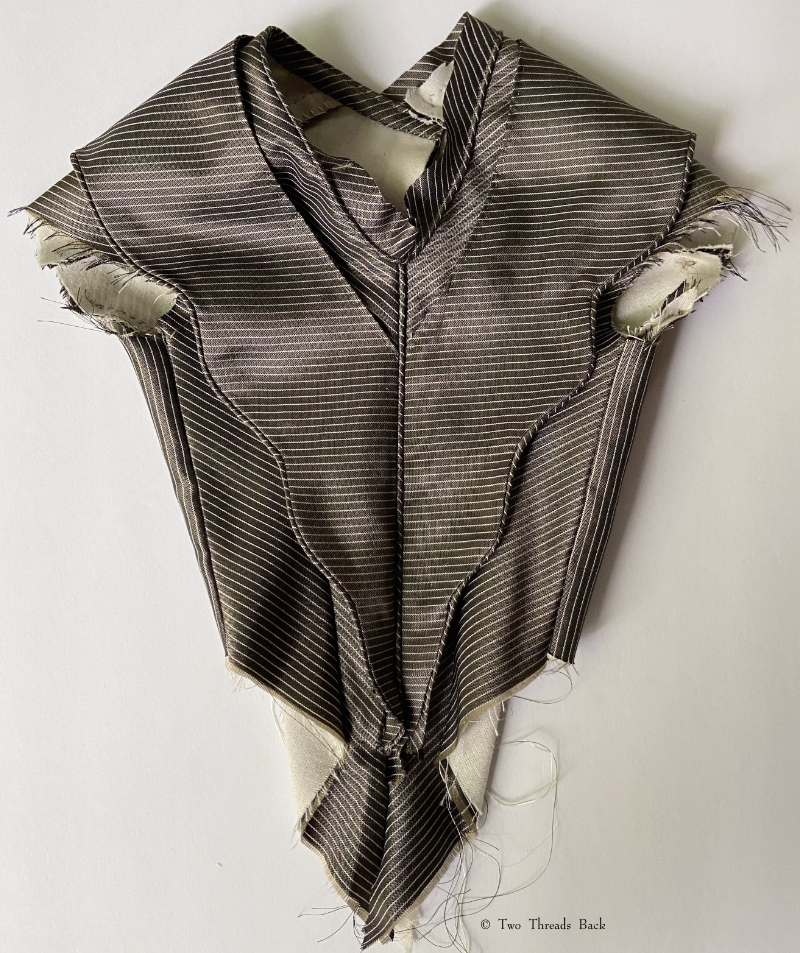
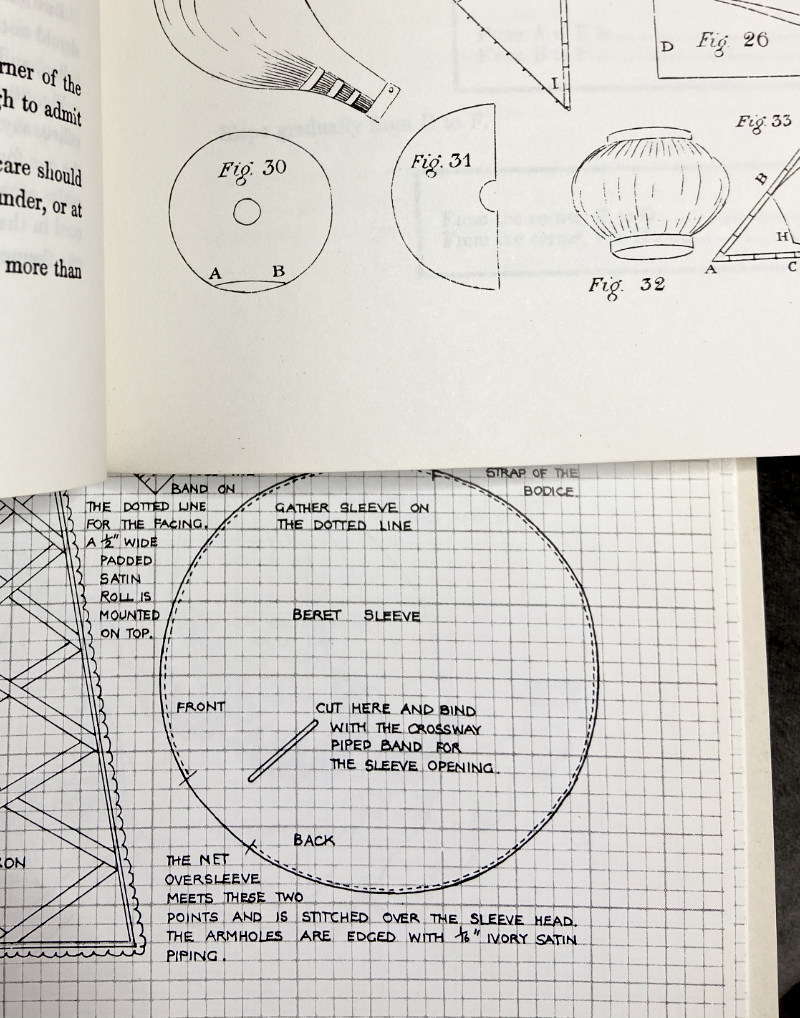
However, that was nothing compared to figuring out the sleeves. Workwoman’s Guide and Patterns of Fashion to the rescue.
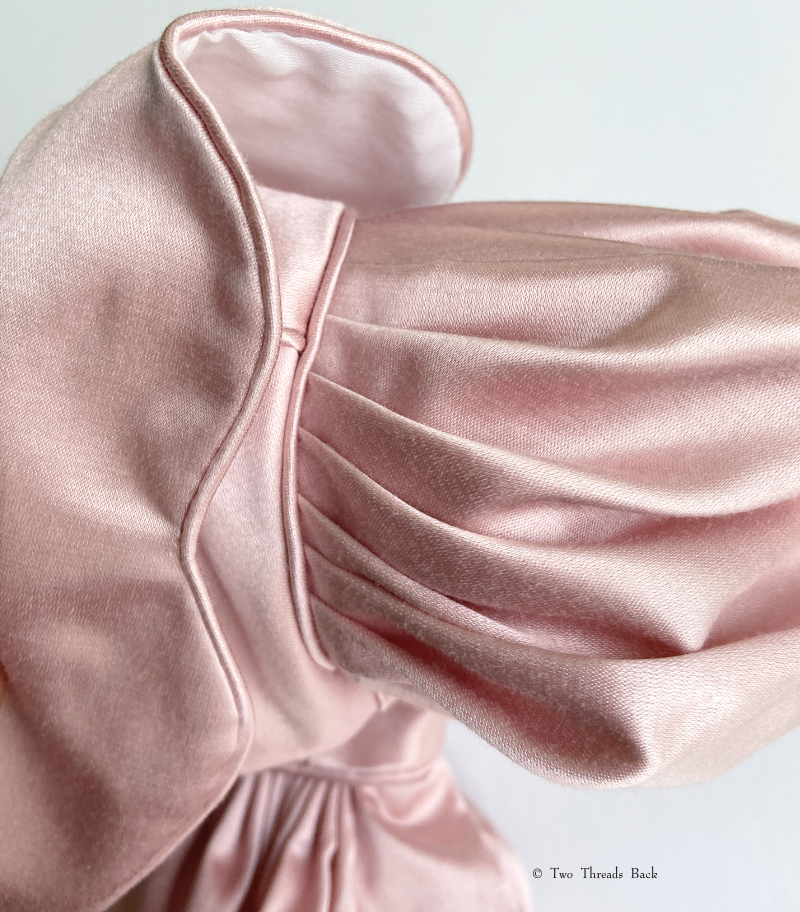
Unfortunately, with sleeves, you have to make two. And here’s the kicker – they have to match – as mirror images! It looks like the back of the silk is a different color here, but that’s just the lighting.
Sleeve attached. WITH piping! You’ll notice, however, that there are no photos showing both sleeves together. See caption above.
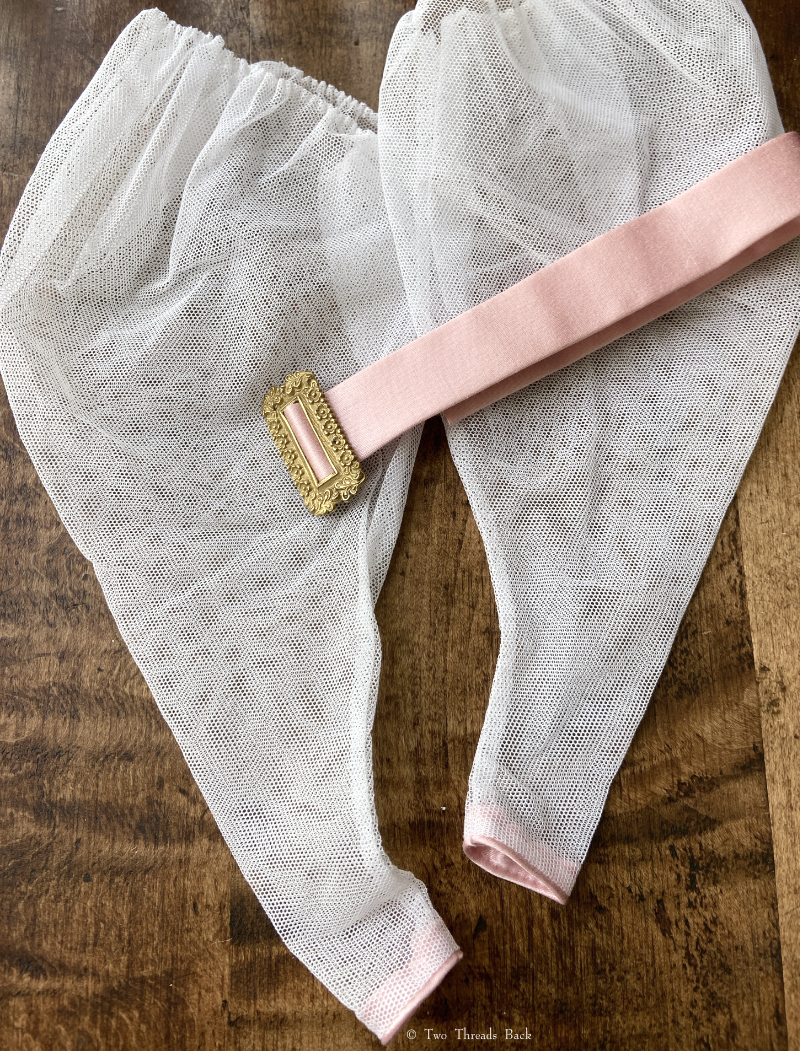
My favorite part! The oversleeves. Until I started searching for examples to go by, I had no idea they were such “a thing.” But the internet is full of portraits of women wearing them. The buckle was a lucky find on Etsy. Vertical rectangular buckles were also very much “a thing.” (Hint: I have one listed there myself right now!)
Moving towards 1840s here, with tighter sleeves and long pointy waists, as my lady became a young matron and wanted a more dignified style. And guess what? Scarlett wasn’t the only one who could make a gown out of curtains! I bought this silk years ago for windows. It was the perfect weight for a doll dress. You might say we “just saw it in the window and couldn’t resist!”
Let’s see… what went wrong during construction? First I tried to use some vintage glazed lining that wasn’t up to the job. Too many needle holes and it cracked. Started over. Then realized I’d cut the bodice in a totally modern way. Started over. Then made yards of sleeve trimming which I trashed because it looked awful on the sleeves. Started over.
After all that, the skirt was too easy. Except that I hemmed it first for convenience, then left the wrong edge open for the waistband. Started over. Maybe there’s no such thing as too easy?
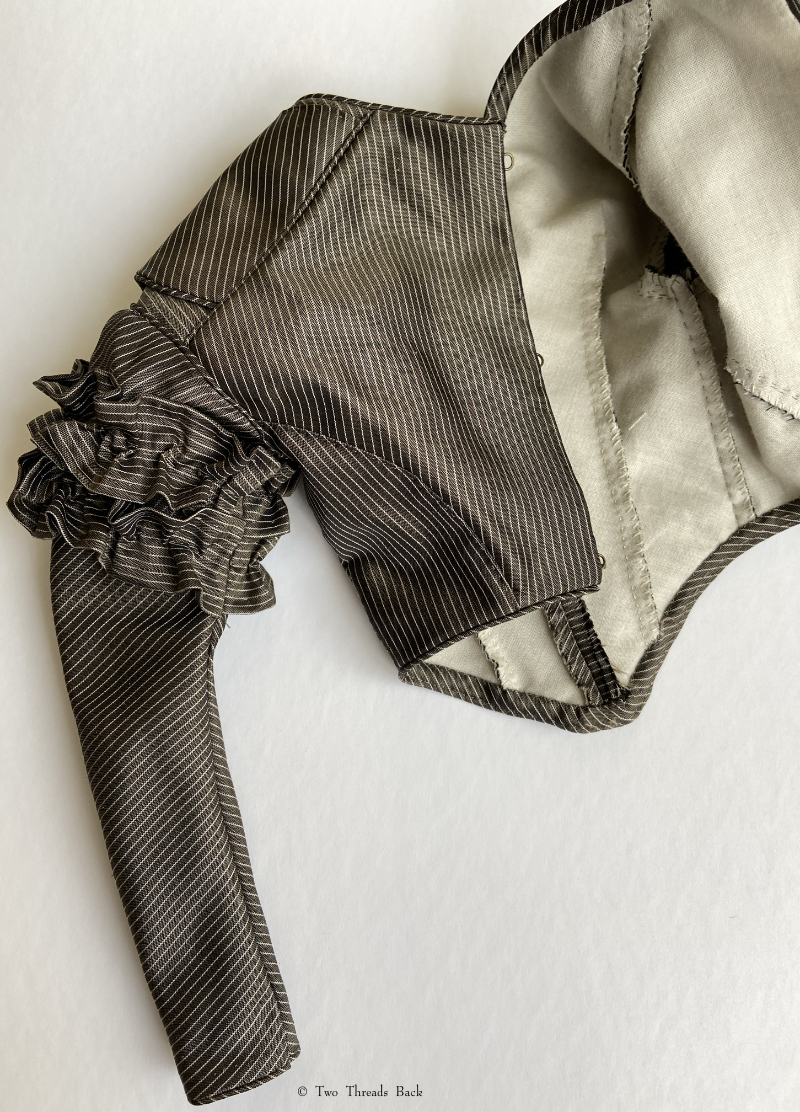
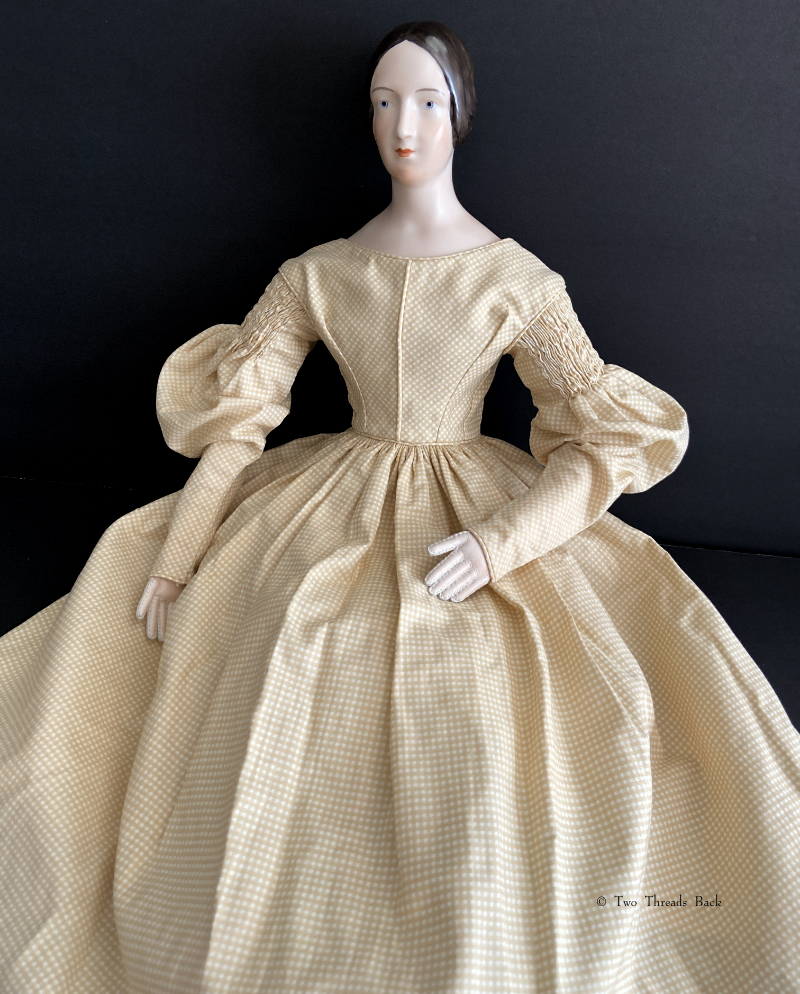
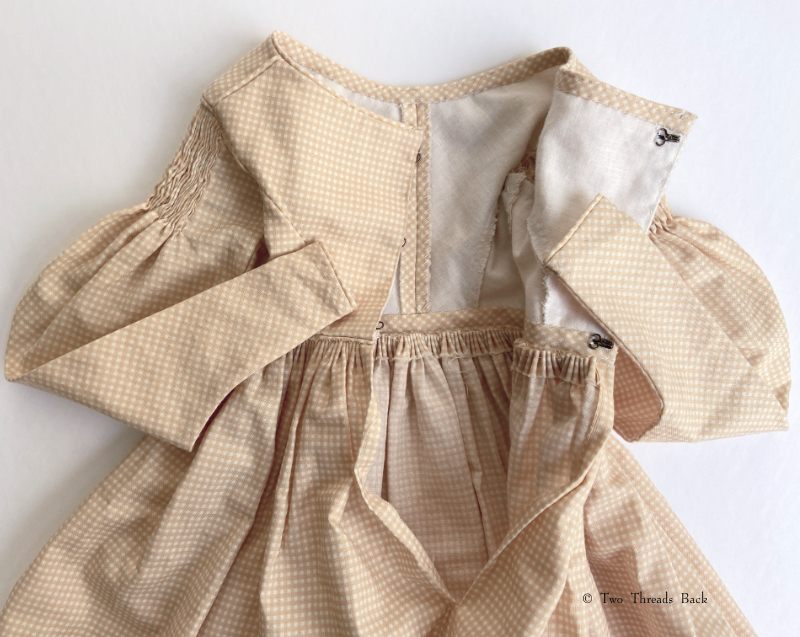
This gown was a pleasure to sew because the cotton was so thin, like original calicos and ginghams. The sleeves were cut like the floral dress, then gauged (gathered) to fit close to the arm.
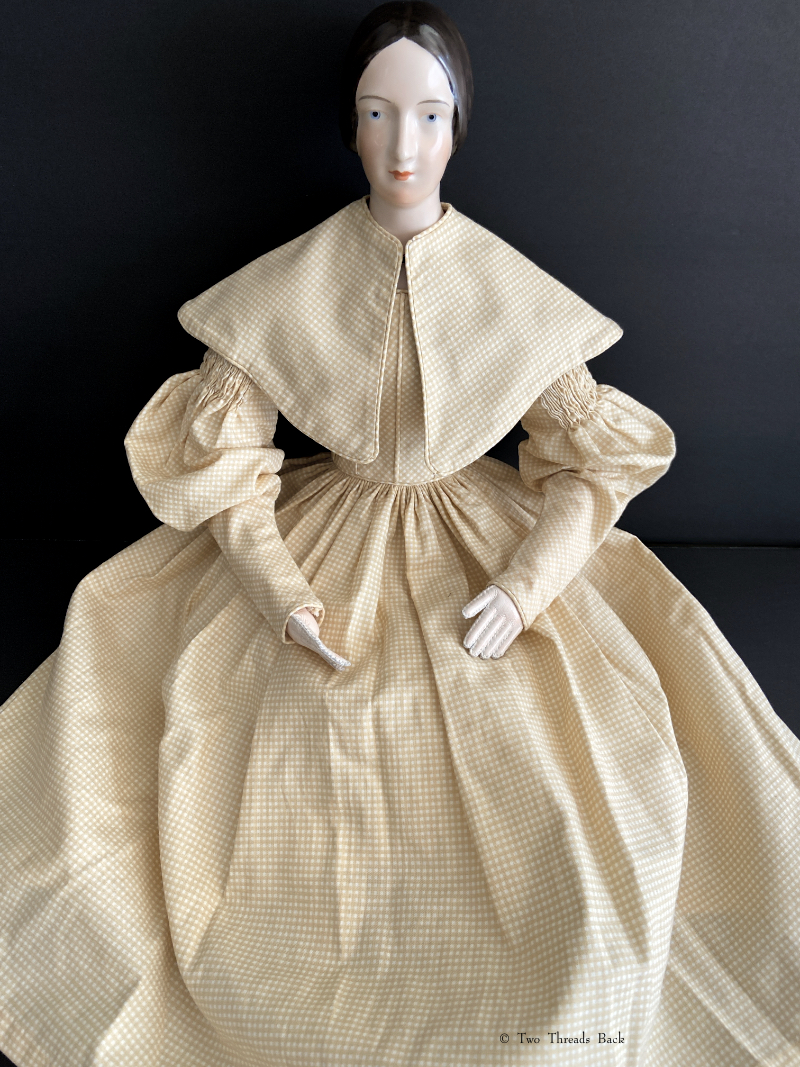
A tippet! Can’t have an 1830s wardrobe without at least one!
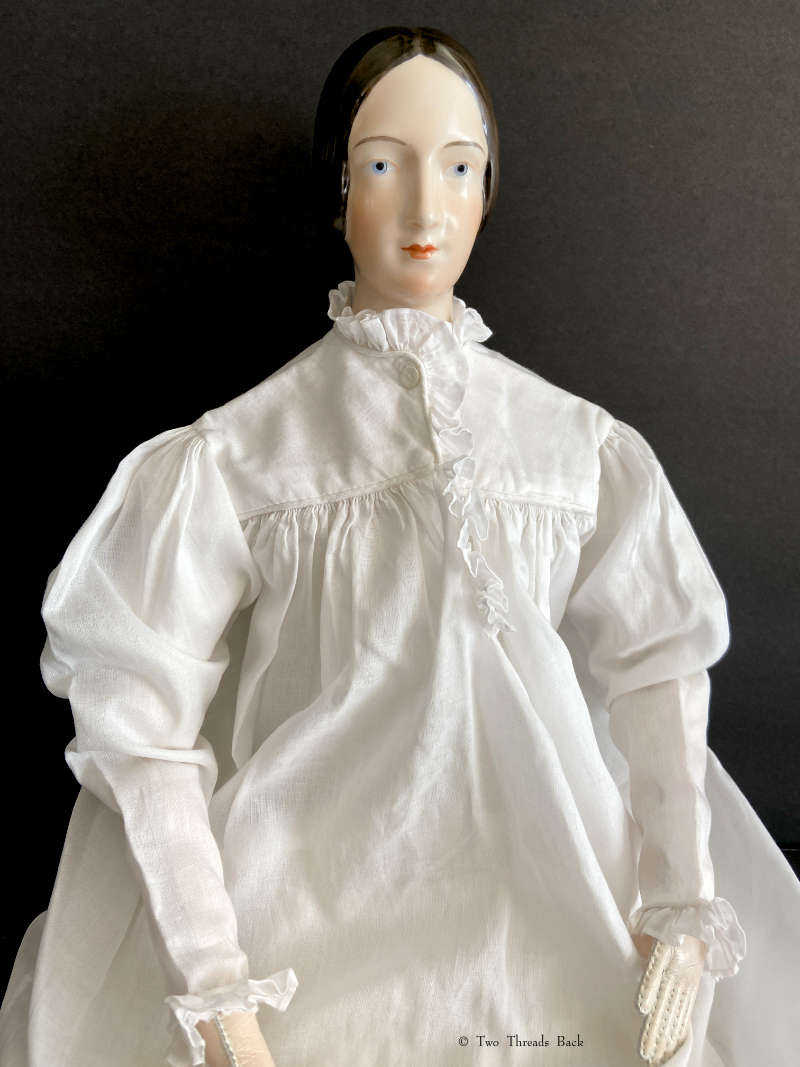
My lady needed a nightdress and I had an unfinished project that was doomed to remain that way. So I used parts of it for her gown. I shouldn’t say what’s inauthentic about it, but I will: the hem shouldn’t have tucks, but it does.
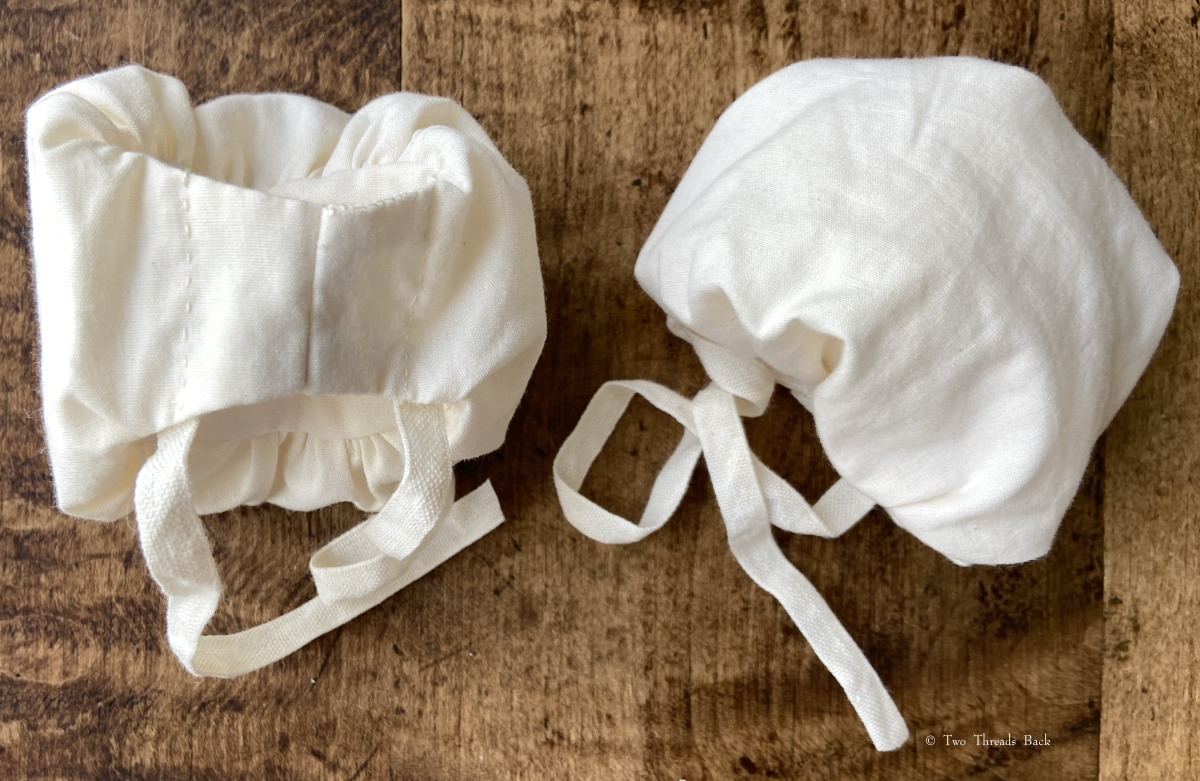
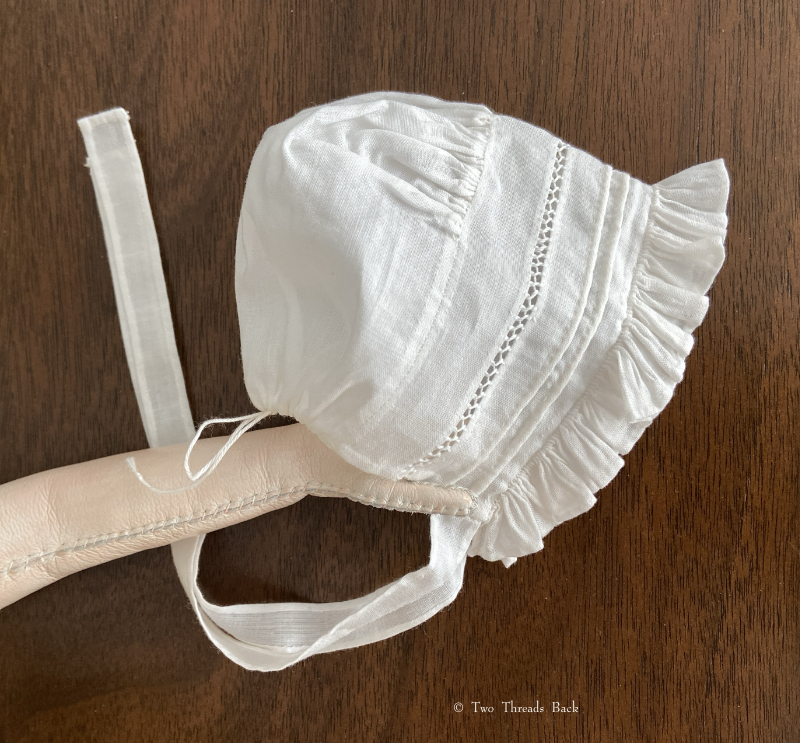
To compensate for taking liberties with the nightgown, I went the extra mile for her night cap and actually sewed the strings (ties) like originals were done, instead of using ribbons. The hems are tinier than they look in the photo, and my vision is now a little worse.
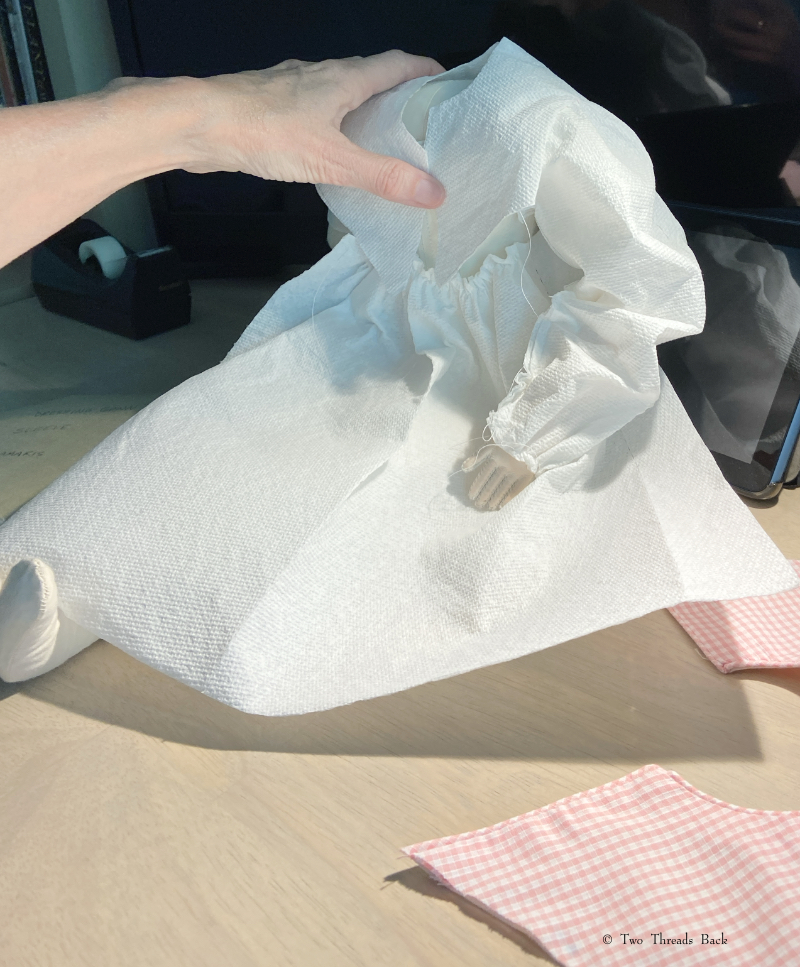
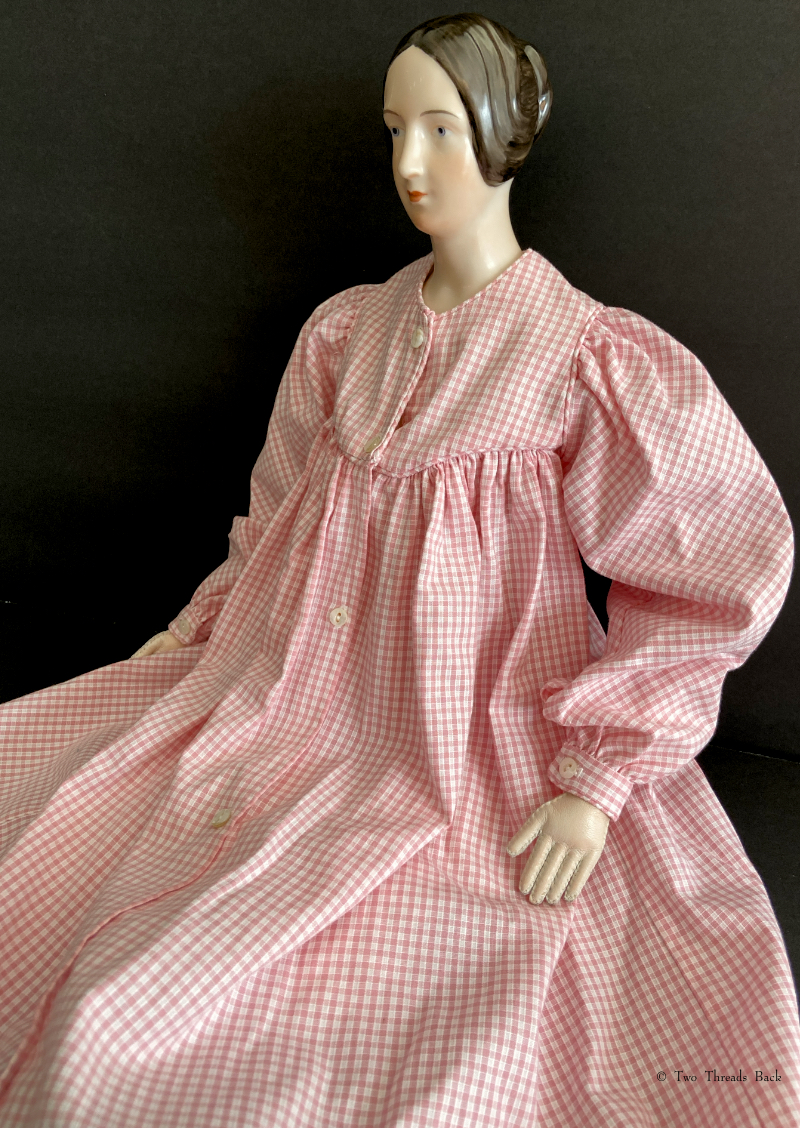
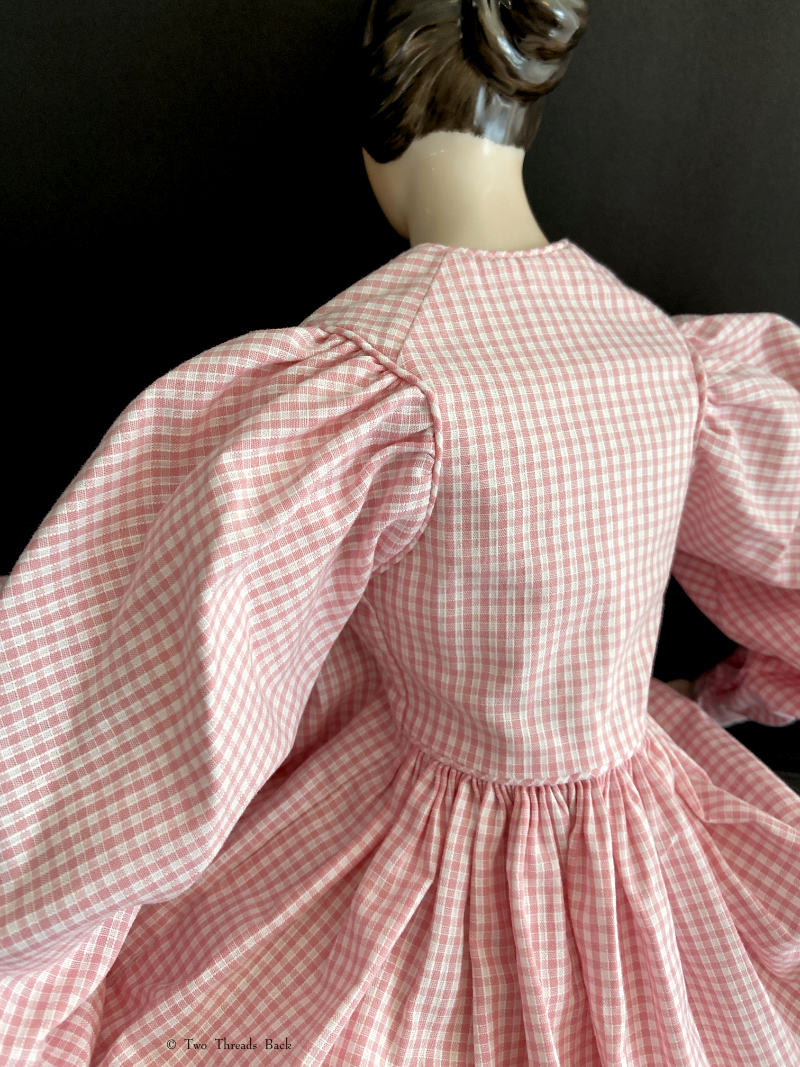
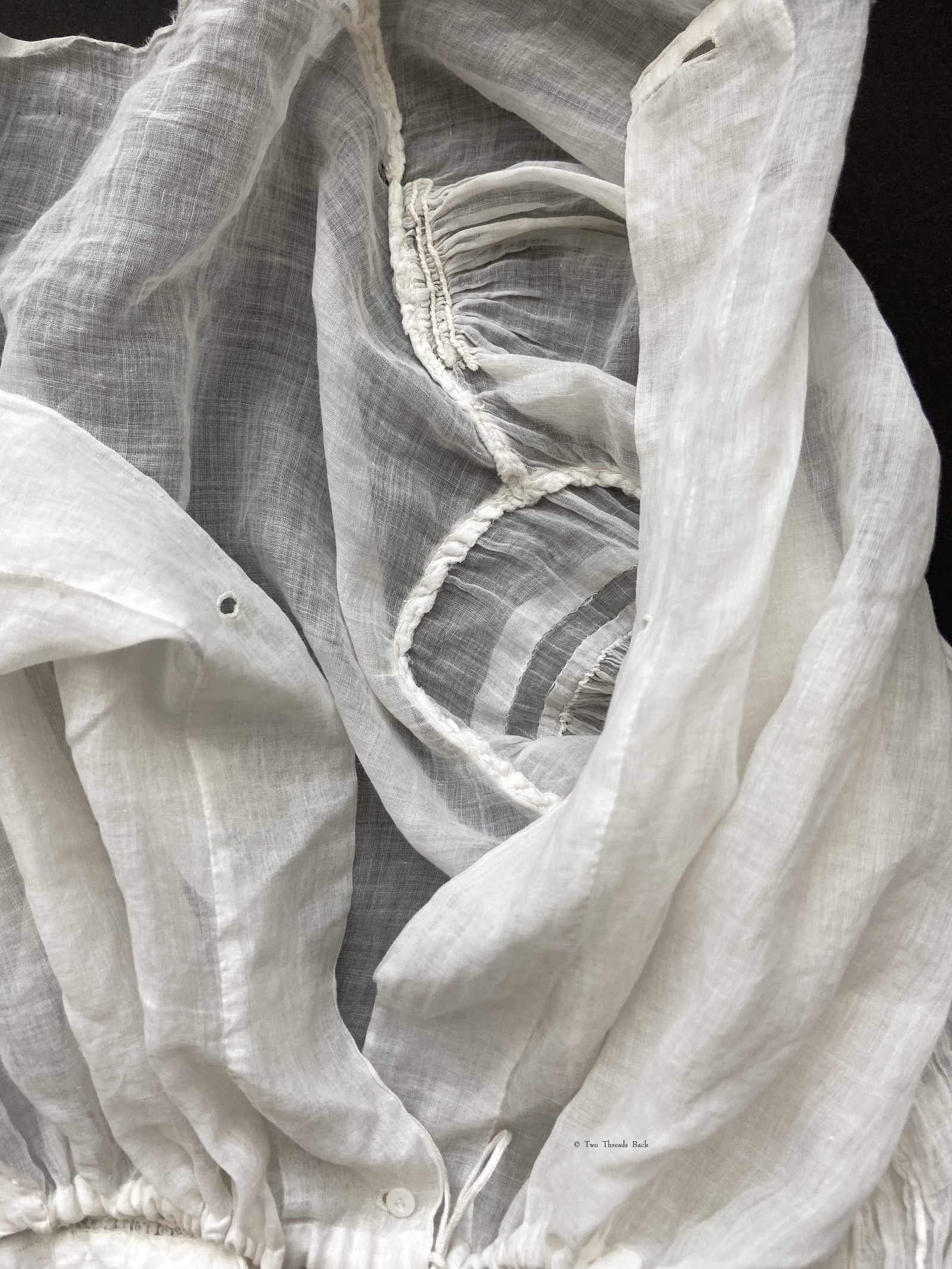
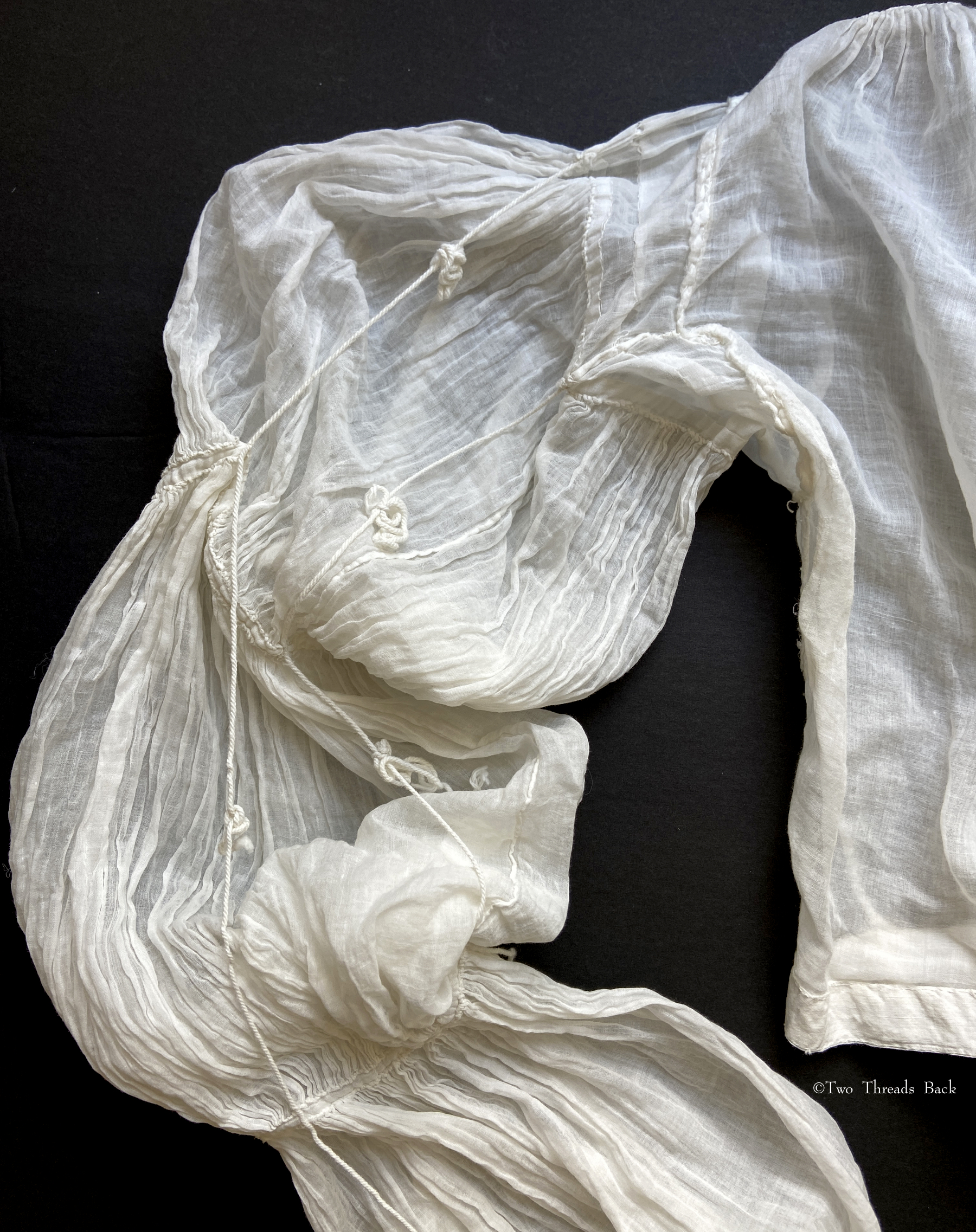
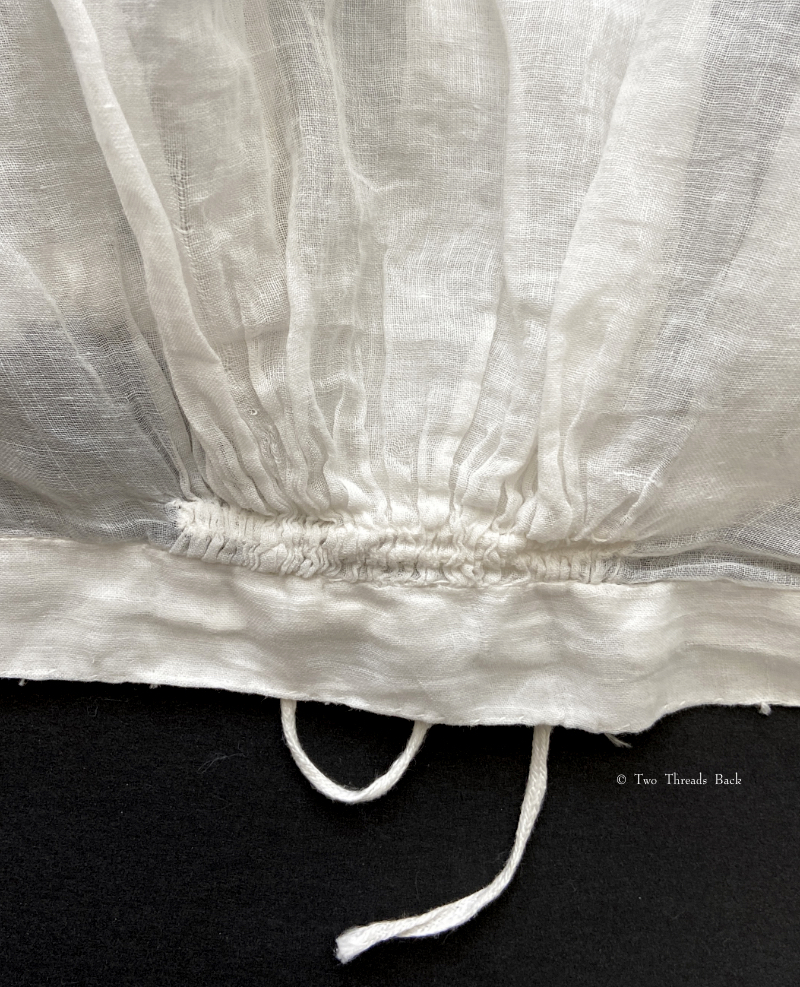
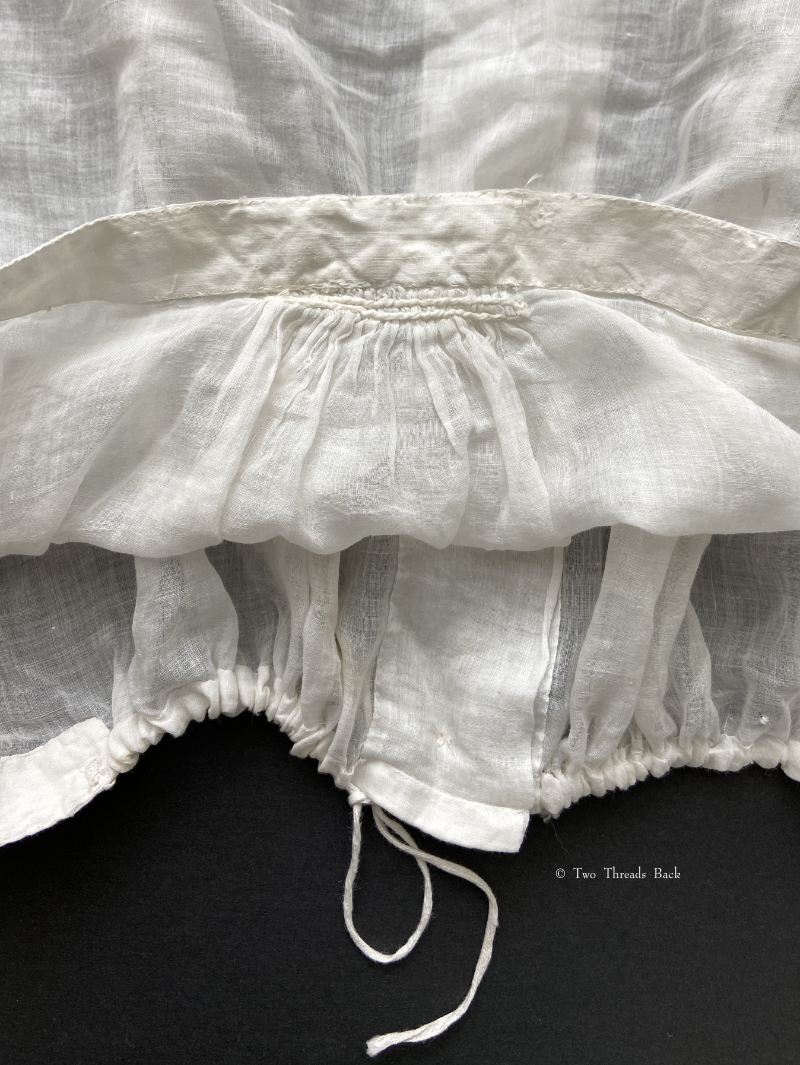
I’ve never watched a horror movie, ever. But making this dressing gown felt like I was living one. I had only a few online images to go by (e.g. Augusta Auctions here). Figuring out how to make the lining fitted in the back and tie around the front and the yoke attach to the front skirt and the sleeves fit it all… I was within an inch of setting fire to days of tortured work. So I put it away for a long time, then got it back out and fought it till I won. NEVER AGAIN. (Photo of me using my patented paper towel pattern method.)
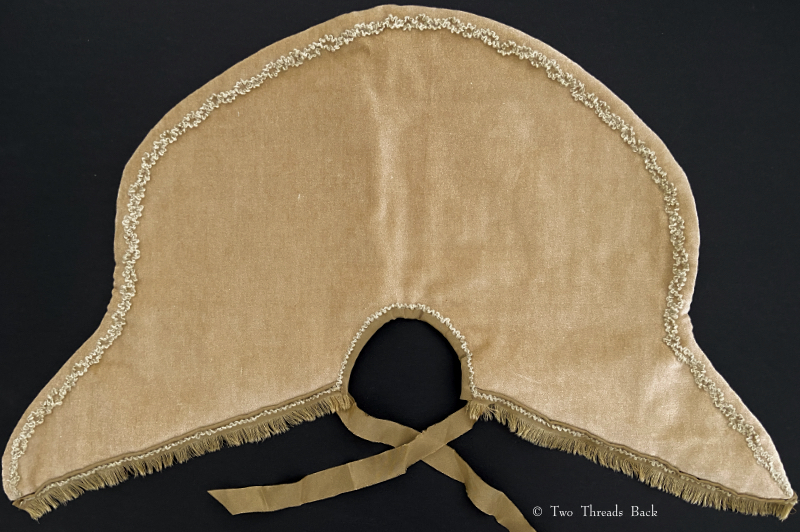
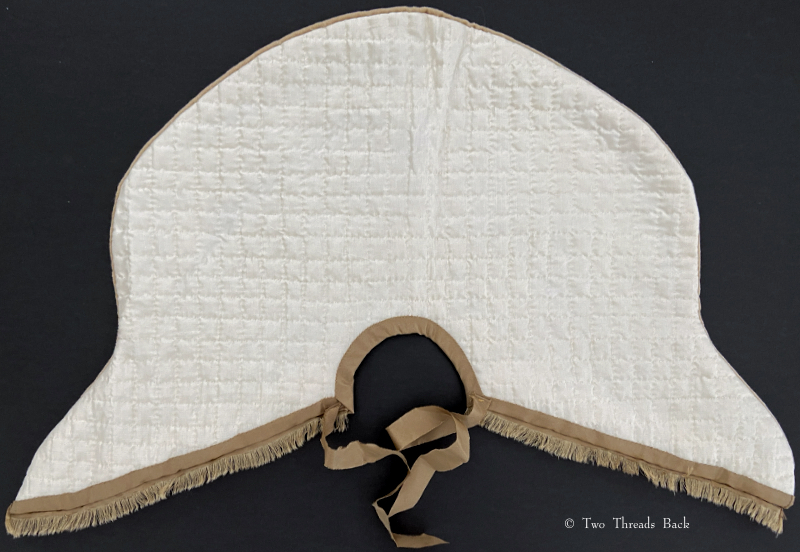
Last of all, a cloak for cold weather. It’s made of a dull gold cotton velveteen, lined with ivory silk which is quilted with wool batting. It’s edged with silk ribbon unraveled into fringe and a curly silk trim.
The quilting took ages and I had to stitch it flat on a table to keep it straight. Some of the lines are crooked anyway.

About 1849

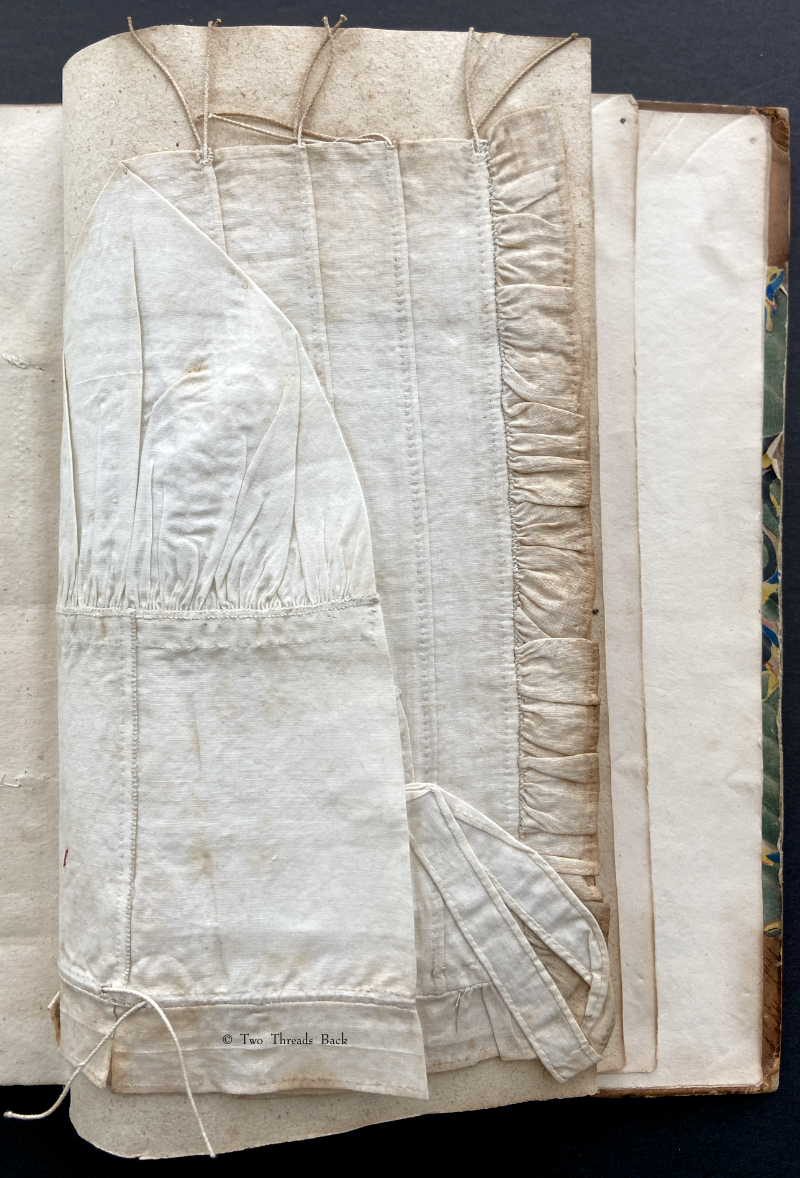
This is one of two caps included in the 1816 British and Foreign School Society manual, a book intended as a guide for educators who were using their monitorial system. It’s attached to the page so I can’t fold it out to show it well, but there’s a tiny number “1” marked in red cotton barely visible on the left. The other cap is marked (surprise!) “2.”
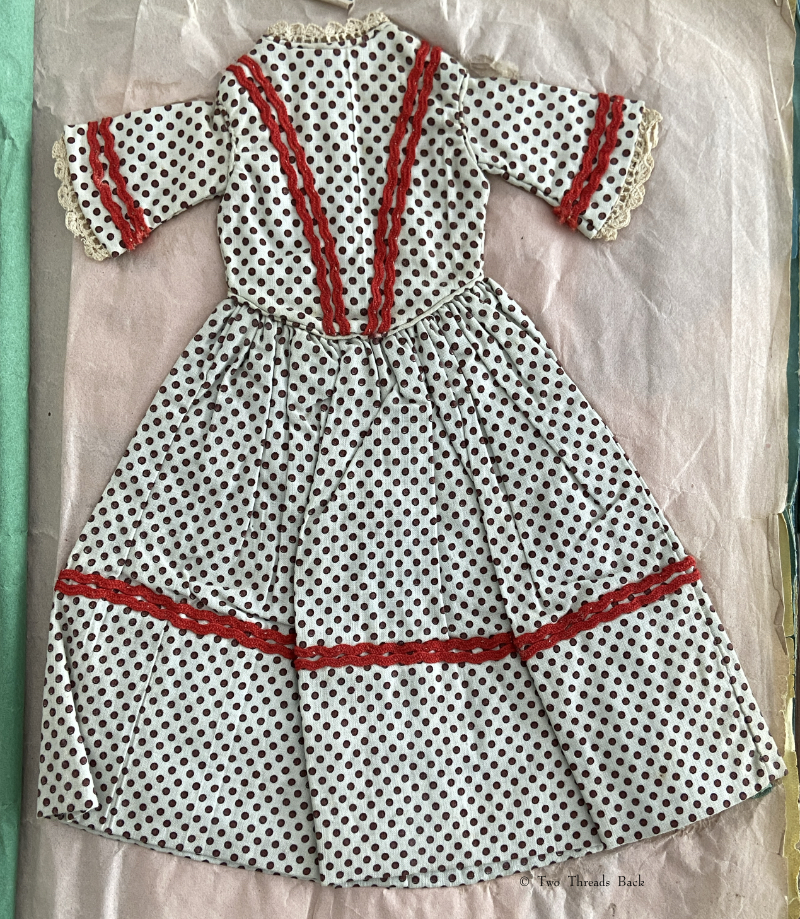
This dress is a simpler style than the sheer one above and it’s made of printed cotton.
Mary sewed this child’s dress with nine tucks in the skirt, gauged gathers, and trim she (probably) made herself.
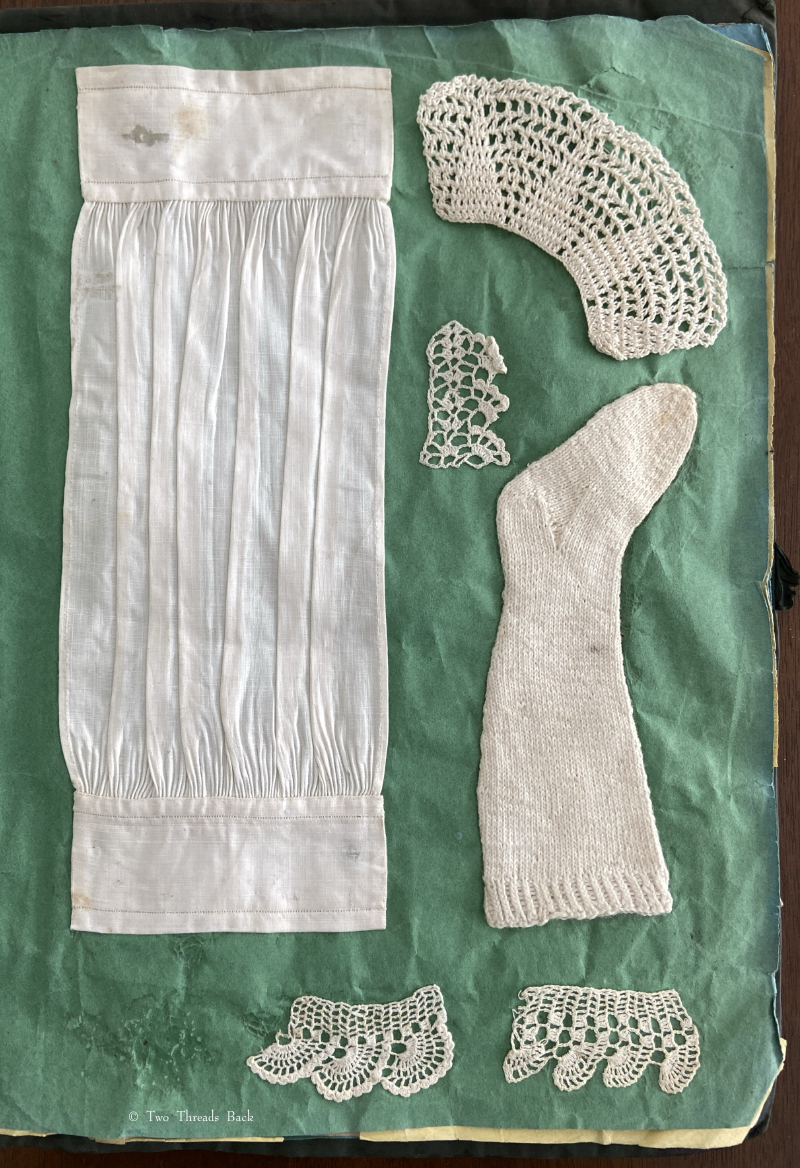
We can’t forget the MOST important garment in the Plain Sewing repertoire: The Shirt. No course in plain sewing was complete without this accomplishment!
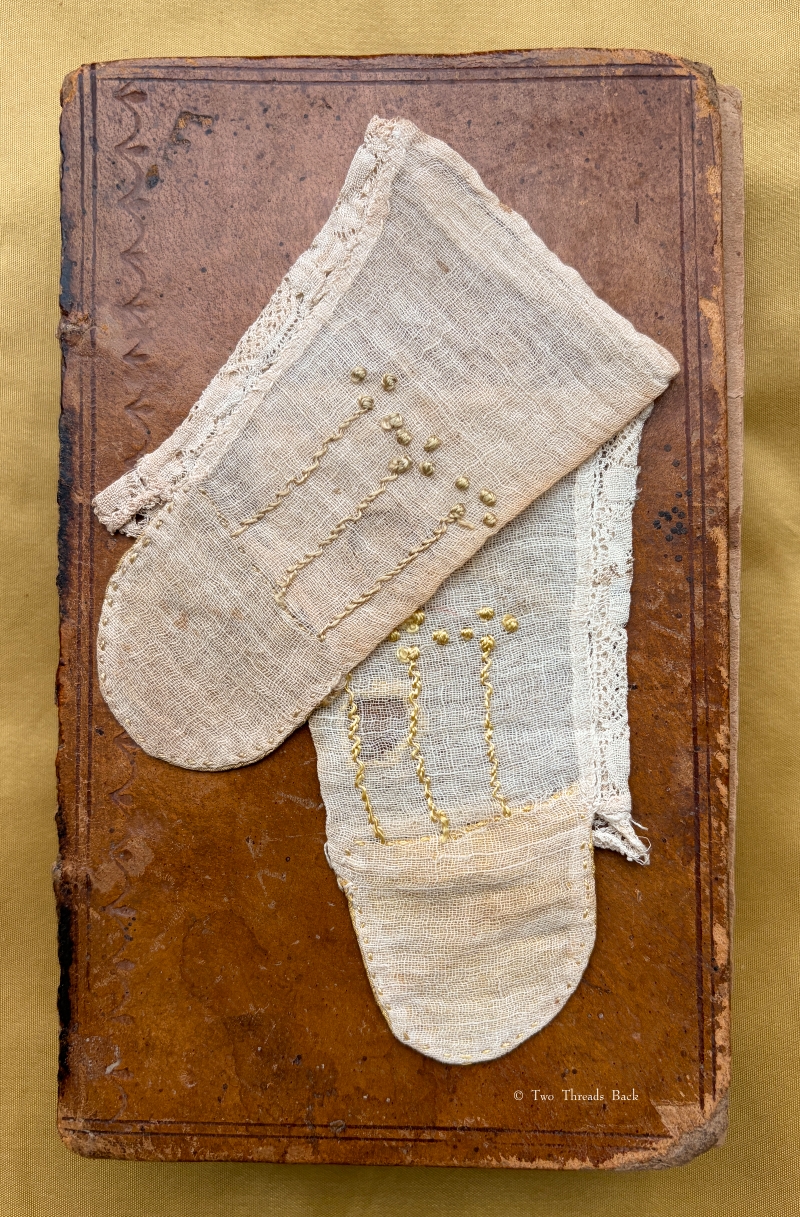
Here’s an example of the practice cuffs or wristbands that would have been worked before she advanced to making the above shirt. Knitting was also an essential needlework skill for women, and most 19th C sample albums included examples. There was a single full-sized stocking tucked into the book also.
Plain and fancy! Mary did all the hemming, seaming, and making buttonholes in her earliest lessons, but she obviously got to learn some fancywork as well. If you get a thrill looking at daguerreotypes of that time (Pinterest is sooo addictive) you might recognize the vandyke collar pattern that was so popular then.
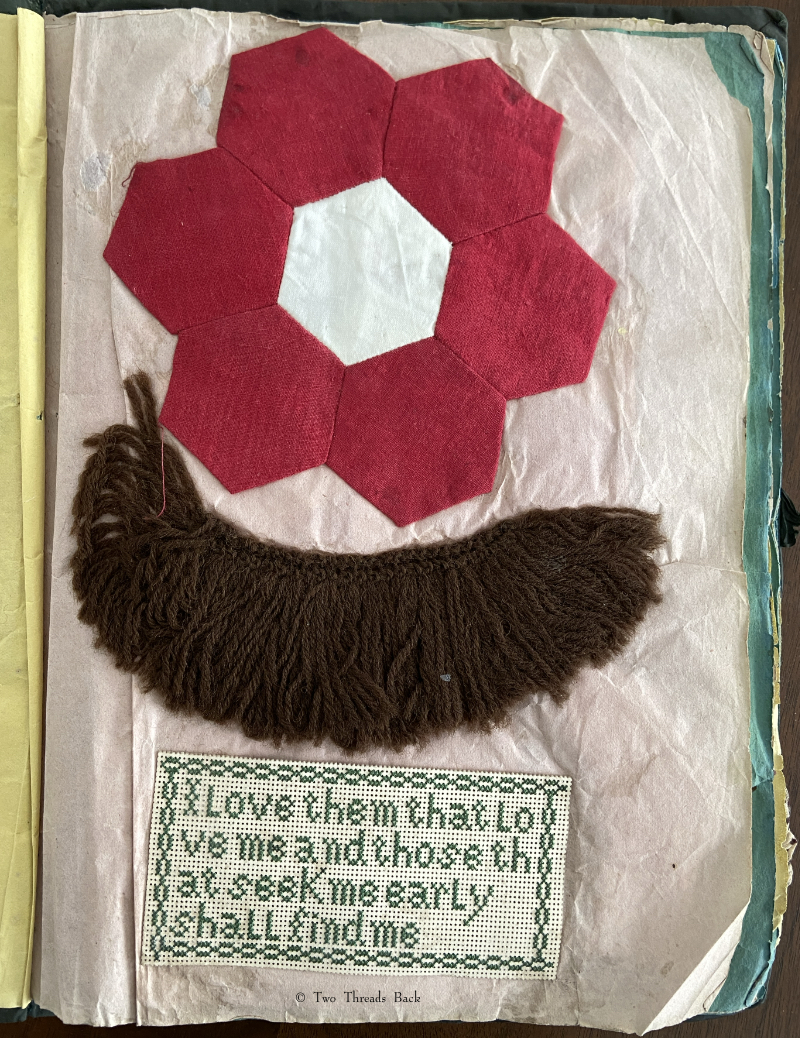
Nope, it’s not a walrus mustache. It’s some pretty (or not!) wool trim, useful for Victorians who didn’t know the meaning of restraint in decor. Mary also made a hexagon quilt patch and worked a scripture verse on punched paper. I don’t understand why 19th C needle workers seem so untroubled by words that run out of roo– m. Why???
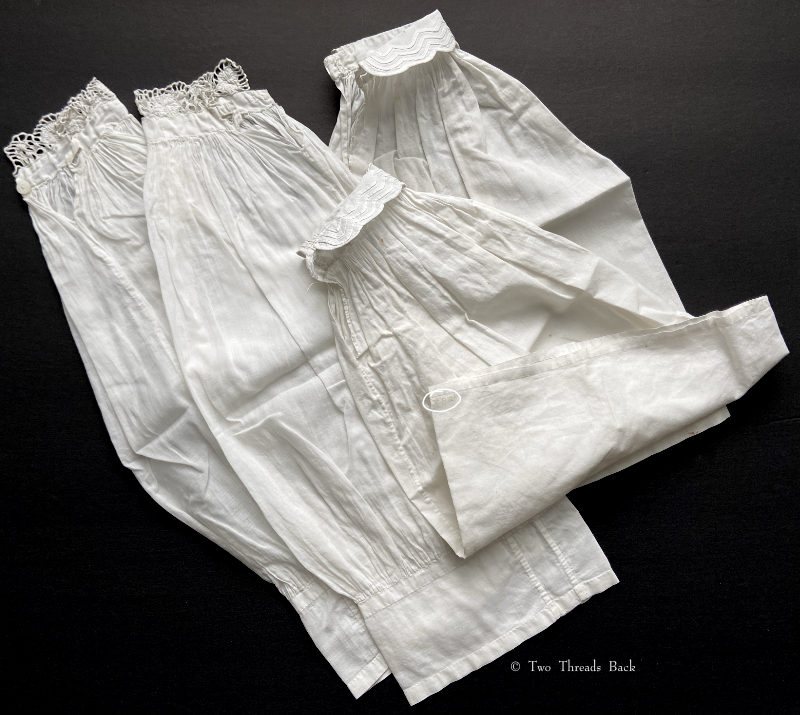
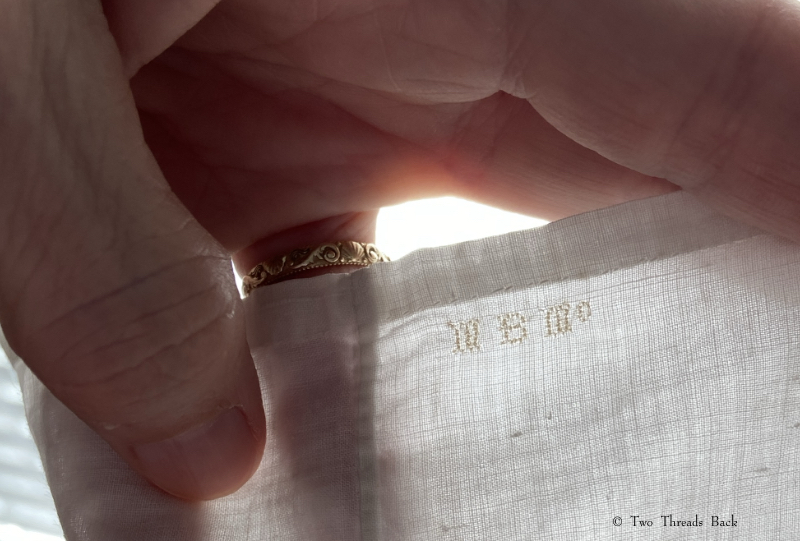
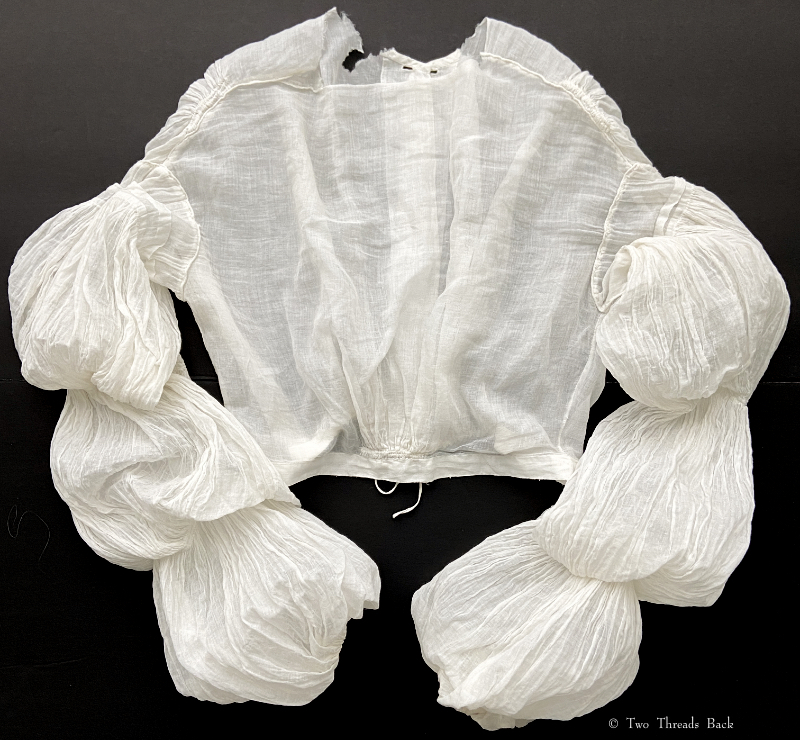
Two pairs of undersleeves were kept with the book. I assume they were Mary’s work because they have her initials marked in cross stitch. I’ve circled them in the photo to show how small they are. The sleeves show wear, so I don’t know if they were part of her sewing instruction or later work that stayed with her album.
The marked initials are less than 4mm tall. I never cease to be amazed at the tiny stitches they could make. The letters look like M B Mc to me. McQuiston?

Three Scoops

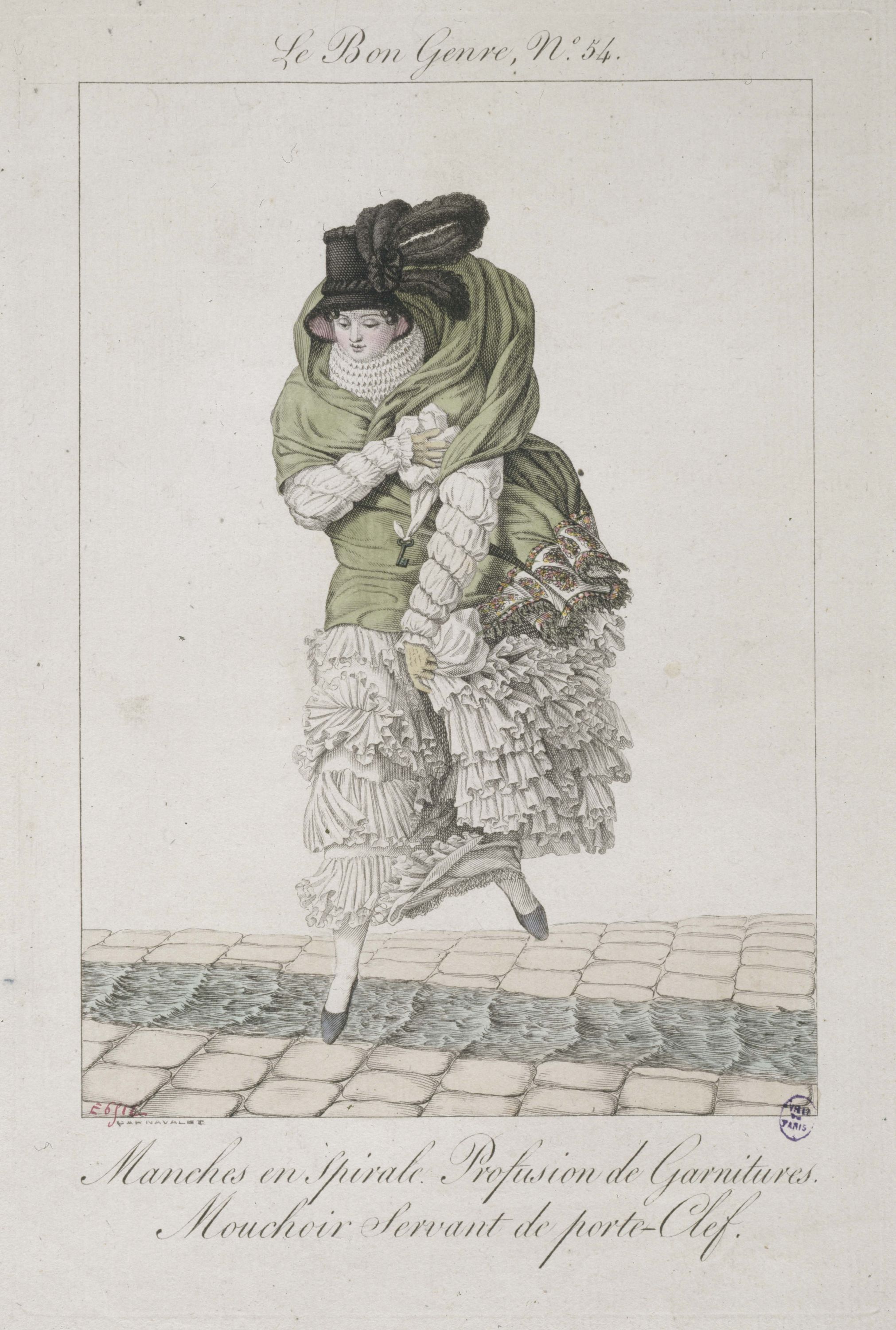
Enough fluff, do you think? Le Bon Genre numéro 54 : Manches en Spirales, Profusion de Garnitures, 1812″. Paris, Musée Carnavalet. CC0
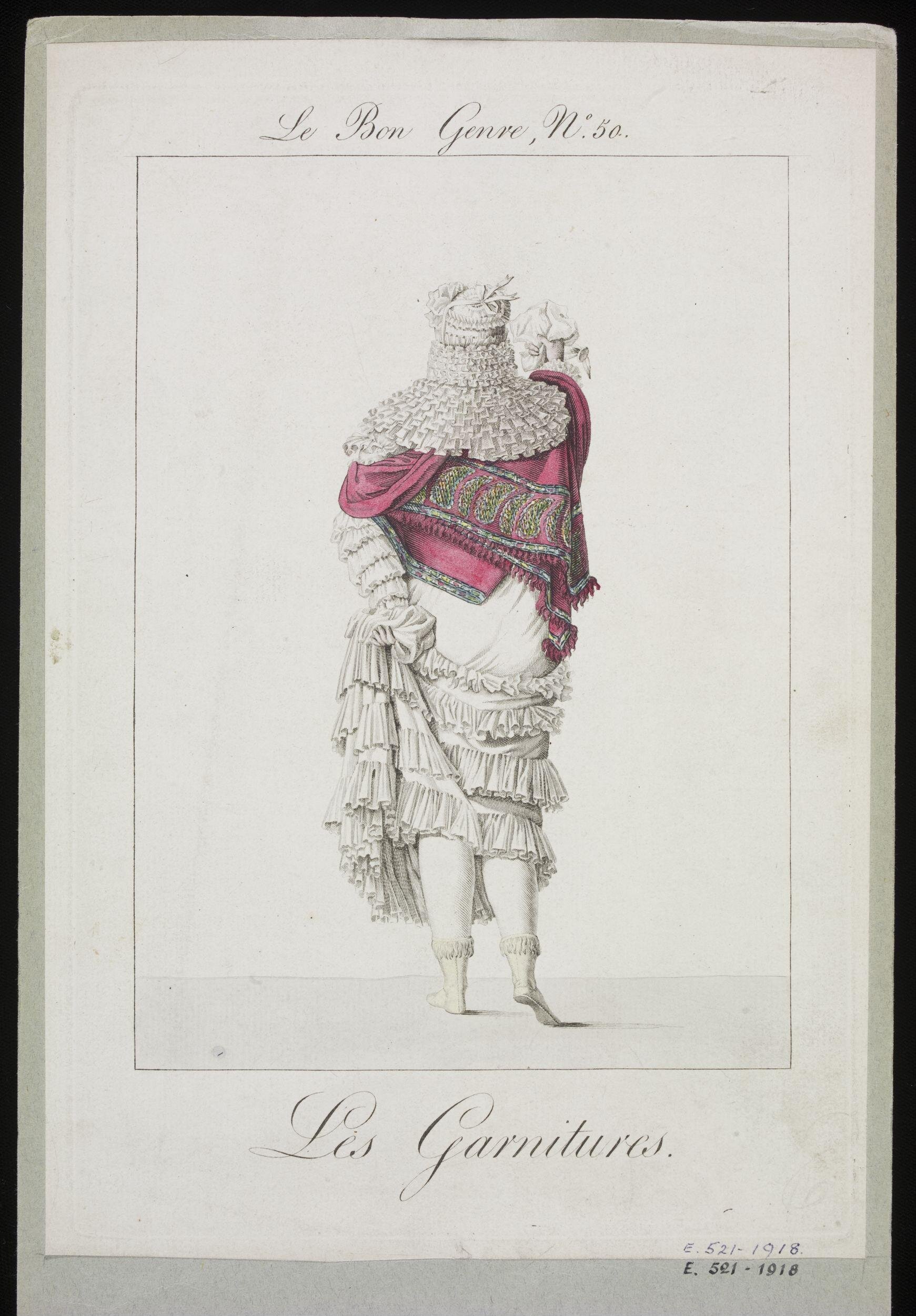
Revealing and concealing – and quite a few scoops of ice cream! “Le Bon Genre, N°50. Les Garnitures. G.10779″ by Anonyme, graveur. CC0 1.0.
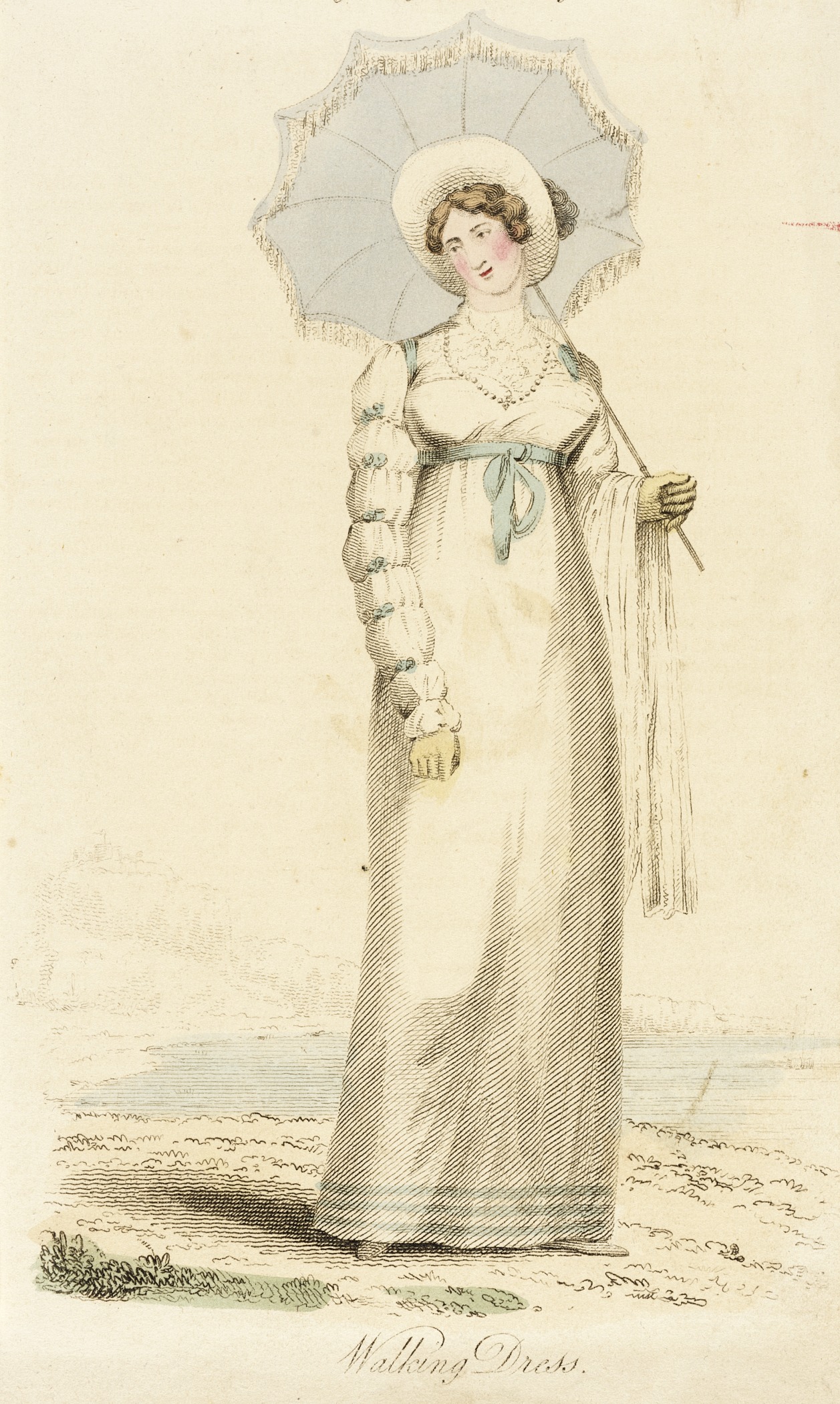
And a lot of scoops on this one as well! It’s not satire, but a fashion plate. “Morning Walking-Dress: A round robe dress of white figured muslin, with worked bosom, made high on the neck–vandyked collar of lace–long sleeves, made full, and drawn across in five or six divisions–to tie in small bows of light blue ribbon:–the robe trimmed at the feet with a triple row of light blue ribbon: the shoulder-straps and bracer, ribbon of the same color.” The Lady’s Magazine, August, 1814. www. lacma.org

A perfect darn. Click for a closer view.
I’m melting….But with elegance!

Nine What?

A stitch in time saves nine.

I’ve heard the old adage “a stitch in time saves nine” since I was a child, but I think I was an adult before the light clicked on. It made no sense to me: saves nine what? My ten year-old self thought it was silly. My grown-up self got the point, but still thought it was silly.

A few decades later, I can almost appreciate it ‘as written’. According to Thomas Fuller in 1732,

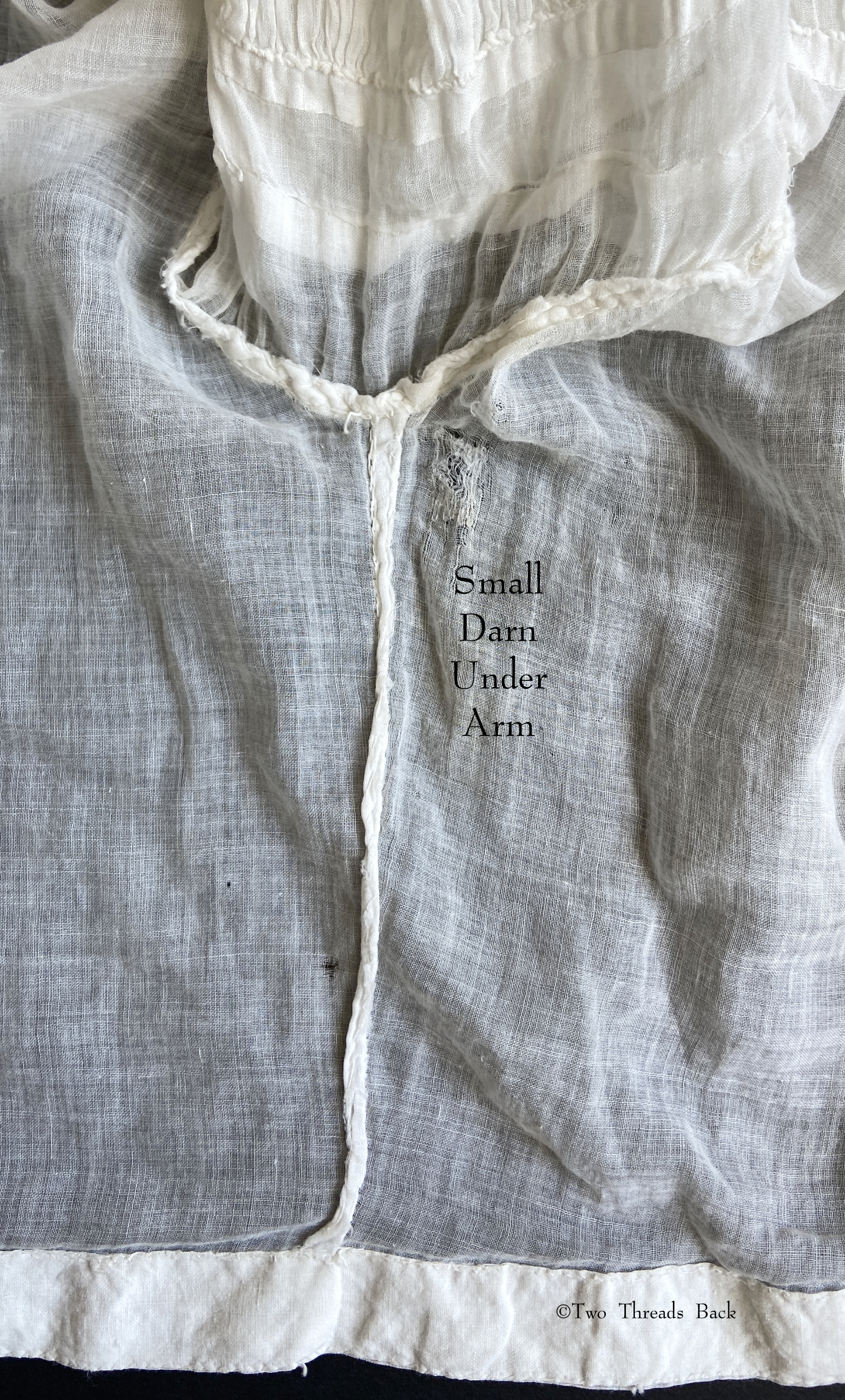
Lots of quick and clumsy patching abounded (by necessity I’m sure!), but I’m amazed at the delicate repairs you can find in finer clothing (examples here, here, and here). One day last summer, I temporarily lost my mind and decided to try it myself on a baby gown in need of repair. Before starting, I looked at a similar gown with a neat mend to see how they’d accomplished it. It had a 3/4″ darn right in the center front.

Can you spot the period mend on this c. 1810 infant gown? Front and center. It’s right below the “Uh-oh!”
Here’s a closer view of the darning.

The one I wanted to repair had eraser-tip size holes on one sleeve and a tear at the back opening. My first problem was finding thread to darn with. Even the finest cotton thread I had looked wrong – too white, too glossy, too thick. So I raided a bag of “damaged beyond saving” muslin scraps and used the closest color and weight match, pulling threads from the fabric itself, trying to get strands long enough to use. I reviewed old sewing manuals for directions, but since I was being adventurous anyway, decided “Never mind manoeuvres, always go at them!”

Here you can see the holes on the front of the left sleeve. It was a daunting task for a first try. But how could I make it any worse?
I worked from the inside to keep it less visible on the outside.
No more holes!
The tear on the back was a little easier because it was straight along the weft. And I’d had a little practice by then!
By this time I was actually having fun with these tedious tiny stitches and went looking for more. I found a couple of pin sized holes and Saved Nine again!

The gown did have one period repair: a three-cornered or “hedge” tear. (At least that’s what it’s called in late 19th century manuals. I only found one earlier reference to hedge tear, 1850s.) I can’t take credit for this darn, darn it. It was neatly done, and I didn’t even discover it until I was part way through my own mending!

A nicely darned tear, done in the gown’s younger days.

All in all, I was pretty satisfied with the results. They wouldn’t stand professional scrutiny, but they work for my purpose and were way more fun than I expected. I’d like to do more. But wait. Does that mean I do or don’t want to Save Nine?

Dropped My Scissors in the Well

Library of Congress, Prints & Photographs Division, FSA/OWI Collection

You can’t sew without scissors, right? Seems like a pretty good excuse to me! I haven’t been sewing much lately either, but I’ve managed to entertain a few leisure hours with good books. Here are some I’ve found so interesting that I thought I’d share.

The Accomplished Lady, A History of Genteel Pursuits, c. 1660-1860 by Noël Riley is a guilty pleasure for this plain sewing enthusiast, since it’s far from plain. It’s a fabulous look at the 17th-19th century crafts, hobbies, and amusements that women who could afford leisure pastimes enjoyed. It covers the things you’d expect such as music, dancing, and cards, but I found the chapters on needlework, beadwork, shellwork and other nature crafts especially fascinating. Seaweed pictures, straw work, paper filigree… so many ways to exercise talent and display creativity! There’s even a bit on theorem or “poonah” painting. It’s beautifully illustrated – got to love the eye candy! – but the scholarly research which sets it all in context (without the tedious academese saturating so many similar works today – thank you, Ms. Riley!) makes it a valuable resource. The Accomplished Lady is definitely worth a book search or trip to the library!

Another happy find is closer to my plain sewing focus. Sweet & Clean?, by Susan North. While the title is the topic, personal cleanliness in early modern England, there is a lot of information on the making, wearing, and washing of underlinen (shirts, shifts, etc.). That, of course, means plain sewing figures prominently!

The exhaustive research on the most private areas of daily life kept me engrossed through every chapter. If you have an interest in clothing, health, and domestic life during those years, you’ll find answers to questions you didn’t even know to ask. Sweet & Clean? might be overwhelming if you like to rush through historic site tours to get to the cafe. But if you’re someone who lingers and wants to explore behind all the closed doors, this one’s for you!

Not all my reading is print – books that are available online can be just as entertaining. Old catalogs are lots of fun to browse, and I’ve found that sewing time can dwindle because of them. Mollie’s lost scissors may have been much like these. Which, no surprise, actually look a lot like those in my sewing basket now. The image below is from Carson, Pirie, Scott & Co. Wholesale Drygoods Catalog, 1893. Have a look, it’s like shopping the past.

1893 wholesale catalog. Note the prices per dozen!

If that catalog doesn’t have what you need to stock your dry goods store, here’s another. See what Rice, Stix, and Co. had to offer in their wholesale catalog, 1890.

I have one like E1646 – and it’s not antique, just old!

Maybe when you can “conscientiously spare the time,” you will have as much fun reading as sewing. And if you have any good books to share, please do! It may be a while before I retrieve my scissors from the well.

1 Friends of Dudley Farm Newsletter, June 2000. You can read about Fannie and see her picture here.