Little Biggin

18th C Cap 1a
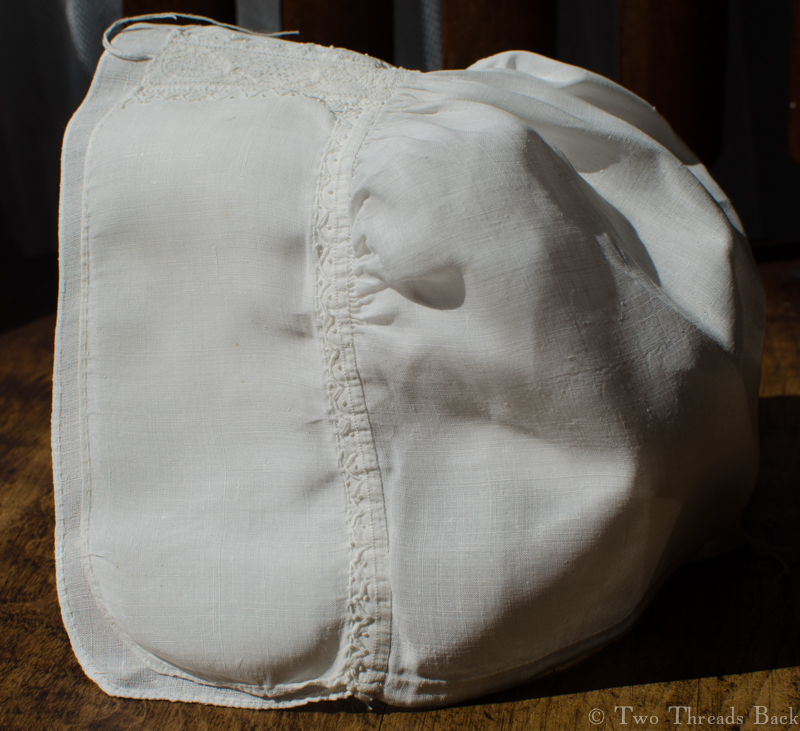
18th century linen cap for a baby.

Babies look so sweet in caps, and once upon a time they wore them from the time they were born. They wore a lot of things actually, as Thomas Jarrold wrote in this 1736 excerpt:

18th C Cap 1b
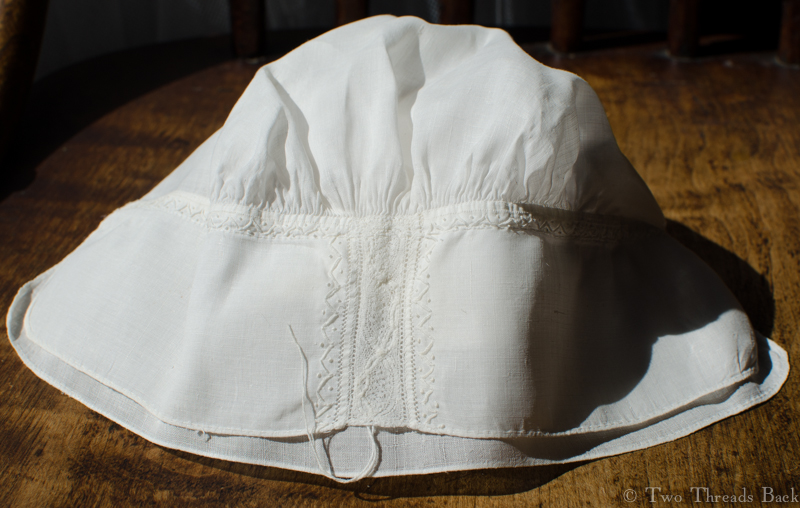
Infant’s linen cap, lace insertion on brim.

Formerly, the dress of an infant was cumbersome and oppressive, it is now much simplified, but still it admits of improvement; many parts are unnecessary, and even injurious, and require an experienced person to adjust them, and, in dressing the infant, so much time is consumed and so much toil occasioned as must greatly exhaust and weary it; to this it ought not to be subjected, that cannot be proper which distresses the child …. its dress should be light and warm, and so constructed, that the time occupied in dressing may not be greater than the capacity of the child to bear it.
18th C Cap 1fIndeed! The Foundling Museum’s record books also list a great variety of garments, and those for the head include cap, bonnet, biggin, forehead-cloth, and head-cloth – not necessarily worn simultaneously. I’m particularly fond of these little caps because they show such exquisite stitching. I don’t think anyone today does plain sewing so fine and dainty.

18th C Cap 1e
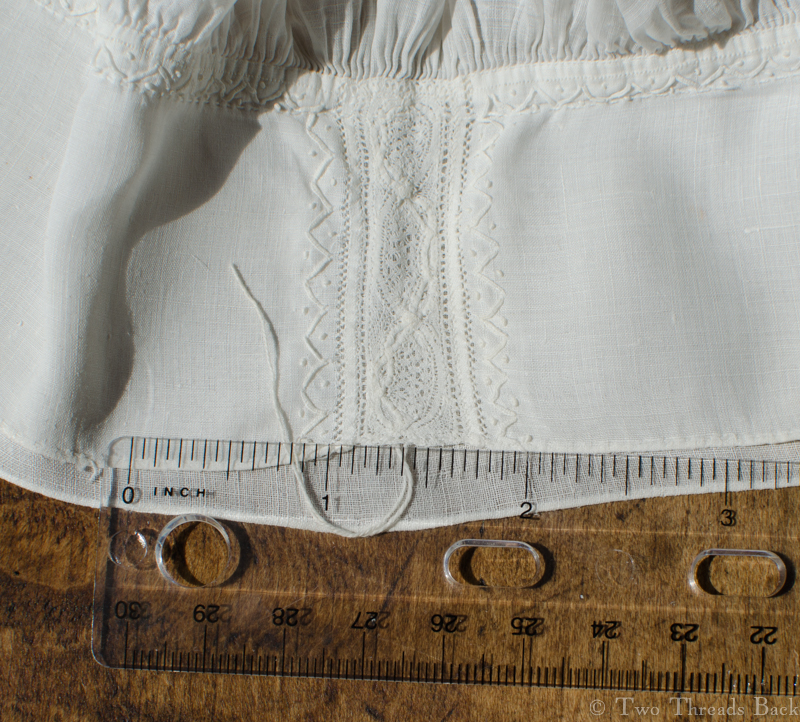
A measure to illustrate just how fine the work is – can you see the backstitching?

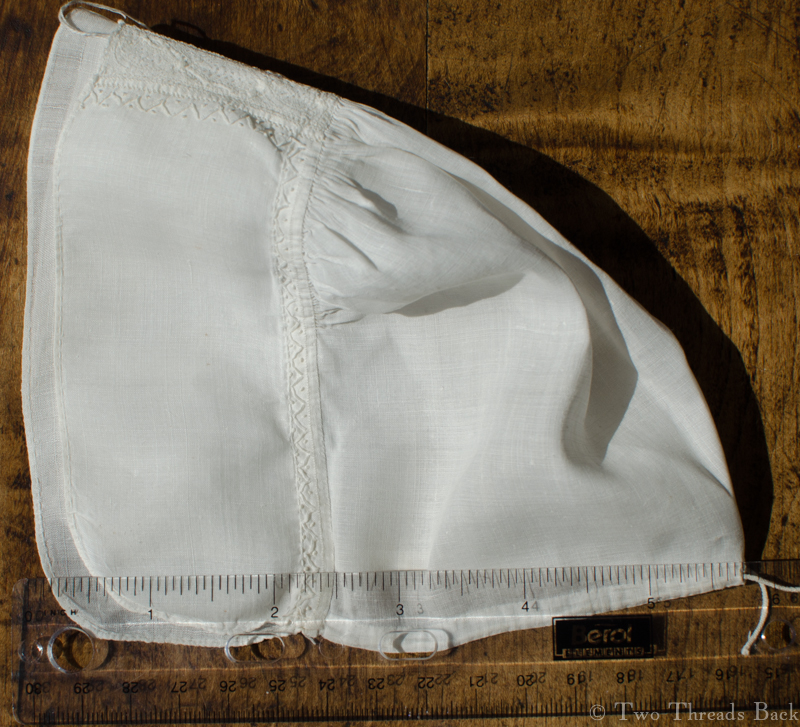
This elegant example is made of linen, and it measures about 10 inches across the double brim. From the front to the back hem is about 8 inches. The lace insertion is on the upper brim only. (If you can identify the lace, please let me know!)

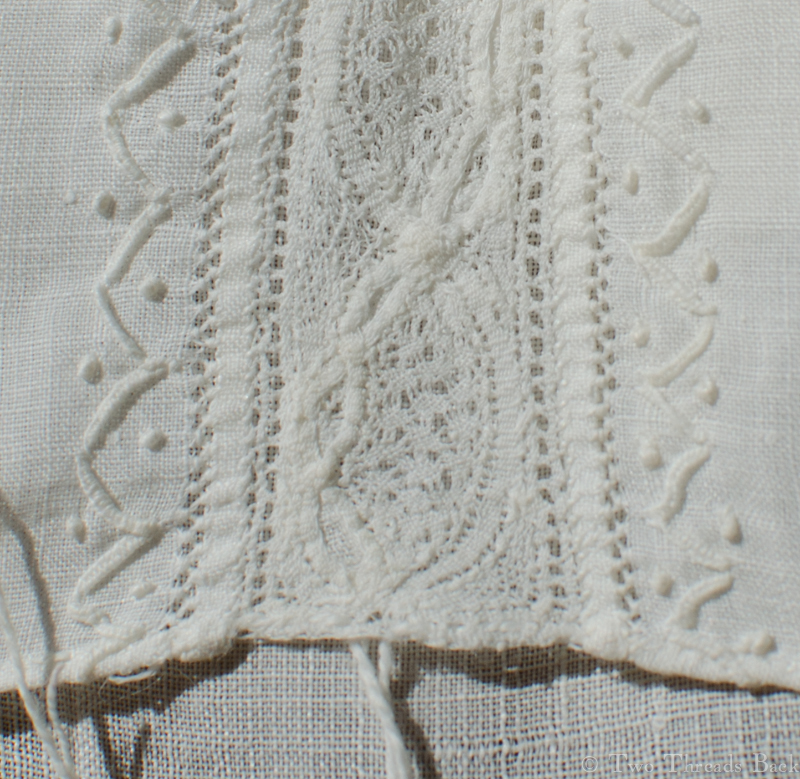
The embroidery worked along the edge of the insertion and where the crown is gathered to the brim is typical of 18th century whitework on infant clothing.

Closeup of lace insertion on cap.

One puzzling feature is the running thread along the hem of the brim. On the under layer, it terminates a couple of inches short of the center on each side. It appears to function as the familiar “stay stitching” of today. However, on the upper layer, it continues from both sides, meeting in the middle. And the threads are left hanging!

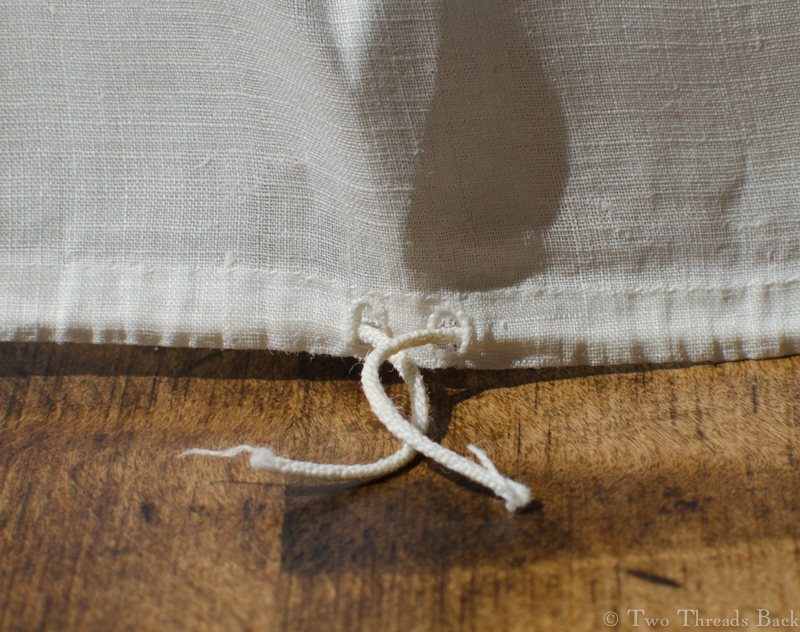
The back is finished simply, with two tiny cords to draw for a closer fit. There are no ties (or pin marks) on the cap, another feature that was common into the early 19th century. Does that suggest that another head covering was worn with it? I don’t know of a baby today who could keep such a hat in place.  And “that cannot be proper which distresses the child!”
18th C Cap 1d
Little ties to adjust the fit of the back.

Recipe for Disaster

Laundry
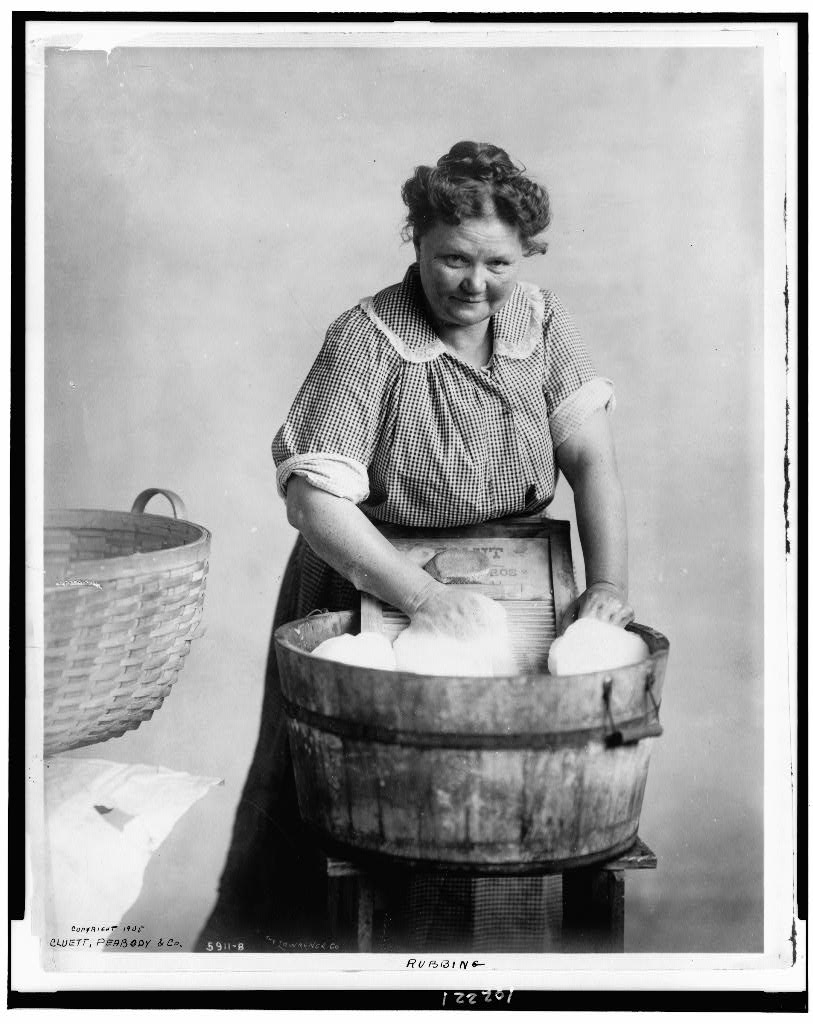
Let’s hope she’s well-ventilated.

It’s so much fun to read housekeeping manuals and other domestic how-to books from days gone by. You come across many strange things in cookery, cosmetics, and cures: some fun, some funny, and some frightening. I found this delightful mixture in an old book on my shelf, The Complete Dressmaker, 1907.

A very highly recommended cleansing fluid may be made from the following:

Gasoline . . . . . . . . . . . . .1 gallon

Ether . . . . . . . . . . . . . . .1 teaspoonful

Chloroform . . . . . . . . ..1 teaspoonful

Ammonia . . . . . . . . . . . .2 teaspoonfuls

 Alcohol . . . . . . . . . . . . ..1 gill

Mix well and do not use near a fire or light, or in a closed room. (Seriously?) This fluid cleans silks and woolen materials, leaves a new finish and does not shrink the fabric or give white goods a yellow tinge. It may be used on the most delicate colors and fabrics and is very inexpensive.

Pour into a china washbowl sufficient of the fluid to cover the material or article to be cleaned; wash as you would in water, rub the soiled spots with an old, soft brush; a toothbrush will answer this purpose on a flat surface. Wring the material out of this fluid and rinse in a second portion. Wring out again and hang out in the air until the fluid evaporates.

Or the haz-mat team arrives.

In all fairness I should admit that the contents, if I knew them, of many products we use today would be just as shocking to a non-chemist like myself.  Still, this is one recipe I’ll let pass.

A Dorset Knot – I mean Knob – Button

Dorset Knob 1
Dorset Knob Buttons, early 19th century

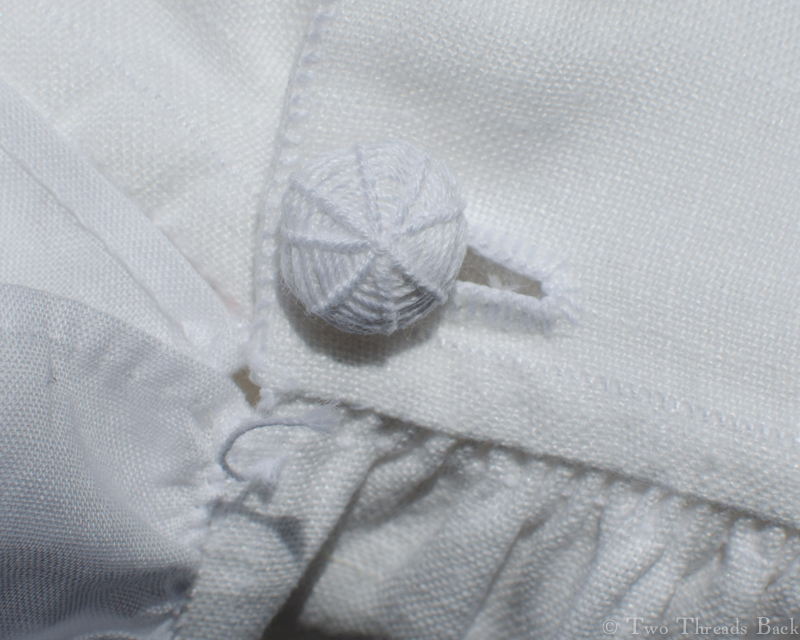
The Dorset Button! Not the more common flat disk with thread spokes, but a “high top,” a tiny sphere wrapped in a spider’s web of thread. I mentioned in the Love Shirt post that I would explain how I made the buttons for the shirt – a non-documented, unauthenticated version for the directionally challenged: me. Believe me, before I finished the trial button, it did look more like a Dorset Knot. But I persevered.
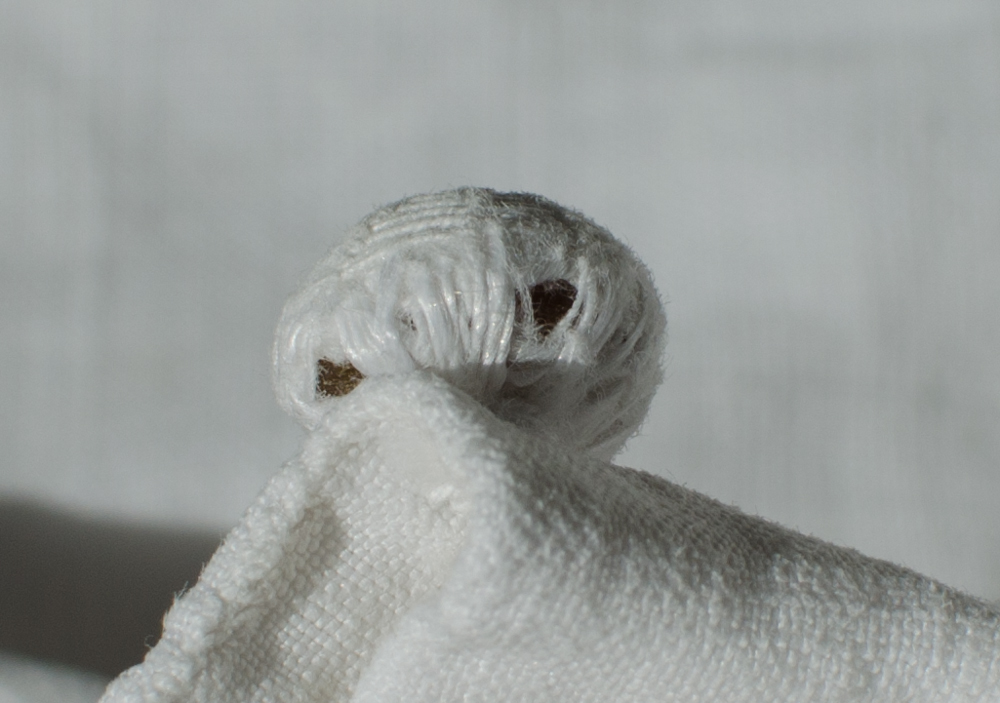
The originals I wanted to copy are pictured above. They seemed to be stuffed with a kind of fiber, but the base was a black substance with a greenish-yellow cast and waxy look. It had puzzled me for years. Then after reading more about Dorset knob buttons, I realized the material must be horn.

Dorset Knob 3
You can see the horn button base on the original.

I didn’t have horn buttons, so I used shell instead, about 1 cm in diameter. I cut a little square of linen, about 3.5 cm, and on that I traced and cut out a circle larger than the button. The scraps served as stuffing for the knob. Waste not, want not.

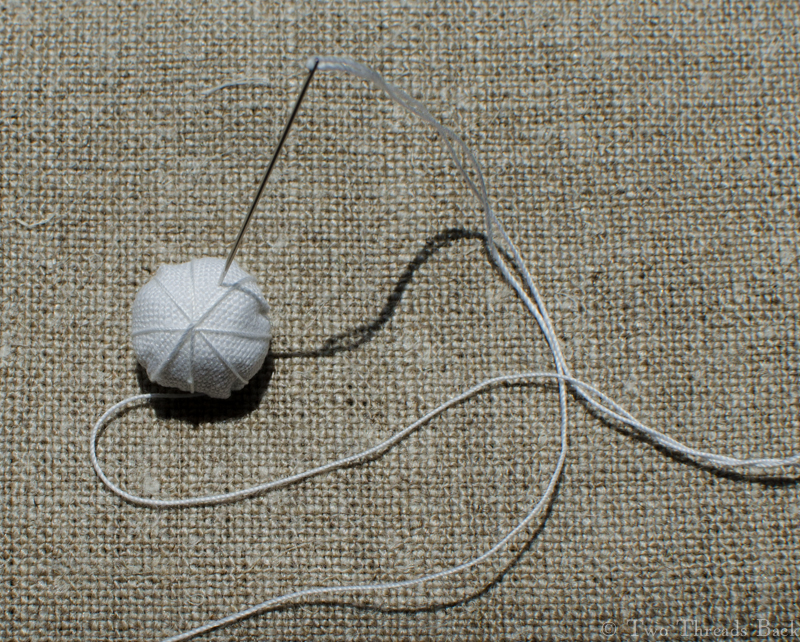
Next I ran a gathering stitch around the circle, put the scraps in the center with the flat button on top, pulled the gathers tight, and stitched them closed. Voilà! The mold!

Then I wrapped thread around the button in a compass rose pattern and anchored it. Beginning at the top, I circumnavigated the button, taking a backstitch around each “spoke” and moving on to the next. It was a bit fiddly, having to smush the lumpiness of the mold and realign the spokes as I worked toward the base.

Once I had made a final pass around the base, I took a few stitches to anchor it all. And then I had to make four more.

For those who like pictures better, see below. For those who want a more authentic method, there is a lot of serious research available online now. And for everyone else… well, there’s always velcro.

Stuffed and gathered.
Thread laced in spokes around the mold.
Dorset Knob Weaving
Circumnavigating the globe: backstitching around each spoke before going on to the next. Or back one, forward two.
Dorset Knob Done!
Dorset Knob Done!

Arsenic and Old Lace, or Why I Don’t Have Spiders in the Closet

Paris Green Perfume

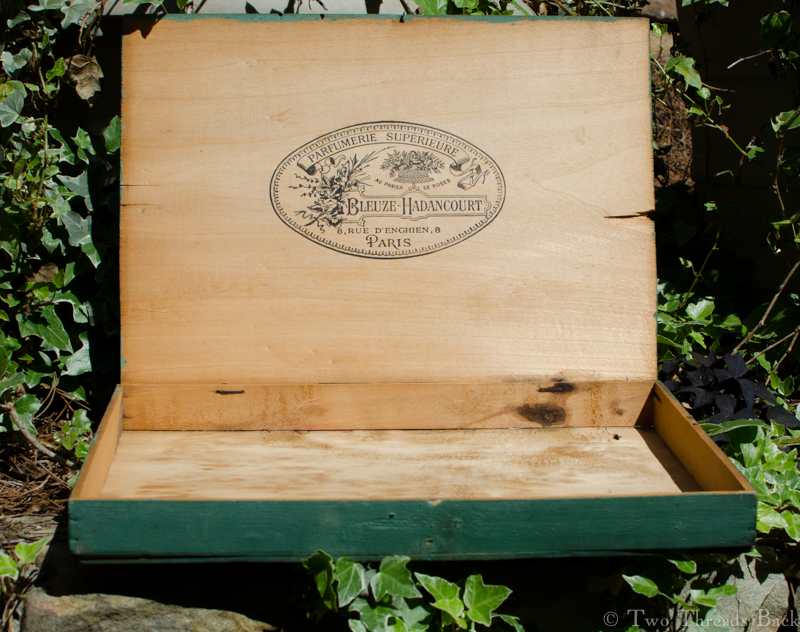
Do you like to rescue old things, just because they’re old, even if you don’t know what you’ll do with them? I do. So years ago, when I was helping with a “collection deaccession” and saw this really cool old box that was being discarded, I offered it a home with me.

A green box from Paris.
A green box from Paris, Parfumerie indeed.

It’s been upstairs ever since. Periodically I clean, reorganize, and clear out because I’m compulsive that way. Maybe it helps me handle stress, whatever. I call these events The Counting, in honor of Cold Comfort Farm. Last year when it was time for a Counting, I put all the items I use for antique sewing displays, including the old painted box, together in a tightly sealed plastic bin.

In the following months I went up a couple of times to pull something out of it, and when I lifted the lid, gasped and choked over fumes some sort. The smell was a little like really nasty varnish, maybe mixed with bug spray. It was distressing because I didn’t know the source and I didn’t want it polluting my old textile bits.  I got up close and personal, sniffing the sewing box, the tools, the little lace sleeves and collars, and even the parfumerie box, but I couldn’t tell where it was coming from.  Since the green box was the only thing relatively recently acquired, I assumed that was the culprit and took it out. No more smells.

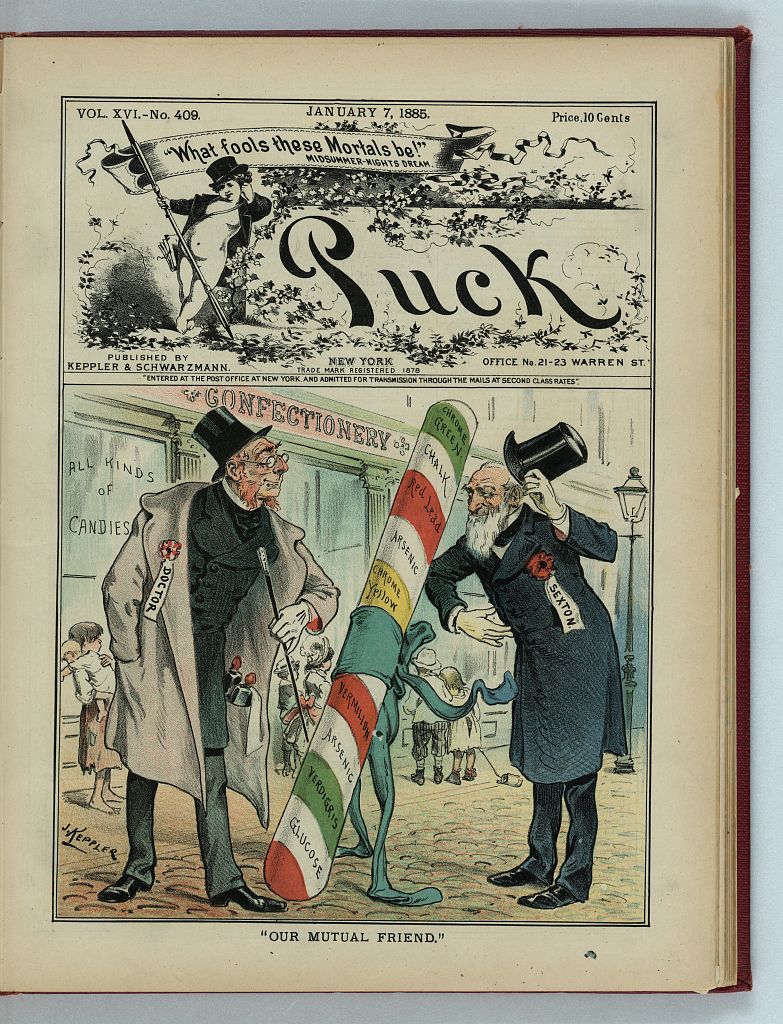
Early eye candy.
It’s just sat on a shelf, wrapped in paper, ever since. Until this week when perusing the fabulous Wearable Prints, 1760-1860, History, Materials, and Mechanics, by Susan Greene, and reading about green dyes. Of course I’ve heard of frequent use in the 19th century of arsenic in dyes, paints, and foods – it was even a scandal in its own day. But I never thought it would provide me with anything but some occasional macabre reading. Now I wondered, have I been harboring a criminal, a poisoner?

Some more internet research has left me a little warier of casual collecting or repurposing. I really don’t know if the green box is toxic (it isn’t all that old), but I’m not going to take any chances. It’s sealed up tight and stored under the eaves in the attic now. I can’t bring myself to trash it because you never know when you’ll need a nice conversation piece. For unwelcome visitors.

The Conversation Piece


Featherweight Champion

Featherweight

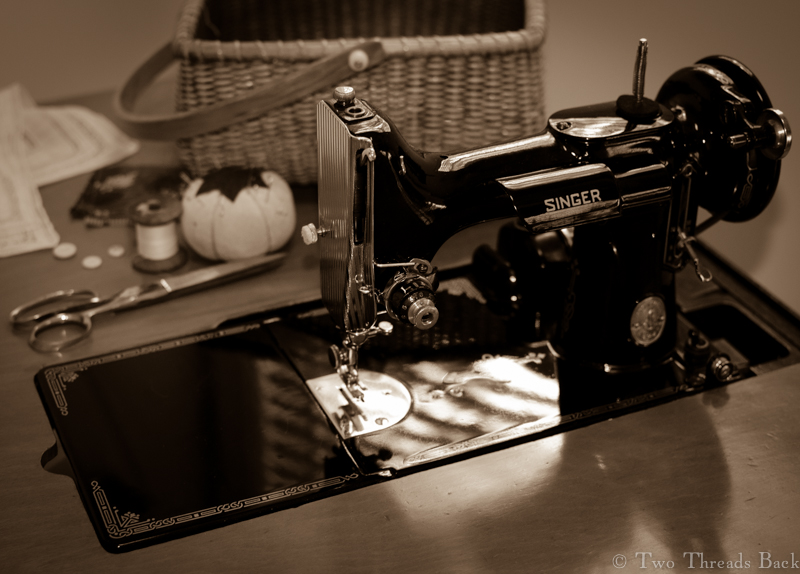
I suspect I’ve got just as many ancestors as anyone else, but mine weren’t notable for leaving closets and attics full of heirlooms. The oldest thing I’ve got is my DNA. However, that doesn’t mean I don’t have some treasures! One of my dearest is my grandmother’s old Singer sewing machine. Yes, me. The hand sewing monomaniac loves a machine.

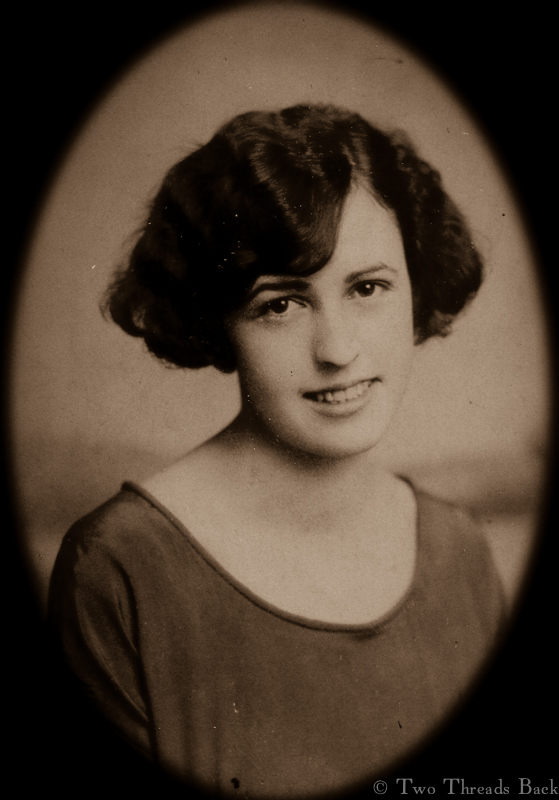
My grandmother, an amazing seamstress!
My grandmother, an amazing seamstress.

She (the machine) was born Christmas of 1948. My grandfather bought it as a present for my grandmother that year. I don’t suppose anyone knew that the featherweights would become classics.

She (the machine) had already earned retirement by the time I welcomed her into my home, but nope, I kept her going. She only does straight stitch, can you imagine? Why would anyone, some quilters excepted, want a machine that doesn’t do fancy stitches? Not even zigzag?

Weeell, just ask a featherweight fanatic. Simple, small, light, reliable, long-lived. What more could you ask? I wish the same could be said about me – well, maybe not the simple. If you have time, take a look at Singer Instructions for Art Embroidery & Lace. The possibilities using an older machine, even treadle, are dazzling. It’s hard to believe anyone could do such elaborate work without today’s technology. It was published (1911) and republished, and can be downloaded free  in a variety of formats. So don’t underestimate their potential, between the attachments and techniques, a seamstress could really do just about anything with an old Singer.

Notice I said “a seamstress”in that vague and distant not-me sort of way. Because just about all I’ve done is use the basic set up and a couple of attachments. Even the buttonhole kit remains in its sarcophagus, waiting for the day I’m brave enough to resurrect it. Although I do have Grandma’s buttonhole samples resting under the presser foot, like they always did.

For my birthday last year, I had the machine restored to her original condition. I found an expert who did a superb job and a talented friend who did the table. My little champion sewed beautifully before, but now she’s a dream to use. Even if only for plain (machine) sewing!

Shiftless

Shift Full
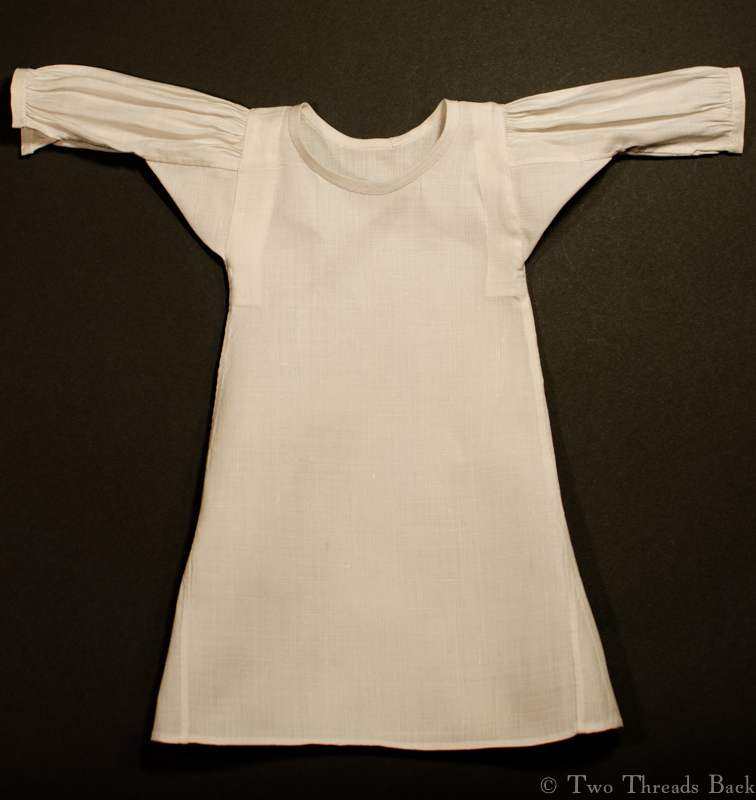
Maybe Graceless, Pointless, Feckless, and Aimless – but not Shiftless!

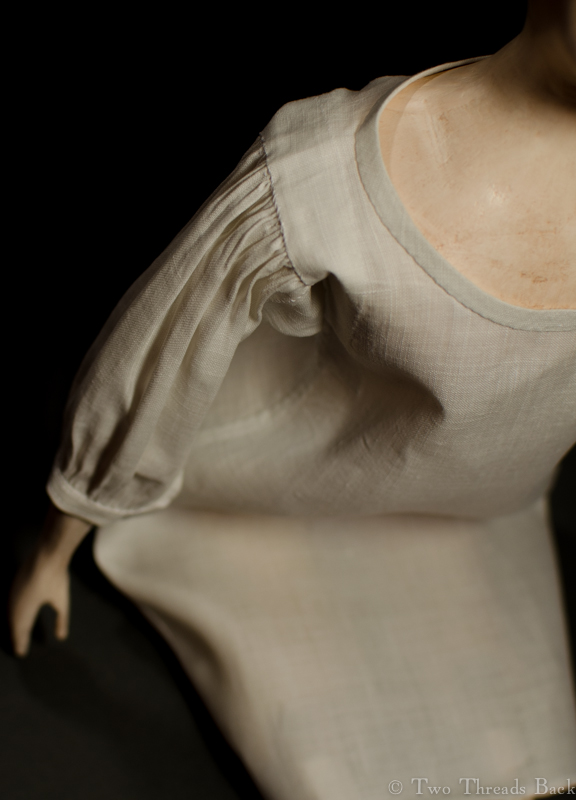
Shiftless no more! Pharaby can compost the fig leaves now.

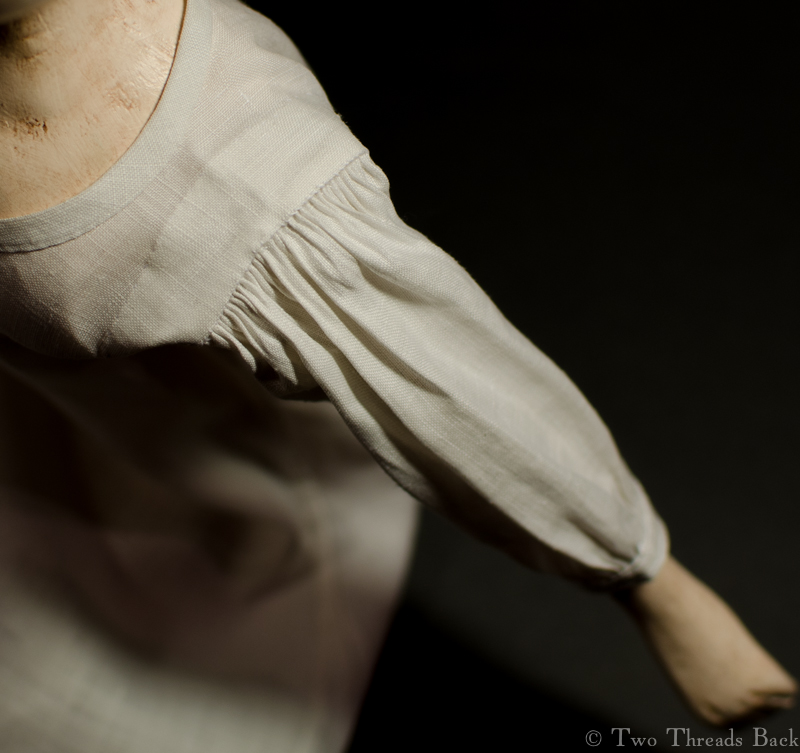
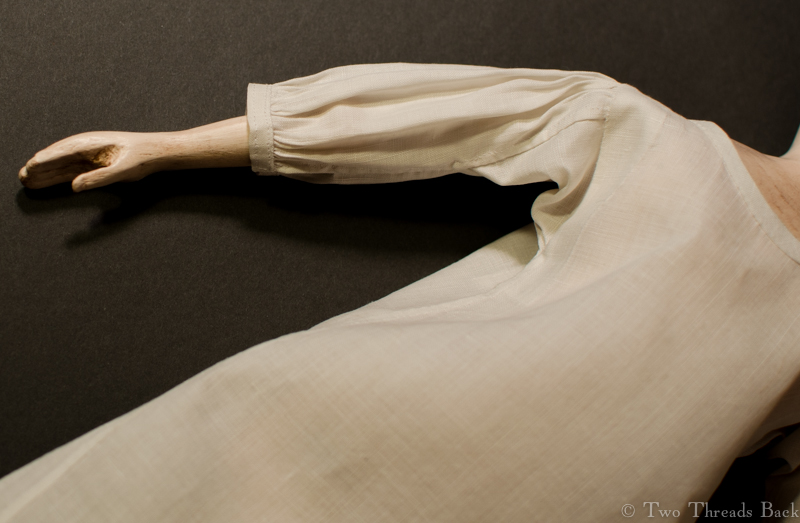
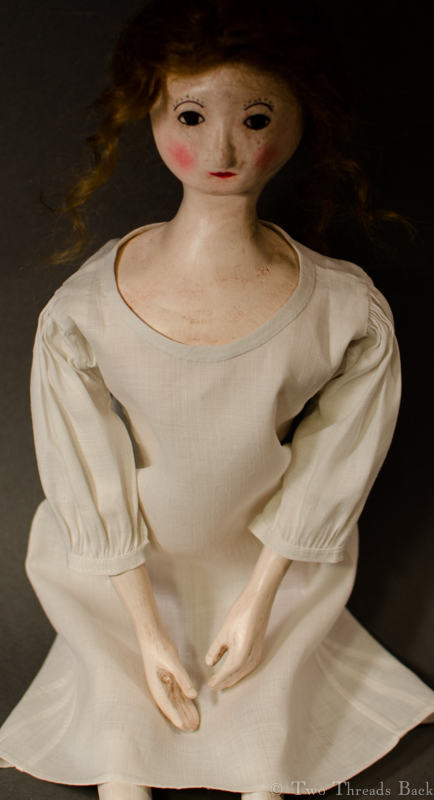
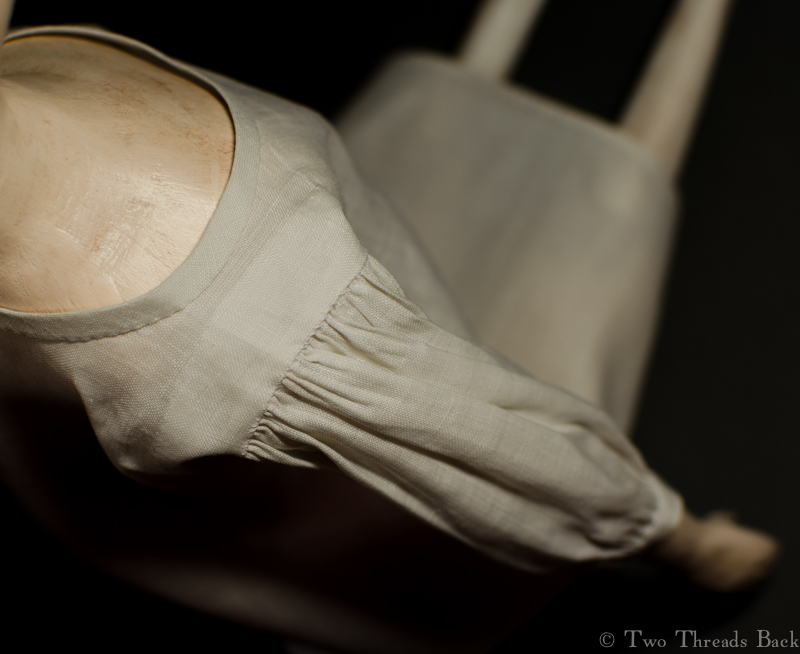
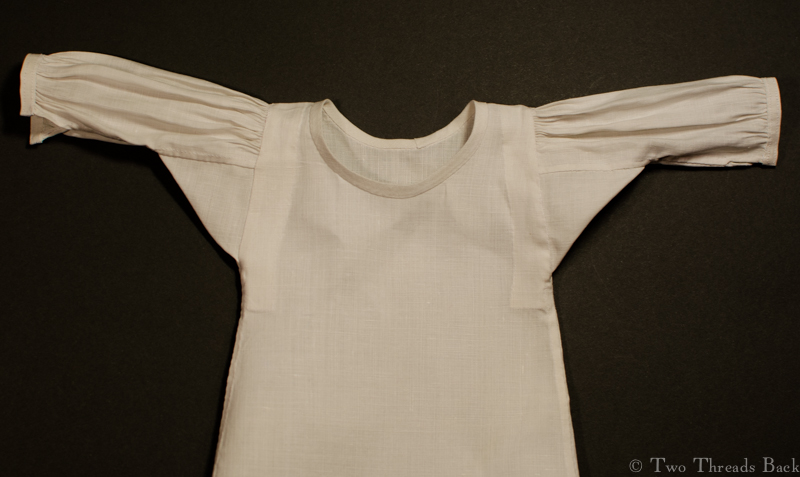
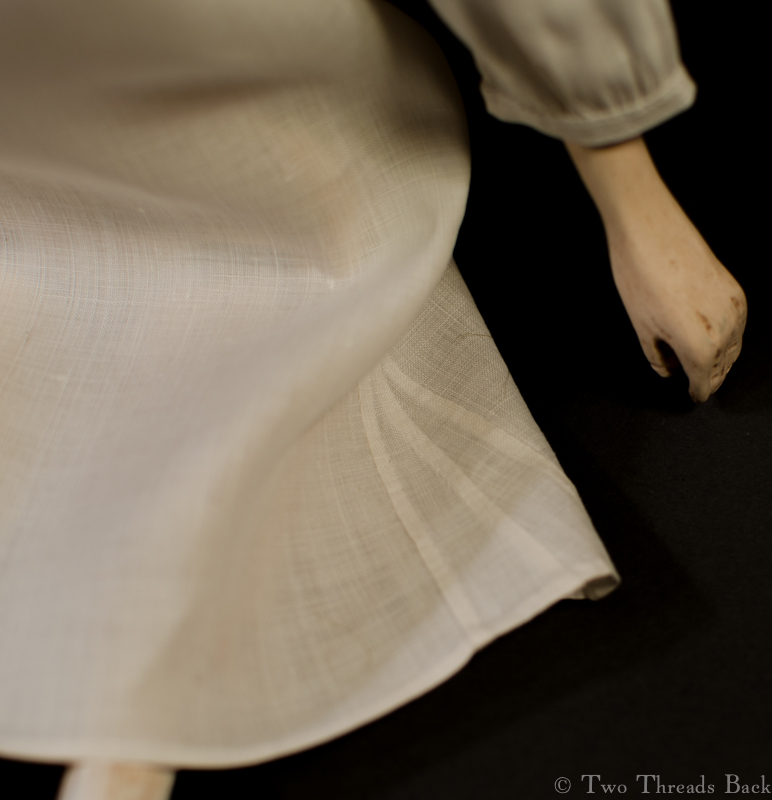
To make her shift, I used some fine old linen with a silky feel, and  I scaled a pattern in Costume Close-Up (is there anyone who doesn’t use that pattern?). Then I proceeded to sew up the gores, body, and neckline. Shift Hem When it came to the sleeves, though, I was perplexed. What was typical, plain or gathered? I reeeeally wanted to do gathered.

Not being an eighteenth-century-fashionista, I pulled out costume books and scoured the internet for guidance (see this awesome study). Most of the images of extant shifts I found – there were a few exceptions – had sleeves without gathers at the armscye, or shoulder. But period art seems to imply that  shifts did have them; otherwise, how so fluffy? That means that 1) I didn’t look in the right places,  2) I couldn’t see details and misinterpreted the pictures, 3) they didn’t survive as often, or 4) some dates were wrong. Maybe all four, plus some more reasons I haven’t thought of yet.  Oh well.

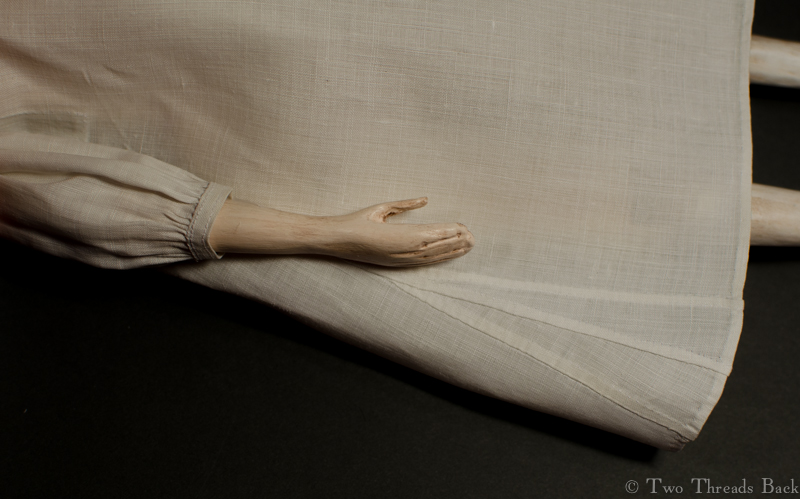
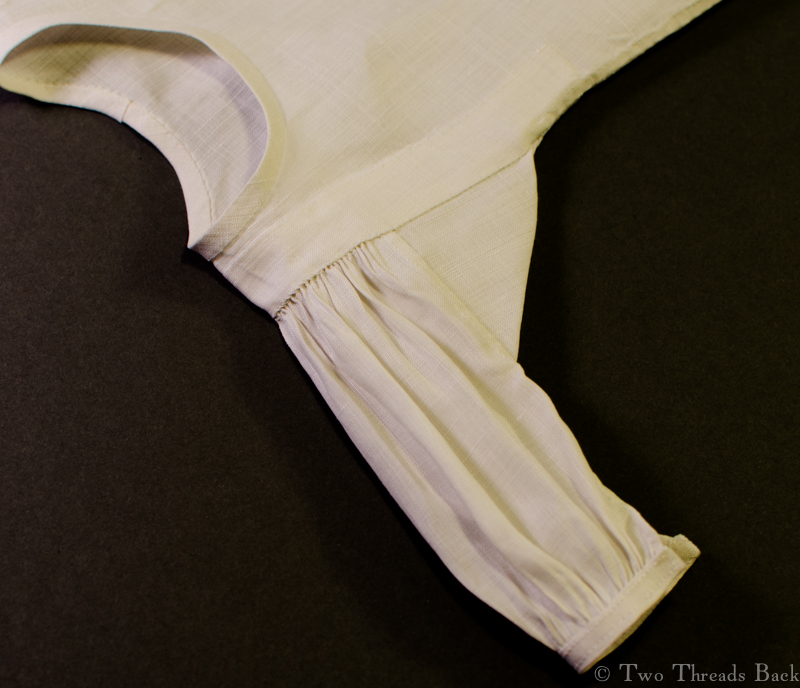
Shift Left ShoulderHowever! I found two or three images of exquisite little shifts on early wooden dolls in museums, and those had sleeves that were gathered at the armscye. I think. Anyway, I love setting in gathers and it’s my toy, so that’s what I did.

Now another dilemma. To stitch or not to stitch, that was the question. I was so accustomed to seeing the stitching (now called backstitching) on the wristbands of men’s shirts, that her little cuffs looked as bare as she did.   But, duh for me, I’d already set in the gathers. Could I do it, post hoc stitching?  Why not – if there’s a harder way, I’ll find it. You don’t see any close-up photos of the cuffs here, do you? Ha.

Shift RightNext came the binders, those reinforcing strips that are a standard feature in men’s shirts. I can only guess how common they were in women’s shifts, because they don’t usually show in photos, nor are they noted in descriptions. But I’ve long speculated that originally binders were there just for “setting in” gathers – support for a stress area was just a bonus. So in they went.

Now the question you’ve been too polite to ask: did it fit? Pharaby said it would do. She’s not fussy. Any doll destined to wear fashions spanning a century or so – at the same time – can’t afford to be.

Oh, but she does expect me to mark her shift and add ties for her cuffs. She hasn’t decided about frills.

Shift Pharaby

Shift Gathers

Shift Right Shoulder

Shift Neckline

Shift Gores

Shift Sleeve


A One Stitch Wonder

Calico Full

I’ve always loved order and simplicity. That sounds awfully smug, but I shouldn’t commend myself since it’s probably because my brain can’t handle very much at one time. This craving for minimalism is getting worse as I get older. Try googling the minimalist lifestyle and maybe you’ll see the attraction! Or not.

A conversation the other day started me thinking about simplicity in plain sewing. Hmm. What was the most basic stitch? Well, anyone who uses old sewing machines knows you can do just about anything with a straight stitch, which is closest to a backstitch in hand sewing.

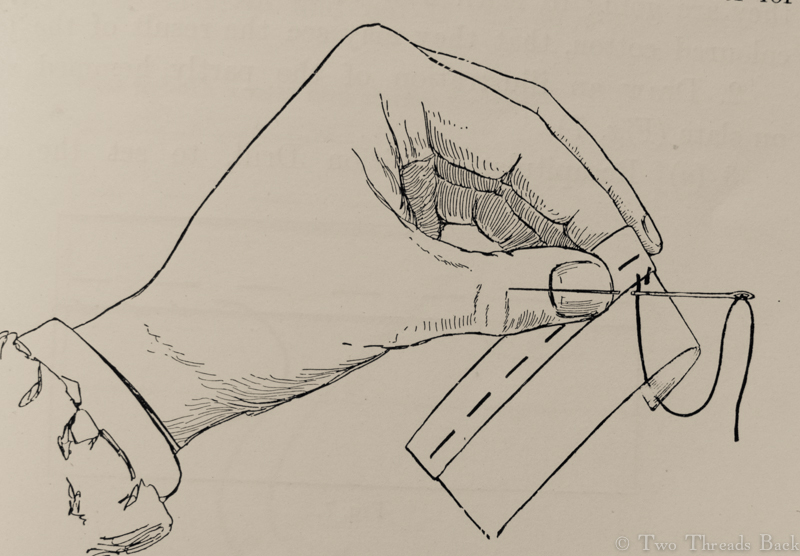
But backstitching wasn’t the primary stitch in 19th century sewing manuals, nor was running, as I learned when I studied plain needlework instruction. It was hemming. That’s the little slanted stitch that you would use to (surprise!) hem something. Once your hemming was neat enough, you could learn to work other stitches.

Hemming
“Simple hemming is the first step on the road to proficiency in needlework.”

By the way, I’ve noticed that most costume historians, or at least ones I’ve heard and read, call this same stitch “whip” instead of “hem.” For example, “the edge is folded back and whip stitched in place.” But then, why shouldn’t they? I understand perfectly what they mean. If you’ve seen my post on muslin you’ll know I’ve come to terms with terms!

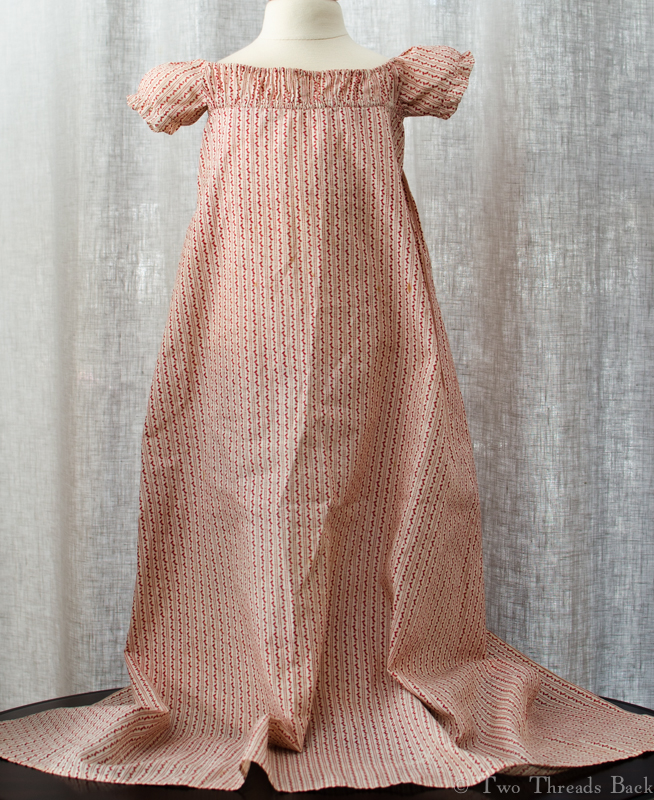
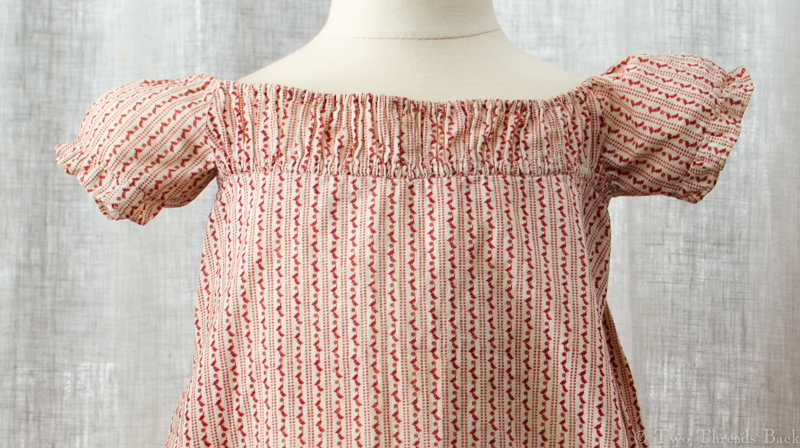
Getting back to simplicity. I decided to go closet diving for something that used only that one stitch, hemming, to construct a garment. And I found it! A Regency era calico baby dress. Granted, it didn’t have enough pattern pieces to warrant many stitches. But the whole gown was made by hemming!

Calico Baby Gown, c 1815.

Or was it? Well, in my eagerness to find what I was looking for, I didn’t look close enough, and I didn’t think it through.

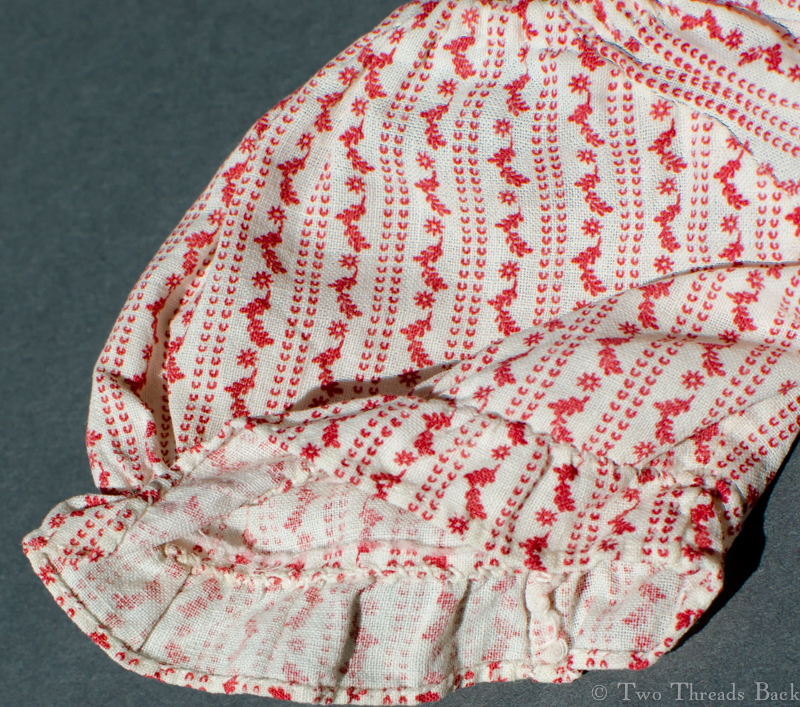
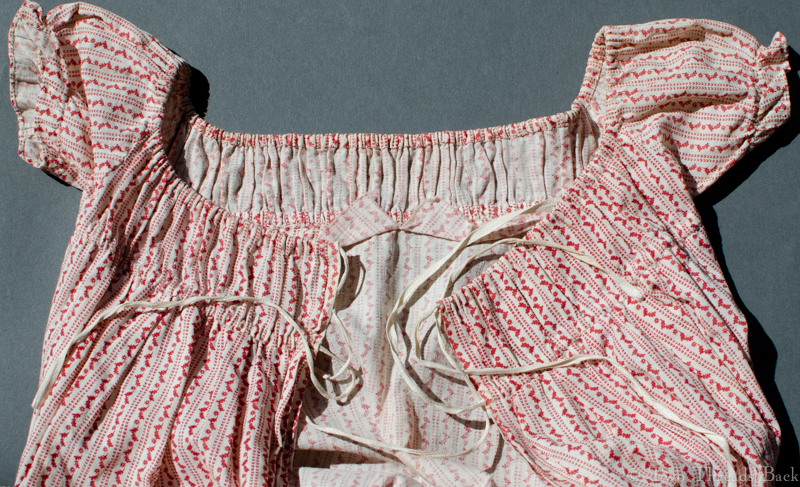
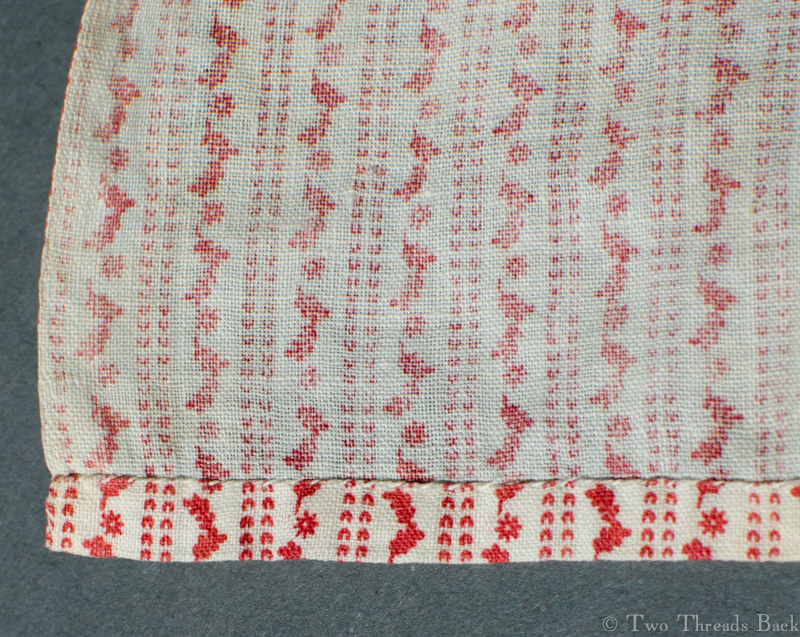
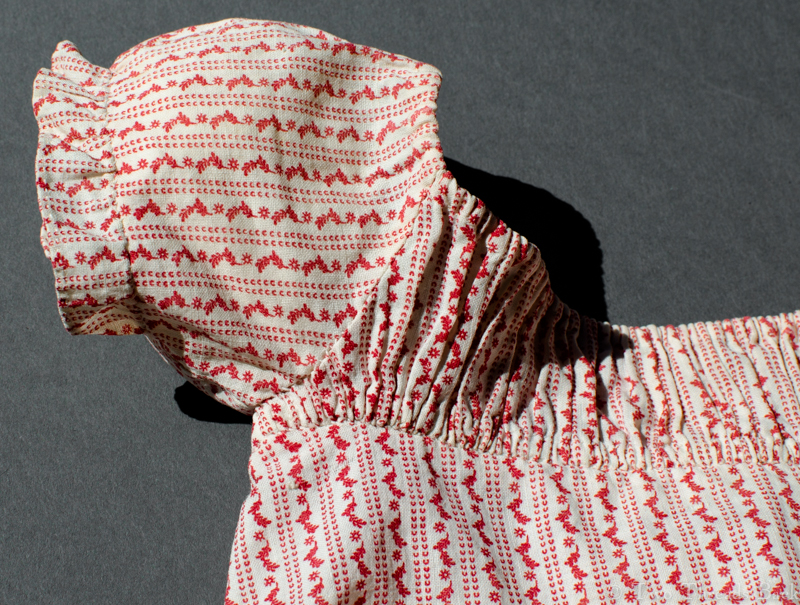
The skirt was made of one piece and hemmed, check. The casings for the strings were hemmed, check. The tiny ruffles on the sleeves were hemmed, check.

Calico Hem
Hem.

Calico Sleeve
Casings for drawstrings.

Sleeve ruffles.
Sleeve ruffles.

Calico Back
Back opening.

The bodice was hemmed to the skirt – whoa! Wait a minute. That wasn’t right. Things were unraveling. I mean my clever discovery, not the little frock.

Yes, the stitches looked the same at first glance, but any experience (or a practical mind) would tell you that you have to hold those two pieces face to face and sew them together. That makes it seaming, as they would have said, or overcasting, as we’d say today. Same thing for the ruffles attached to the sleeves.

And there was more. The tiny bodice sides, all three-quarter inch of them, were running stitch. As were the sleeves to the body – and then overcast!

So much for that, no single stitch here. I confess it doesn’t really bother me too much that it’s not pure minimalist stitching. I’m learning to slow down and look closer. And it’s still a wonder of simplicity!

Disarmament (En) Treaty

pharabydisarmed

It occurred to me this morning that I left out something in my last post. I forgot to mention the delay between doll wiggery, and doll wardrobe.

My dear, long-suffering husband! I like to modestly claim that he owes his great patience to me. I not only set the example myself, but I make it a point to try his, regularly.

Pharaby was all ready to dress, except for attaching the arms. I knew if I made that simple little hammer tap through the layers of linen and reinforcing leather, I’d mess it up. So I wanted him to do it. I made the request, a time or two, and waited. And waited.

After a couple weeks I thought it was time for another delicate reminder. I know he is very fond of dangerous metal things that make loud noises. So I tried a new approach, thinking it would have particular appeal, especially if spoken with a charming southern drawl.

It worked! 🙂