Picture This

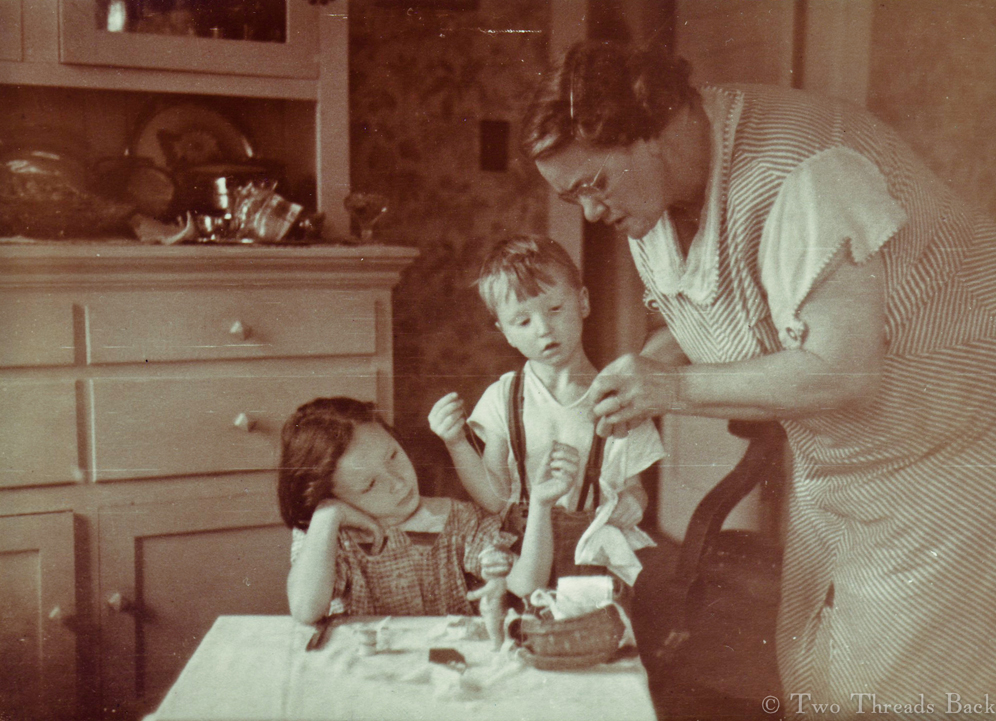
Sewing Lesson 1934
The Sewing Lesson, 1934

I’m naturally drawn to images of sewing, and I come across a little treasure now and then. There’s something very touching about a pose like this. The scene is perfect in its way. The little girl with her tiny sewing basket and doll, little brother wearing suspenders and holding the thread, and mother carefully fixing the work! It makes me wonder about their lives – who were they?

Well, in this case I do know their names because they’re written on the back of the photo. Iva Fuller, Jean Ray and Charlie Ray. So I suppose she’s not their mother, maybe an aunt or grandmother? I guess it’s a lesson to me about creating stories around pictures and objects. But I doubt it will stop me from doing it!

A quick search did not help me identify the people or place. Do you know them? The year was “about 1934.” And I’d love to hear from someone who can identify the type of doll!
The Ubiquitous Cuff

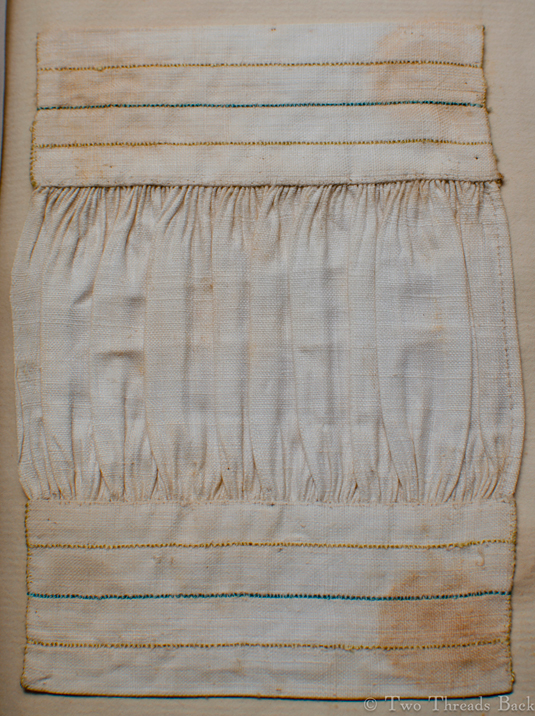
Cuff 1820
Sample of a cuff from an 1820 sewing manual.

The little wristband  appears in English, European, and American school samplers throughout the nineteenth and into the early twentieth century. Girls were first taught the basic stitches and expected to master each one. But of course the purpose of learning stitches is to make something!

Cuff IH
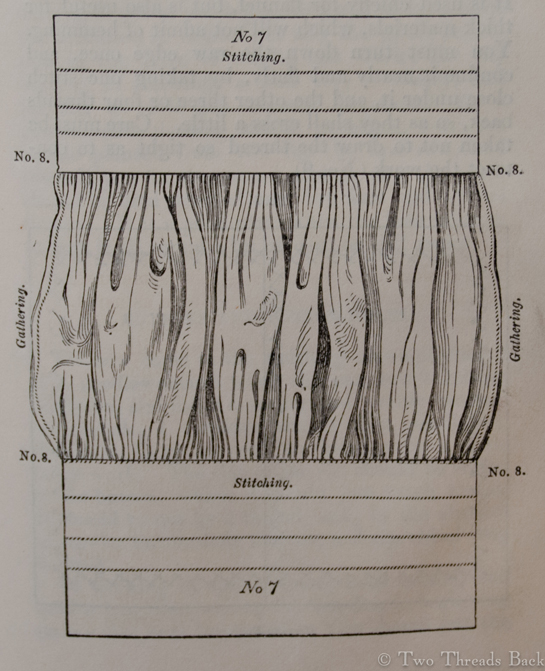
Illustration of a pattern for a sample cuff, 1850.

When they were accomplished in running, stitching, and seaming,  the time had come to assemble parts of a garment. This was often how they learned to stroke and gather tiny pleats into a band – each side gathered and the pleats attached separately on both sides. The ends of the band were seamed (overcast) with very tiny stitches. What could be more suitable than a little cuff? It only required a scrap of fabric and was easy to handle.

This method of inserting and fixing the sleeve in the band is also a clue when examining a garment to determine its age (or whether it’s a good reproduction!). I’ve noticed that almost all early pieces of plain sewing use this method for cuffs, collars, and waistbands, anything gathered and set into a band.

After the sewing machine became common later in the century, construction methods adapted to its use. Even though some plain work was still taught using the old method, the new way became standard – to the point where today we rarely know any other.

Cuff1851
Another sample of a cuff from a mid-19th century manual – see how tiny the stitches are!