Heart-bit? No, I don’t mean smitten with love, phrased in a folksy sort of way. I mean a little bit, or piece, in the shape of a heart! Worn right over the heart.
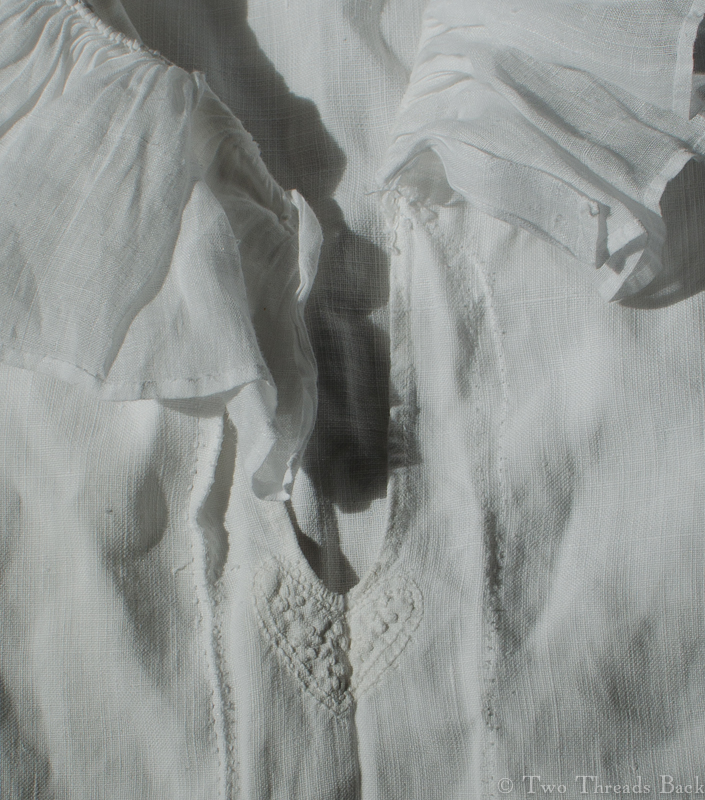
Heart-bit with decorative knots on an early 19th century man’s fine linen shirt. The shirt was rescued from captivity where it had been altered and abused with scissors, sewing machines, and synthetic trim!
That perfect specimen of plain sewing, The Shirt, has a romantic soul. Back in days when shirts were only slit down the front, and not buttoned closed the full length, that end of the opening was vulnerable to tearing. There were various ways to prevent it, and I came across references to this lovely way when researching early sewing instructions. For example, Instructions for Cutting Out Apparel for the Poor, 1789, givesa description of cutting linen for shirts:
This half overplus being a quarter of a yard in length, serves to cut out hearts for the bosoms.
Or a sewing manual from 1833:
HEART-BIT
Before commencing the shirt, small pieces of muslin are given to each girl, for the purpose of learning to settle in, and work the breast-gusset.
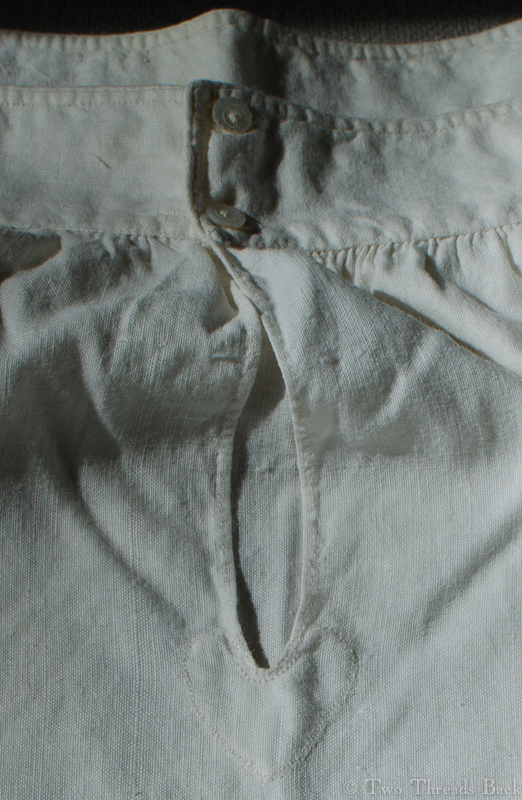
Of course not all shirts had them. Some had a triangular gussets, or a buttonholed reinforcement, or a tiny rectangular piece to prevent a tear, and some had nothing at all. But you have to love linen with a heart!
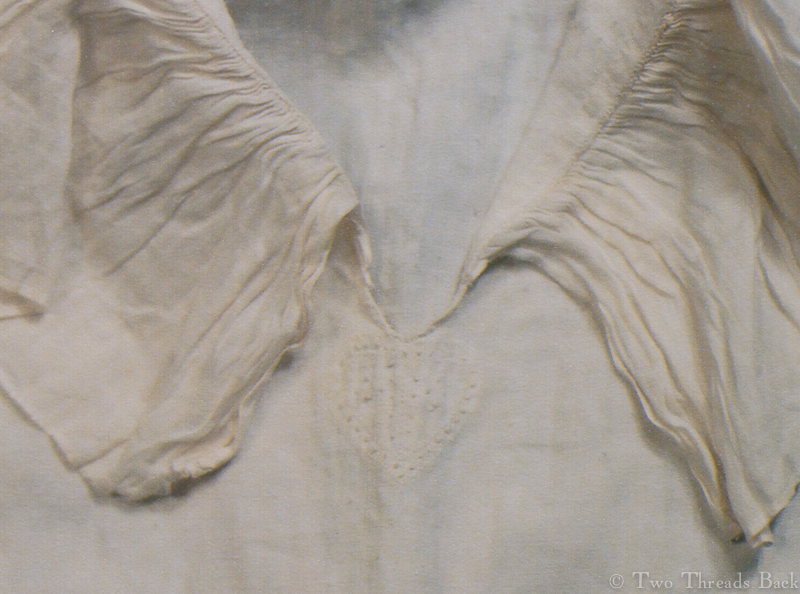
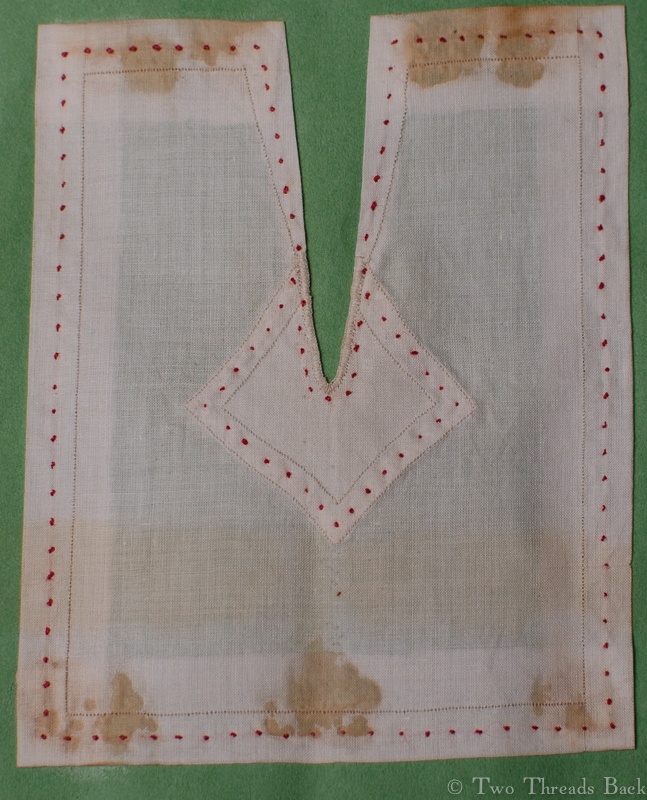
Another early 19th century man’s fine linen shirt, with a beautifully worked heart-bit. Unlike the shirt above, this lucky gentleman spent his retirement carefully packed away.An early 19th century woman’s chemise made of muslin, showing she had a heart, too.A girl’s sewing manual from the mid-19th century displays an alternative shape for the gusset, but still called in the instructions a Heart-piece.
Once upon a time, folks from all over would gather, bringing their best work to show off, to compete for prizes, and to sell. These were the agricultural fairs, a tradition whose roots go back many centuries and places. Nineteenth century America saw their development as a way to encourage innovation. By mid-century, agricultural societies were flourishing.
Today their records are a rich source of information on agricultural and domestic history of the era. The premiums, which ranged from a few cents (female enterprise) to substantial sums (men’s categories!) must have been the source of great pride, outrage, bickering and boasting – oh to have been there to hear the drama! I spent a happy afternoon several years ago in a university library poring over the books full of juicy details. Yes, that was before google books.
“An embroidered map of Savannah… best collection of fall peaches … beautiful specimens of sewing silk … second best profane landscape … woolen counterpane, maker’s name unknown … from the crowded state of the room, and the great number of articles present, several paintings could not be found … second best cow “Eloise” … the committee exhibited a marked partiality for apple pies, and awarded with singular unanimity fifty cents each to Mrs. … a basket of superb wax flowers, which the chairman of the committee on flowers pronounced superior to any in his department of natural ones … S. D., 7 years of age, worsted work executed while lying on his back with a broken thigh, .50 … worsted quilt, said to contain 9765 pieces; ingenuity and labor … lemons of enormous size, preserved in alcohol…” – the list fills volumes.
Crackers, lightning rods, stoves, plows, false teeth, butter, Muscovy ducks, headstones, cologne, down tippets, dog’s hair socks, essays, fishing boots, parsnips, daguerreotypes, golden pippins, rocking chairs, canaries, grain bags, gold pens, baby-tender. Was there anything they didn’t show?
To paraphrase one report, I am greatly embarrassed on account of the limited means placed at my disposal to mention such a large number of exhibits, and I wish to say, that I doubt not there are many articles not noticed which are as well worthy of premium or gratuity as some which have been thus honored. I am reluctantly compelled to pass them over.
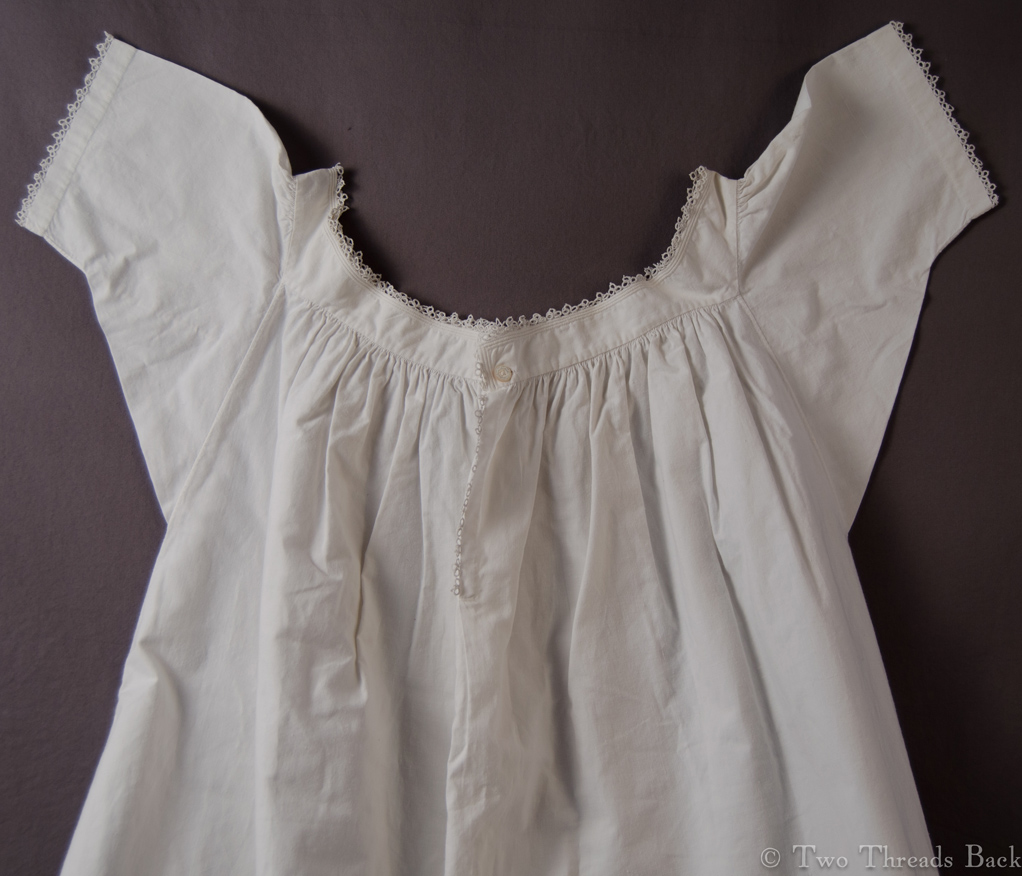
Hand Sewn Chemise
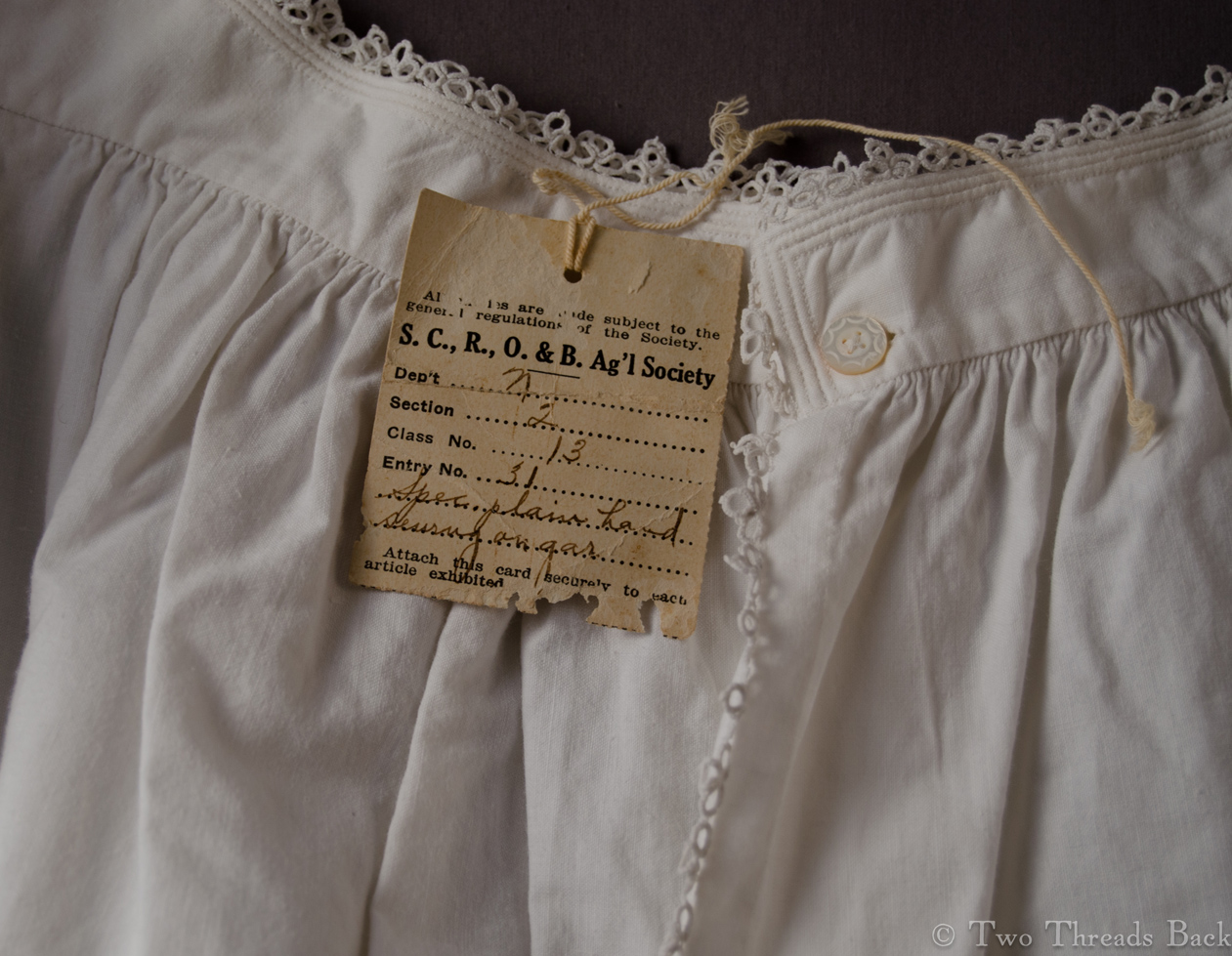
One category is especially interesting to me: plain sewing (surprise!). Here are some examples from the Sandy Creek, Richland, Orwell, & Boylston Agricultural Society of New York, c1860.
The chemises are exquisite, and it’s easy to see why their maker entered them in competition. I regret to say that I don’t know if they won a prize or not. There was no record of one with them. Nonetheless, they are fine work and perhaps the maker would be even more pleased if she knew how much, and how long, they would be admired!
By the way, check the calendar and visit your own state or local fair. If you’ve never toured the exhibits before, you’ll be amazed!

 Two Threads Back