X Marks the Spot

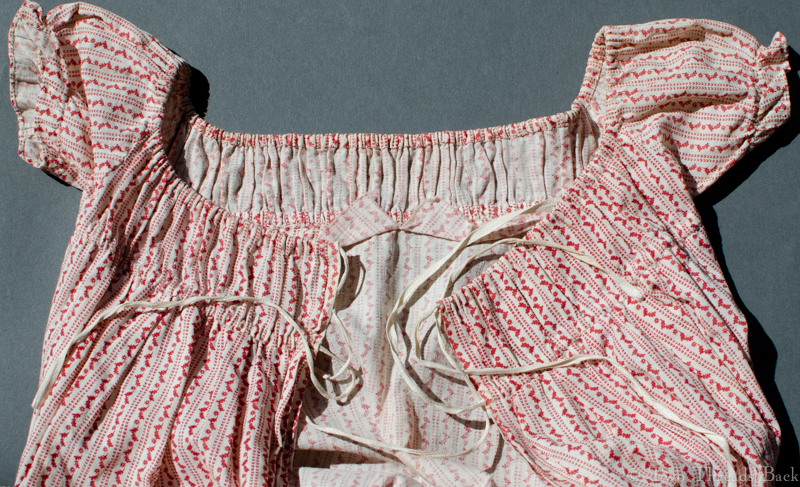
Pharaby's shift is now marked.
Pharaby’s shift is now marked.

“The art of marking was brought to perfection many years ago, and if our great grandmothers could but see the meagre attempts made by us now-a-days, I fancy they would have some contempt for the system by which our needlework abilities are tested.”

– A. K. Smith, 1892

They would certainly have some contempt for how long it took me to mark Pharaby’s shift, regardless of the quality of my work! I should have tended to this little essential when I first made it, but better late than never. We can’t have her single shift getting lost in the laundry, can we?
X Marking 2
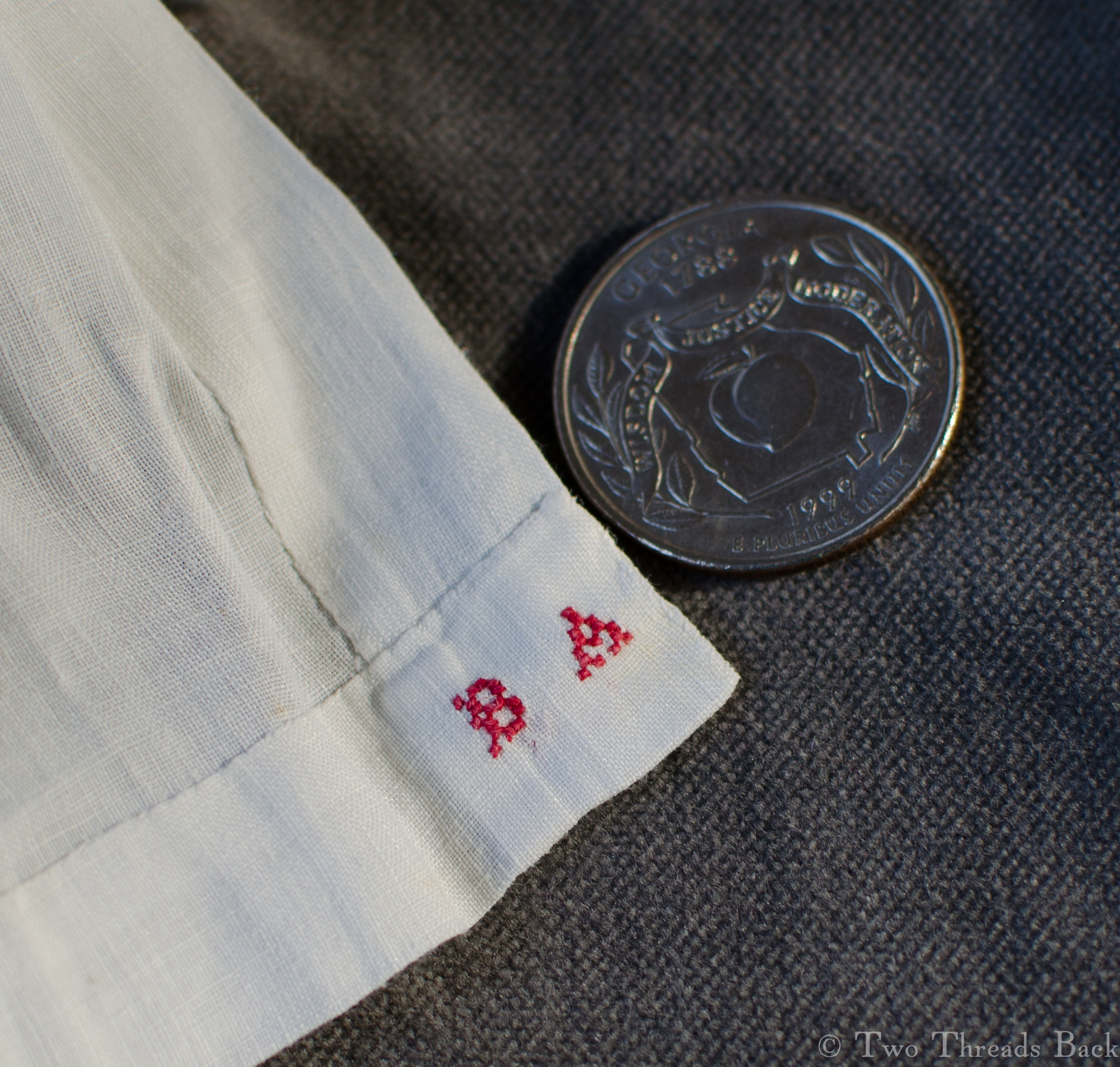
A lovely linen baby shirt marked with Turkey red cotton; note the quarter next to it for size. I’ve kept the image full size, for anyone who wants to view beautifully done original marking up close – just click the image.

First I had to do some practice stitching. Sampler collectors and makers would laugh at how astonished – and intimidated – I am by the miniscule cross-stitches made during the past 200 years. You can see from this little baby shirt (last quarter 19th C) how blithely they marked countless linens. I’m guessing at the “blithely” part, but since I have many shirts from this baby, somebody was doing a lot of marking!

Making it to Pharaby’s scale would be impossible, since barely matching ordinary period work would be the best I could hope for.

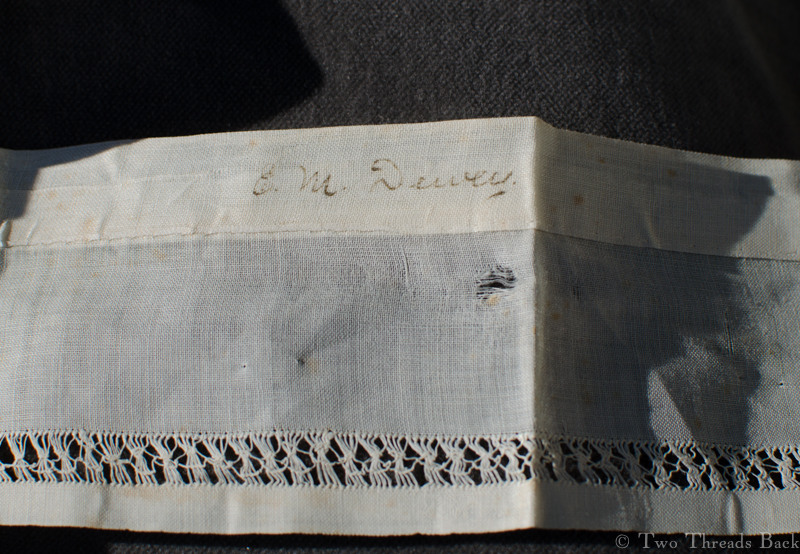
I used a pretty little c1900 linen collar to experiment on (damaged – I wouldn’t inflict my needle on it otherwise), as you can see in the picture.
X Marking 3
A linen collar marked with ink that I used for practice. “No textiles were harmed during the making of this experiment.”

Since the threads in linen are not all exactly the same size, my stitches over two threads looked a bit messy. I tried sewing over four (too big) or over however many made a perfect square (too awkward). By this time I was just about ready to use ink, like the collar owner! But hey, I’m all about plain sewing, right?

A lot of trial and error showed that to be small enough, I’d have to work over two threads, no matter how lumpy my letters looked. I found that just like many projects, things that look pretty awful as I’m working, look a little better when I’m done. Or maybe I’m just cross-eyed by then!
X Marking 5
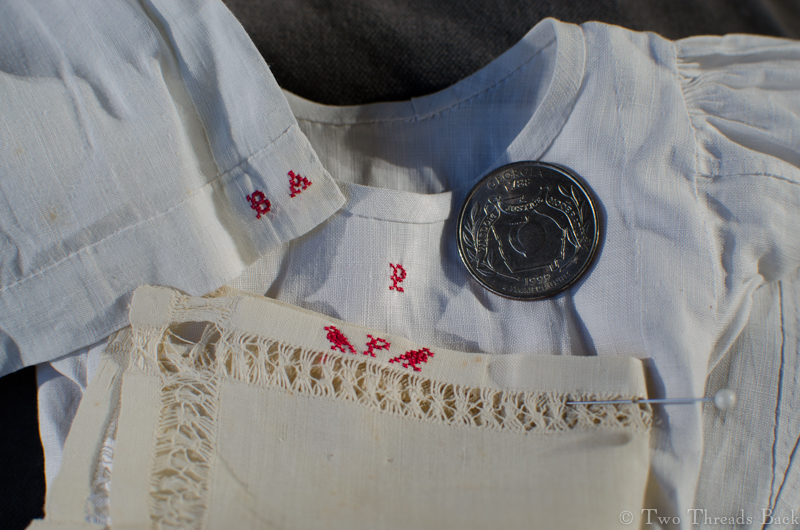
The baby shirt, Pharaby’s shift, and the practice piece, all together. The little birds I tried were from a pattern by the most knowledgeable sampler collector I’ve ever met. Maybe Pharaby will make a sampler one day….


Aprons, No Strings

Apron 1854
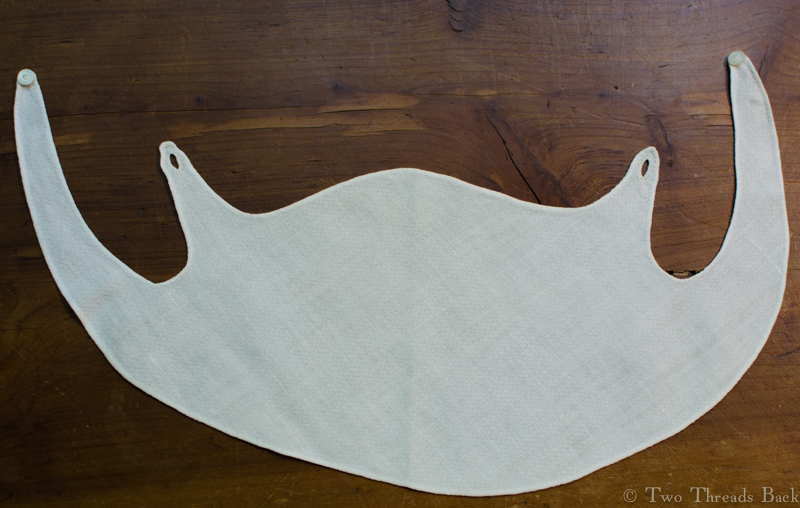
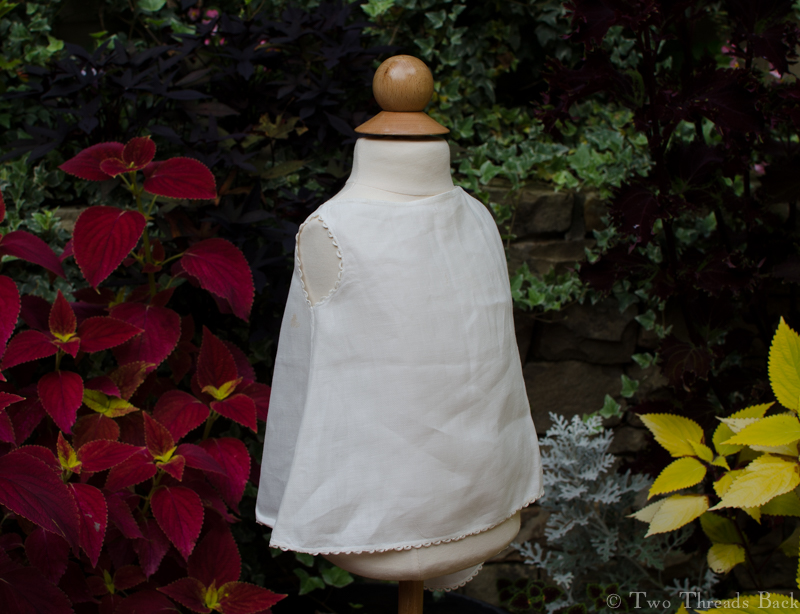
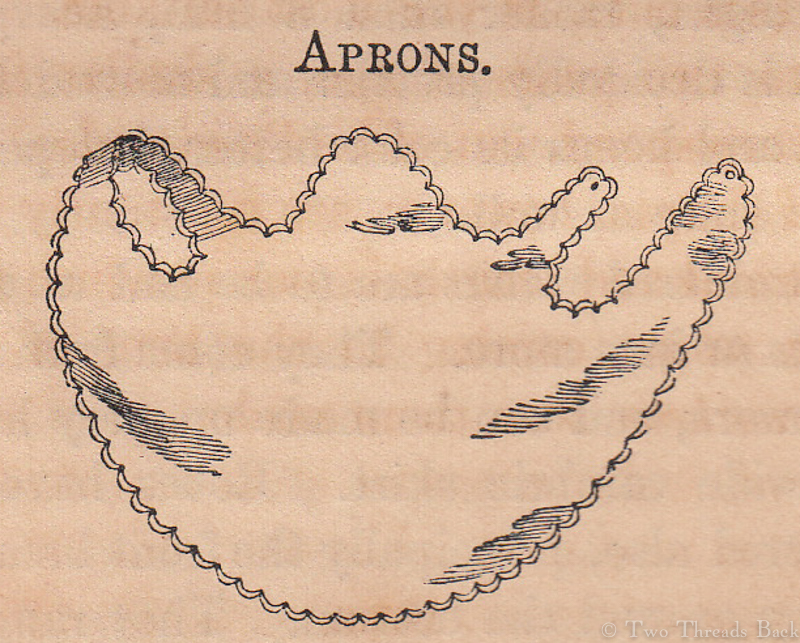
An apron pattern, c.1850 for the 19th century layette.

At three months old, it is usual to commence the use of aprons, which are made of bird’s-eye diaper, or, just now, brilliante, a firm, close-figured cambric, which will wear nearly as long. These last are bound with cambric, in solid colors, as pink, blue, buff, &tc. Bird’s-eye linen is usually trimmed with tatting or anything that wears well. At present, button-hole scollops, either plain or filled with dots, eyelets, &tc., are much used; they are made in this way ornamental, as well as useful. For an infant, the “bib-apron,” round front, coming a little below the waist, with a little shoulder strap buttoning around the arm (see cut), is the most suitable. From six months to two years of age, a similar front, with back to correspond, cut of bird’s-eye also. A large variety of shapes, however, are constantly to be had. The material and length is our province; no child needs an apron coming to the end of the dress skirt, as we have seen them made.

So says Sarah Hale, in a little instruction book written for new mothers in 1854. It amazes me that such a functional item could survive 150 plus years, but I come across them from time to time.  If you’d like an actual-size pattern of the one below, send an email to me, m at twothreadsback dot com, and I’ll send you a pdf – free. Gratis. No strings attached!

Apron 1A
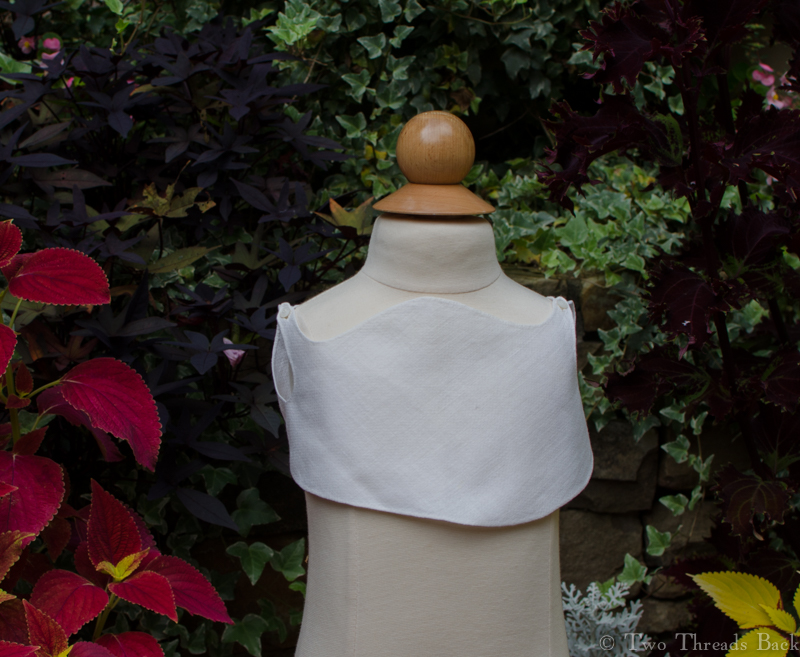
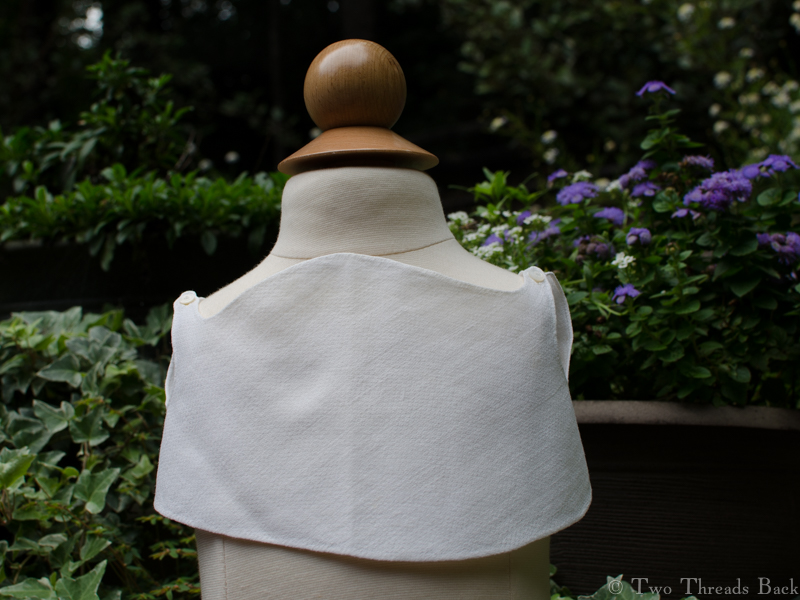
An apron for a very small baby, made of cotton diaper by a mother who was cutting the pattern with one hand and holding the baby with the other.

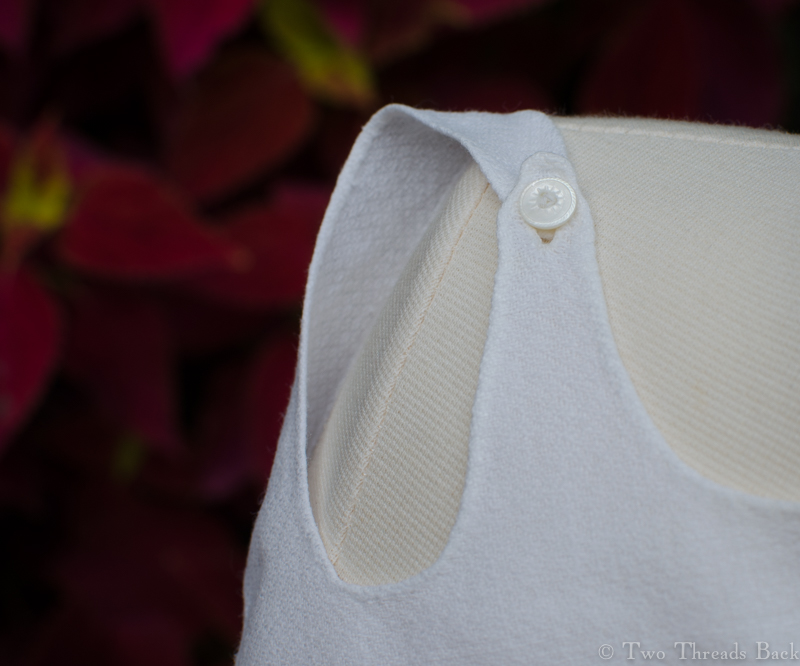
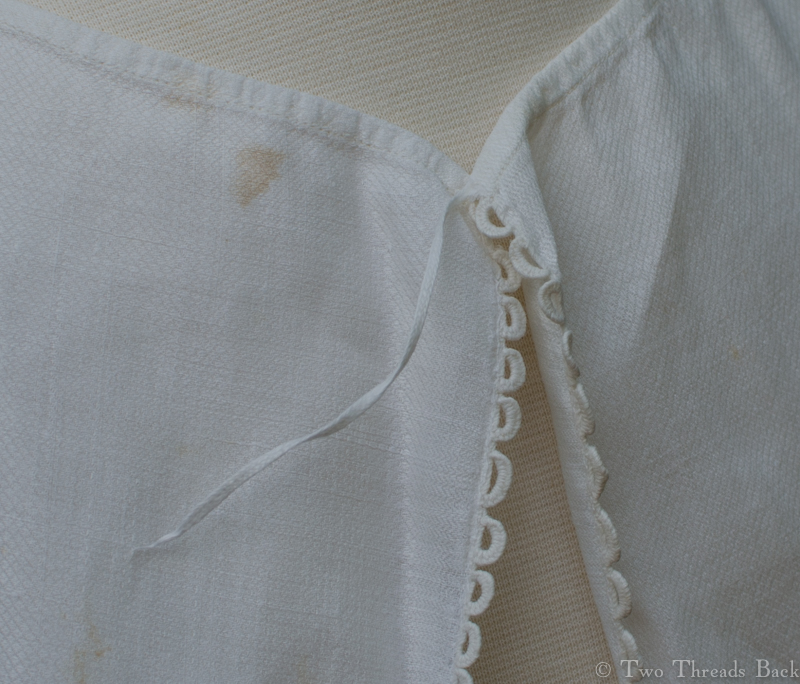
The hems are almost invisible, so I assume Mother was able to use both hands for that. The tiny buttons are made of delicately carved mother of pearl.

You can see the tiny mother of pearl buttons.
A close-up of the buttons and narrow hem.
The photo(s) are slightly underexposed because the apron is so white it's hard to see.
The photo(s) are slightly underexposed because the apron is so white it’s hard to see.
Apron 1D
The fabric is still so strong that the fold-down part in the front refuses to fold down – and I refuse to press it that way. Not a good idea for preserving old textiles!

Another common pattern, made for an older child, is like the one pictured below. It’s also made of diaper – but in linen – and trimmed at the armscyes and hem.

Apron 2A
This one is less like a bib and more like what we’d call a pinafore today.
Apron 2B
A view of the back to show the tape threaded through the neckline and the pretty buttonholed trim.

Apron 1854 Thumb

Flower Patch 2

Flower Patch 02
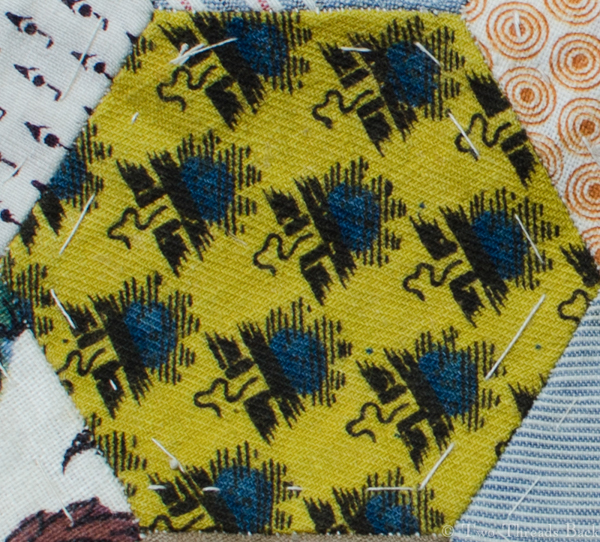
A bright yellow and blue calico patch, early 19th century.

Here we are with another patch from the same collection. There are a LOT of them, so I’ll probably not even mention that in future posts, but simply add the photo.

This one is bright and cheery in yellow and blue, with an absolutely bizarre design. It’s also reminiscent of Mousey Mousey – but perhaps when he was feeling blue on a bad hair day.


The Flower Patch

Flower Patch 01
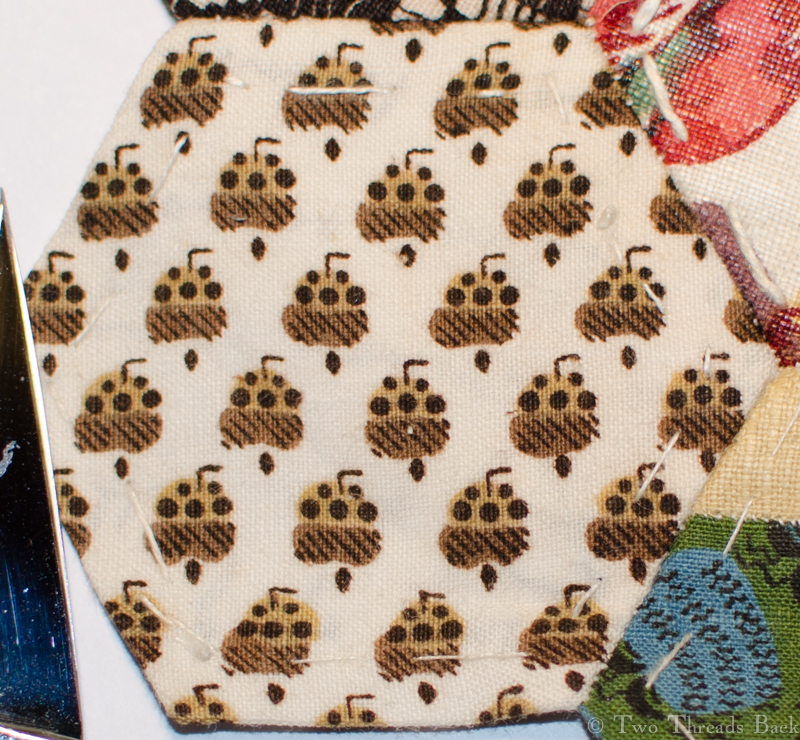
An early cotton calico from English Paper Pieced Patchwork. (Say that really fast.) It measures 2×2 inches. The odd thing on the left is my embroidery scissors holding down the edge.

Welcome to the Flower Patch! Back in the olden days when I was a child, my sister and I would sometimes take our afternoon naps on “pallets.” These were great-grandma-made quilts, all soft and worn, laid on the floor in front of an electric box fan (we lived in The South). Compelled to be still and quiet, we’d make a game of picking out our favorite patterns. Of course it sometimes degenerated into squabbles: “You can’t have that first favorite, ’cause it’s my first favorite!” We’d usually fall asleep and wake up best friends again.

I’ve recently come across a few little quilt bits – can’t afford whole garments or quilts – from my favorite era, the early 19th century, and thought I’d post a picture of a patch now and then. I wanted to record all the patterns anyway, and this seems like a good way to share them at the same time. If you happen to recognize a print, or are blessed enough to have the whole garment (which might give me the vapours), I’d love it if you’d let me know!

These patches are from an “English Paper Piecing” set. I believe it dates to the early 1800s, not only because of the patterns but because some of the paper that’s used on the back is c1808-1812. There are a few pages from English newspapers (London National Register, Monthly Magazine, etc.), private letters, and a whole lot of pages from an old copybook. Of course that doesn’t make a certain date; some fabrics could be earlier or later and it all could have been pieced later. But I’ll leave that to the experts.

Mousy Mousy
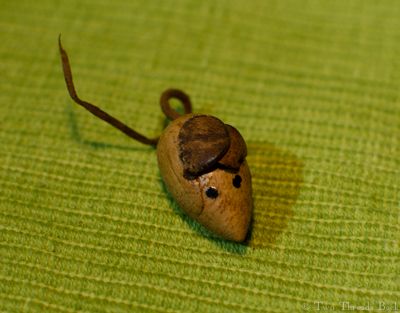
Mousey Mousey: a survivor.

The first patch I selected has a peculiar pattern. It reminds me of poor old Mousey Mousey. Mousey Mousey was a beloved toy that I still treasure, though heaven knows how anything so small (less than an inch) could survive the many decades and almost two dozen moves he has (we have) been through.

Pictured above is Flower Patch #1. By the way, it’s not my first favorite.


Little Biggin Two

18th C Cap 2a
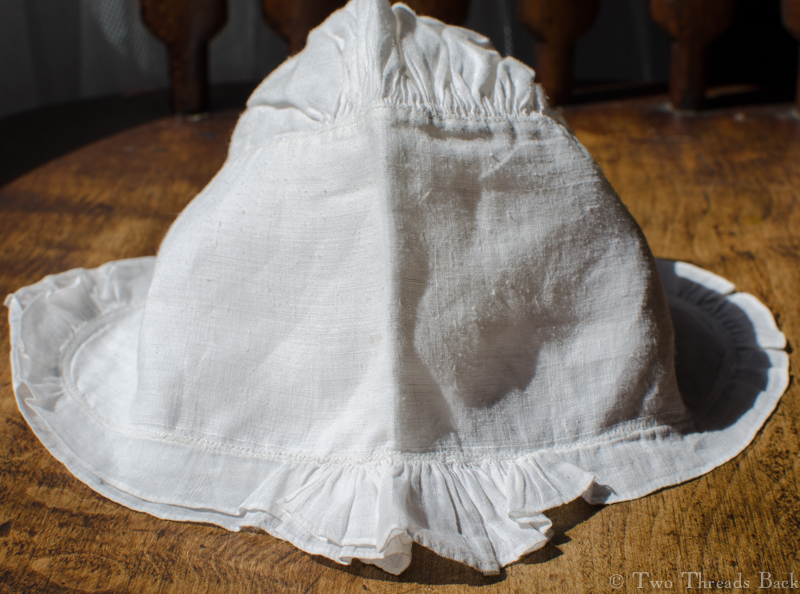
Another 18th century baby’s cap – with frills.

This little cap is a favorite. Yes, the linen is coarser than the lovely smooth cambric in most of the other really old baby things I’ve found. The slubs are noticeable, and they show even more due to washing and wearing. But there’s just something about that little ruffle around the brim. And the extra gathers right in the center – can’t you just see them sticking up, stiff with starch? Rather like a little plume or crest!

18th C Cap 2b
A perfect frame for a baby’s face.

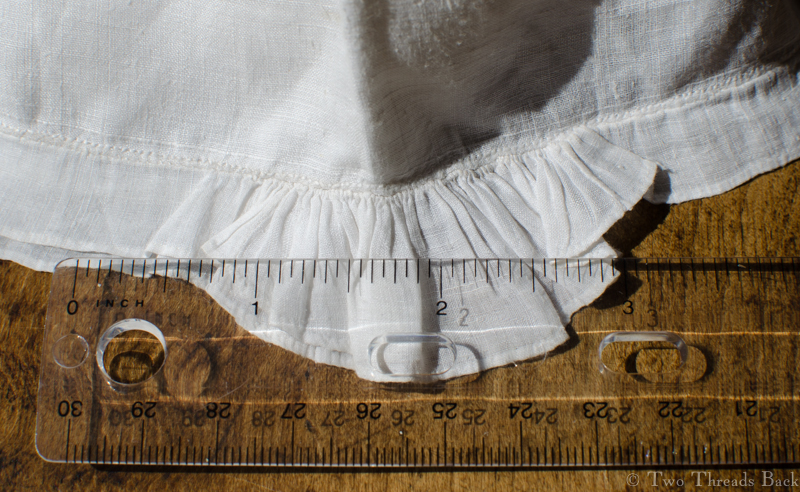
The measurement around the brim, including the ruffle, is about 12 inches; the center front to the back is about 9 inches.

18th C Cap 2f
Baby’s cap with the two-part brim folded open.

It seems like every time I examine a garment to write about it or list it for sale, I find something I’d overlooked before. And sometimes it’s unusual, a feature I haven’t seen before. That happened here, too.

The little crown was stroked and gathered and attached to the upper brim with backstitches, the same way cuffs or collars were attached to shirts. Then the under-layer-brim was hemmed to the crown from beneath. That does make the technique look like “setting in,” a construction process taught from (at least) the 18th to the early 20th centuries – if you’re one of the rare people who’ve seen my book Plain Needlework, you know what I’m talking about.

The strangest thing though, is how the upper layer is hemmed. It’s backstitched! But not securely on the folded hem itself; instead the stitching rests along the very edge. In fact, I really don’t see how it holds. I’ve looked at it with magnification because it’s so different from what I’m used to seeing. But that’s right. The hem is barely caught with the backstitches.

The under layer is normal – if you can call a 1/16 inch hem normal; it’s simply hemmed. Then the ruffle is whipped and gathered on both. The back of the cap is gathered and set in a narrow band, also with backstitching.

18th C Cap 2c
A closer view of the “plume” – and you can see the backstitched hem.

Like last cap I wrote about, this one is in remarkably fine condition and there are no vestiges of ties. Unlike many other fine linen bits, it’s lost its starch. I think the wearer would have approved. Floppy ruffles are more comfortable.

18th C Cap 2e
A back view of the cap.

18th C Cap 2d

Shiftless

Shift Full
Maybe Graceless, Pointless, Feckless, and Aimless – but not Shiftless!

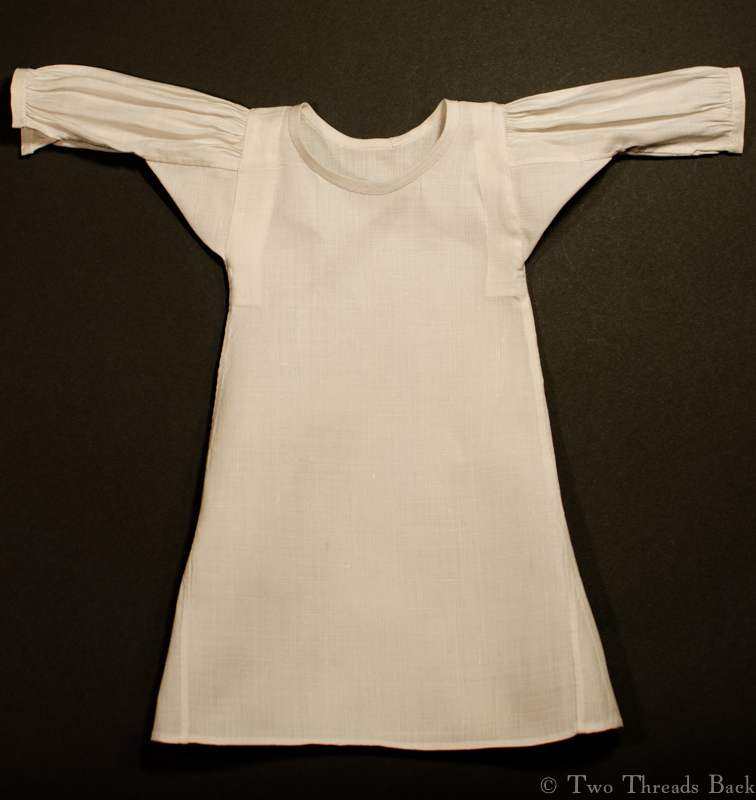
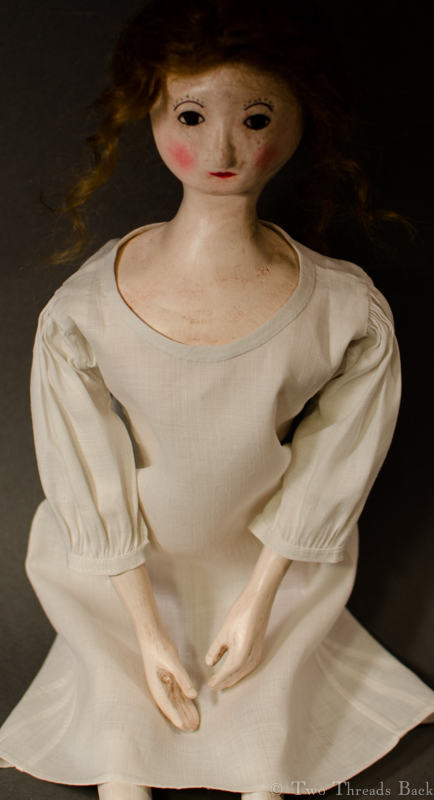
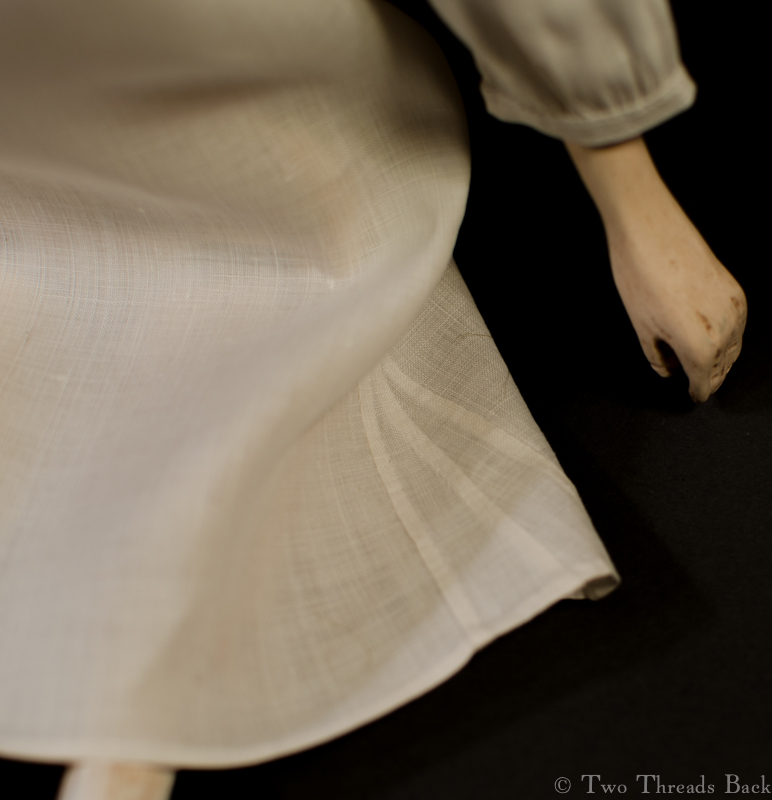
Shiftless no more! Pharaby can compost the fig leaves now.

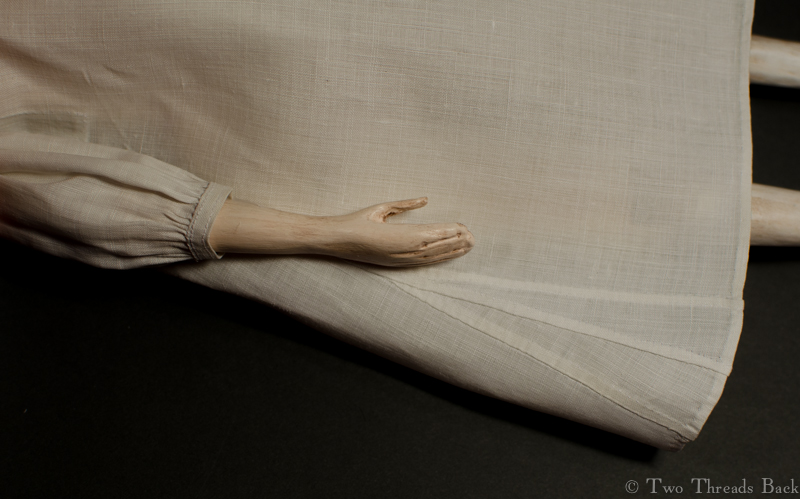
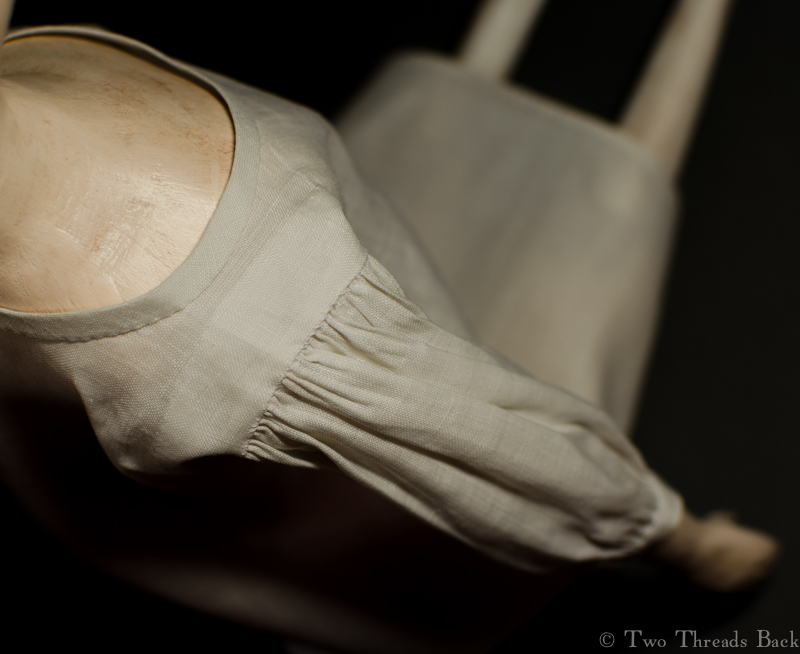
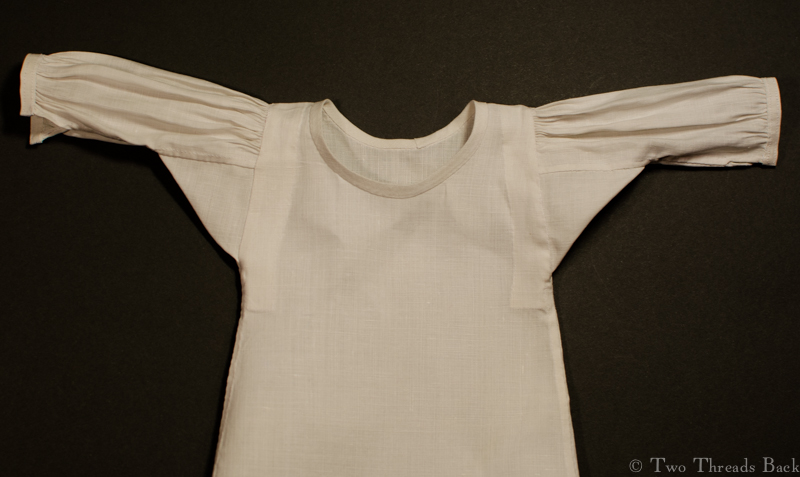
To make her shift, I used some fine old linen with a silky feel, and  I scaled a pattern in Costume Close-Up (is there anyone who doesn’t use that pattern?). Then I proceeded to sew up the gores, body, and neckline. Shift Hem When it came to the sleeves, though, I was perplexed. What was typical, plain or gathered? I reeeeally wanted to do gathered.

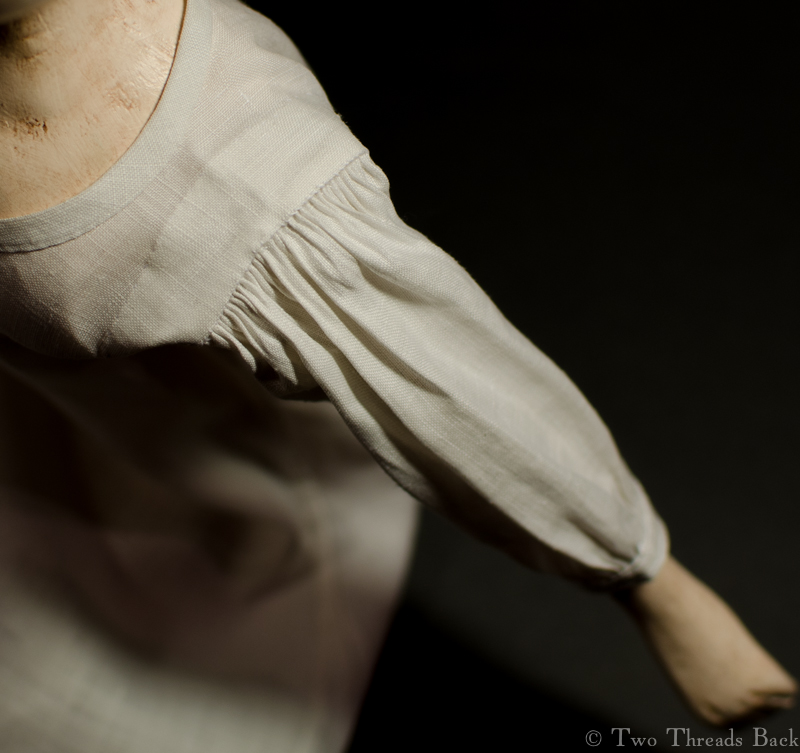
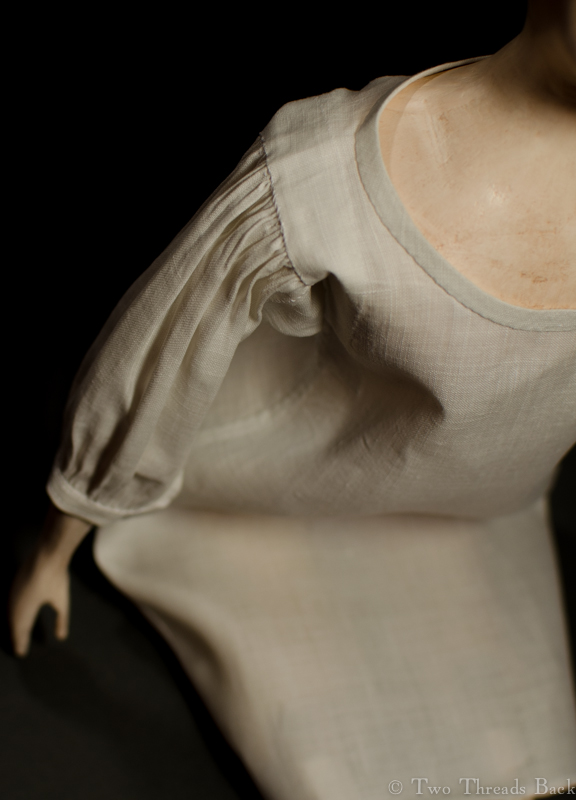
Not being an eighteenth-century-fashionista, I pulled out costume books and scoured the internet for guidance (see this awesome study). Most of the images of extant shifts I found – there were a few exceptions – had sleeves without gathers at the armscye, or shoulder. But period art seems to imply that  shifts did have them; otherwise, how so fluffy? That means that 1) I didn’t look in the right places,  2) I couldn’t see details and misinterpreted the pictures, 3) they didn’t survive as often, or 4) some dates were wrong. Maybe all four, plus some more reasons I haven’t thought of yet.  Oh well.

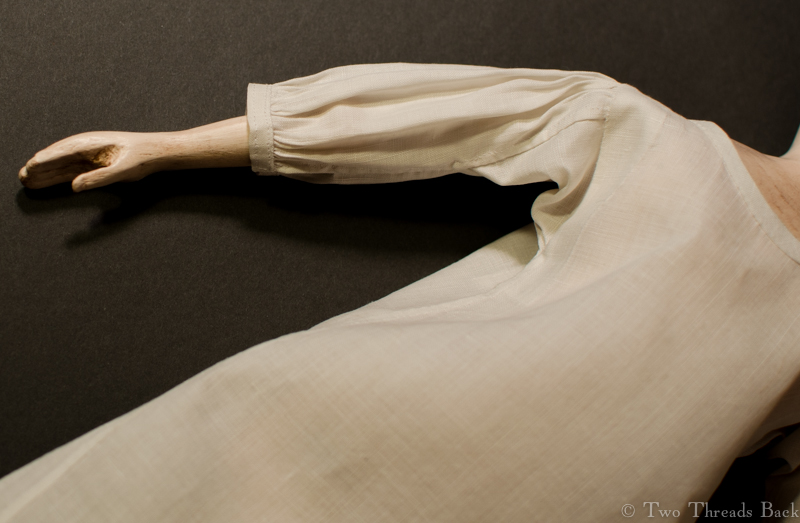
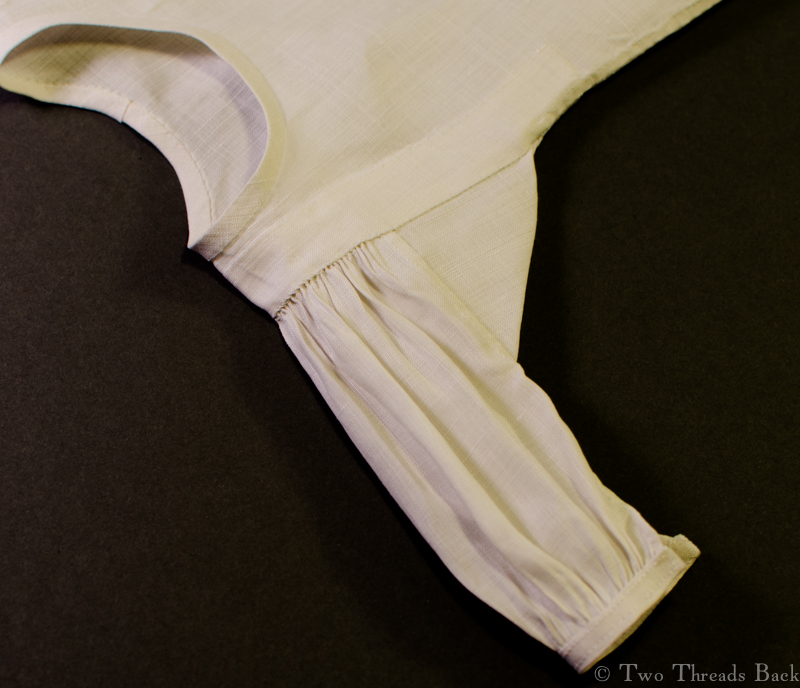
Shift Left ShoulderHowever! I found two or three images of exquisite little shifts on early wooden dolls in museums, and those had sleeves that were gathered at the armscye. I think. Anyway, I love setting in gathers and it’s my toy, so that’s what I did.

Now another dilemma. To stitch or not to stitch, that was the question. I was so accustomed to seeing the stitching (now called backstitching) on the wristbands of men’s shirts, that her little cuffs looked as bare as she did.   But, duh for me, I’d already set in the gathers. Could I do it, post hoc stitching?  Why not – if there’s a harder way, I’ll find it. You don’t see any close-up photos of the cuffs here, do you? Ha.

Shift RightNext came the binders, those reinforcing strips that are a standard feature in men’s shirts. I can only guess how common they were in women’s shifts, because they don’t usually show in photos, nor are they noted in descriptions. But I’ve long speculated that originally binders were there just for “setting in” gathers – support for a stress area was just a bonus. So in they went.

Now the question you’ve been too polite to ask: did it fit? Pharaby said it would do. She’s not fussy. Any doll destined to wear fashions spanning a century or so – at the same time – can’t afford to be.

Oh, but she does expect me to mark her shift and add ties for her cuffs. She hasn’t decided about frills.

Shift Pharaby

Shift Gathers

Shift Right Shoulder

Shift Neckline

Shift Gores

Shift Sleeve


A One Stitch Wonder

Calico Full

I’ve always loved order and simplicity. That sounds awfully smug, but I shouldn’t commend myself since it’s probably because my brain can’t handle very much at one time. This craving for minimalism is getting worse as I get older. Try googling the minimalist lifestyle and maybe you’ll see the attraction! Or not.

A conversation the other day started me thinking about simplicity in plain sewing. Hmm. What was the most basic stitch? Well, anyone who uses old sewing machines knows you can do just about anything with a straight stitch, which is closest to a backstitch in hand sewing.

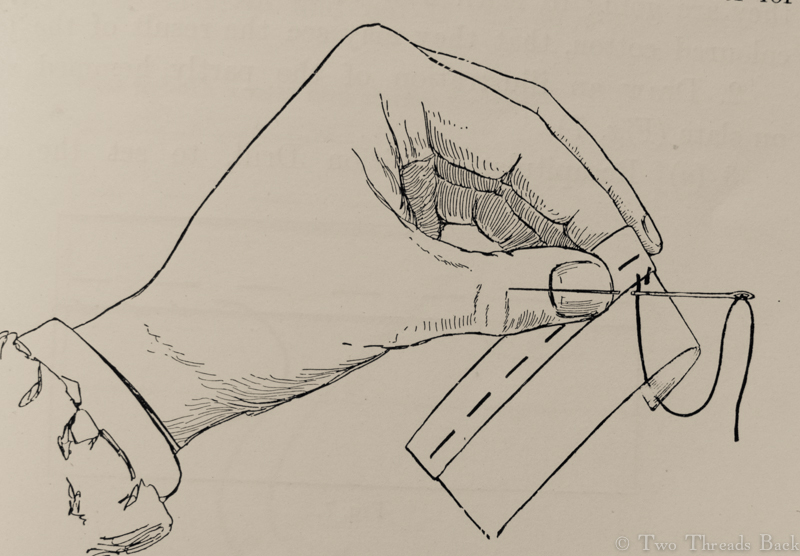
But backstitching wasn’t the primary stitch in 19th century sewing manuals, nor was running, as I learned when I studied plain needlework instruction. It was hemming. That’s the little slanted stitch that you would use to (surprise!) hem something. Once your hemming was neat enough, you could learn to work other stitches.

Hemming
“Simple hemming is the first step on the road to proficiency in needlework.”

By the way, I’ve noticed that most costume historians, or at least ones I’ve heard and read, call this same stitch “whip” instead of “hem.” For example, “the edge is folded back and whip stitched in place.” But then, why shouldn’t they? I understand perfectly what they mean. If you’ve seen my post on muslin you’ll know I’ve come to terms with terms!

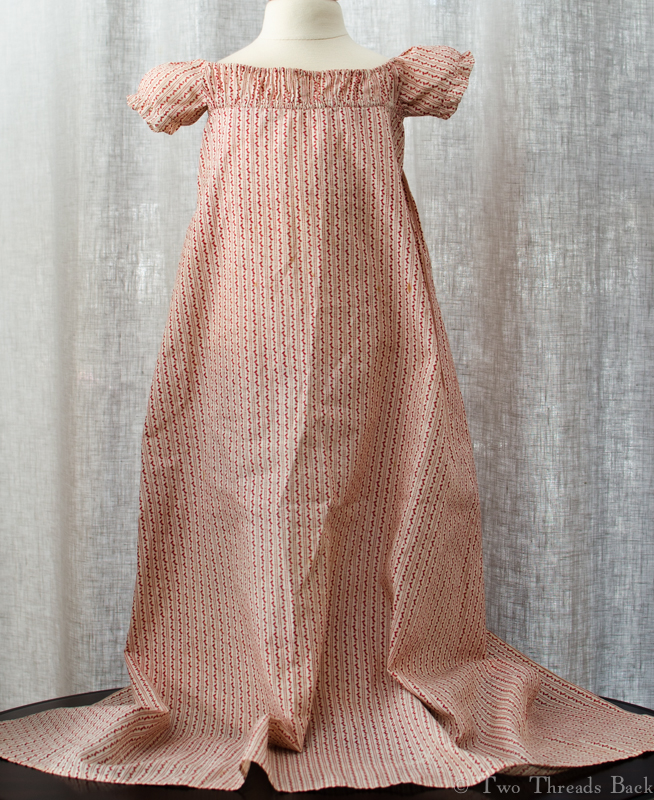
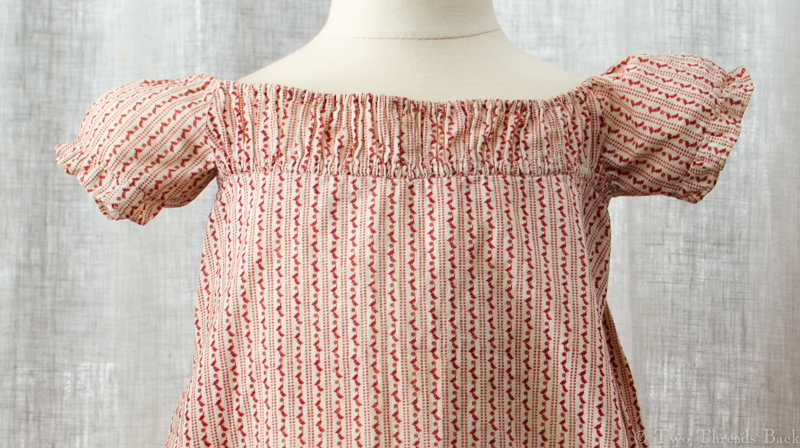
Getting back to simplicity. I decided to go closet diving for something that used only that one stitch, hemming, to construct a garment. And I found it! A Regency era calico baby dress. Granted, it didn’t have enough pattern pieces to warrant many stitches. But the whole gown was made by hemming!

Calico Baby Gown, c 1815.

Or was it? Well, in my eagerness to find what I was looking for, I didn’t look close enough, and I didn’t think it through.

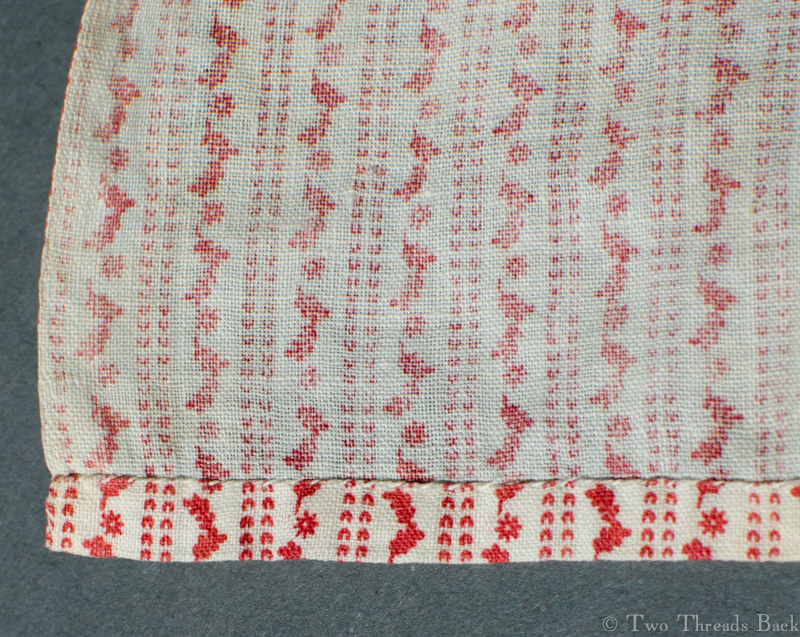
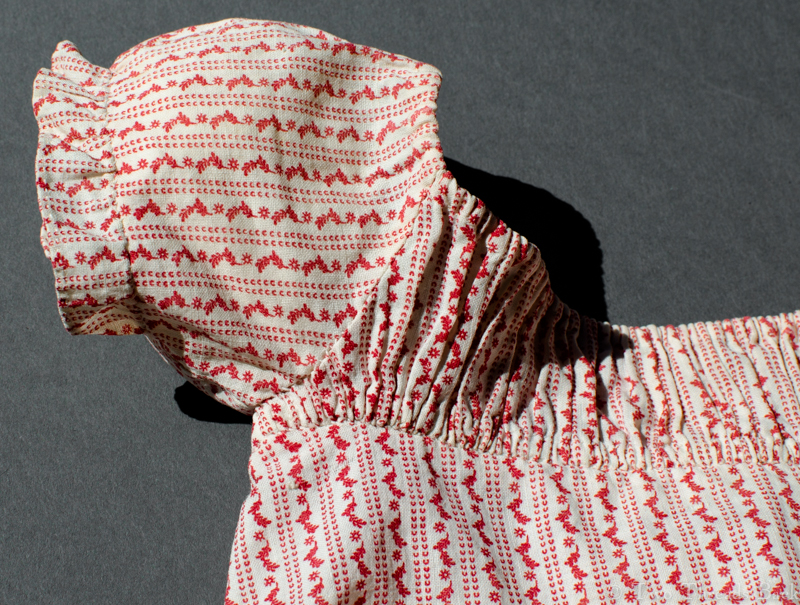
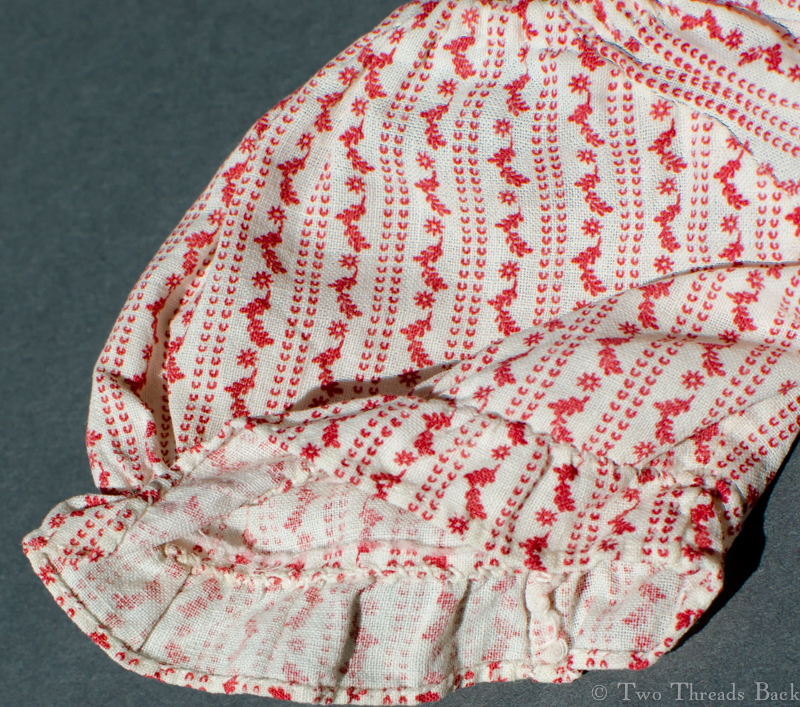
The skirt was made of one piece and hemmed, check. The casings for the strings were hemmed, check. The tiny ruffles on the sleeves were hemmed, check.

Calico Hem
Hem.
Calico Sleeve
Casings for drawstrings.
Sleeve ruffles.
Sleeve ruffles.
Calico Back
Back opening.

The bodice was hemmed to the skirt – whoa! Wait a minute. That wasn’t right. Things were unraveling. I mean my clever discovery, not the little frock.

Yes, the stitches looked the same at first glance, but any experience (or a practical mind) would tell you that you have to hold those two pieces face to face and sew them together. That makes it seaming, as they would have said, or overcasting, as we’d say today. Same thing for the ruffles attached to the sleeves.

And there was more. The tiny bodice sides, all three-quarter inch of them, were running stitch. As were the sleeves to the body – and then overcast!

So much for that, no single stitch here. I confess it doesn’t really bother me too much that it’s not pure minimalist stitching. I’m learning to slow down and look closer. And it’s still a wonder of simplicity!

The Love Shirt

Love Shirt Cuff
The Love Shirt, a replica by Yours Truly

Ta da! After ten grueling years (ok, I don’t really know how long, but it has been years) I finally finished a 19th century gentleman’s square-cut shirt of fine linen. Complete with all twenty parts, including the frill. And Dorset knob buttons.

Where did the name come from? Well, a long time ago a friend and I (I miss you, Janet!) were studying one of these shirts, one that had a heart-bit (see that blog). We reached frantically for our vinaigrettes, trying not to swoon on the artifact, as visions of Mr. Darcy flitted around the room. Somehow we started calling that handsome relic The Love Shirt. So it has been to me, ever since. And I wanted to make one myself.

That type of linen is impossible to find nowadays. However, a dear friend (thanks, Dianne!) provided the closest thing possible, and with a pattern from an 1820 book, I commenced.

Darned little gussets, all the work I did backstitching was mostly hidden when assembled.
Darned little gussets, all the work I did backstitching was mostly hidden when assembled. Having since acquired some cobwebby 100-year-old linen lawn, I intend to replace the muslin ruffles, this time hemming them the right direction. If there’s a harder way to do anything, I’ll find it.

Unfortunately I have a memory like Dory, so every time I put away the project for a spell, I’d have to practically learn how to do the next step all over. A 19th century seamstress would have been appalled to see me.

Love Shirt Full

Um, do I sew both ends of XYZ before I ABC? Do I cut or fold first? Did I sew the sleeve on backwards? Oops. Front and back are the same before the collar goes on, right? Not if you hemmed them first. Oh right, I was supposed to check that I was putting the slit in the front. Well… I’ll just cut the back shorter and make it be the front. And my g-g-g-g-great-grandmother could make one of these in a day or so? How embarrassing.

I did learn a lot. I learned how hard it is to backstitch over two threads without going blind. I learned that there is NO not-shiny sewing thread available today. I learned that linen thread breaks, other people’s buttonholes always look nicer than mine, knots are usually unnecessary, even poor work looks better when ironed, and a drawn thread is no guarantee you’ll sew a straight line. I learned that you had to love your man, or love survival to make one of these. And I learned how to make Dorset knob buttons, my own way! Maybe I’ll write about that next time.

Love Shirt Cuff
You can see the backstitching that nearly blinded me. And you can see the gauging thread I used to hold the stroked gathers in place. I’m going to leave it there a loooong time.