“About 1849.” Except for the owner’s name, that’s really all I know about the history of this particular little sewing album. It’s bound with marbled paper card stock, edged with silk ribbon, and the colorful pages have the feel (and unfortunately the quality!) of children’s construction paper. Written inside the front cover is “made about 1849 by Mary M. Quiston, later Mrs. Reid, later Mrs. Porter.” (The “M. Quiston” might be “McQuiston.”)
Samplers of cross stitch (marking), embroidery, or darning skills have a long history in Britain, America, and Europe, but the popularity of books containing specimens of plain sewing stitches began in England in the 1810s. They were developed as part of the “monitorial” education system where pupils who had mastered a skill instructed the ones who were just learning it.
This system of “mutual education” was originally applied to basic reading, writing, and arithmetic, then to plain needlework since it was an essential part of female education. Understanding sewing instruction techniques was much easier if you had a small sample to see. Books with samples of hemming, stitching, seaming, marking, etc., were originally intended to help a teacher follow “the system” in her classroom, but also developed into treasured collections preserved by the girls who had worked them in order to demonstrate their accomplishments.
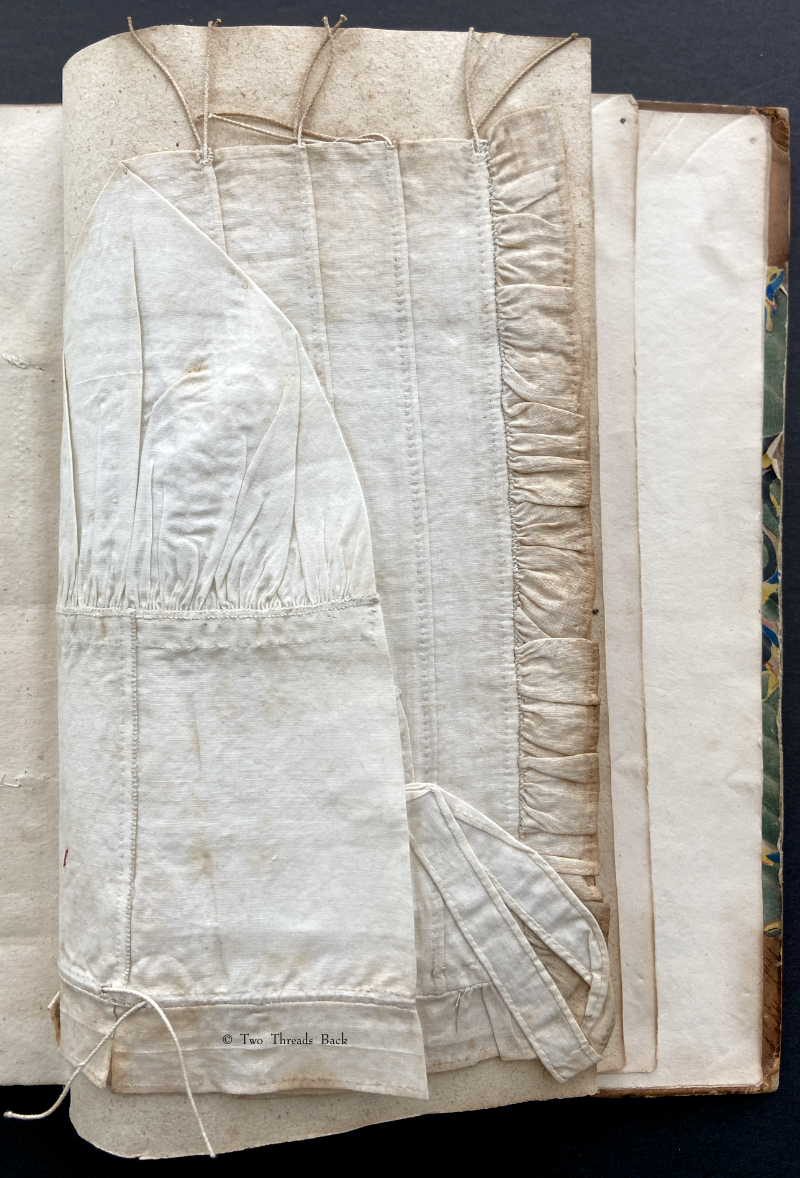
This is one of two caps included in the 1816 British and Foreign School Society manual, a book intended as a guide for educators who were using their monitorial system. It’s attached to the page so I can’t fold it out to show it well, but there’s a tiny number “1” marked in red cotton barely visible on the left. The other cap is marked (surprise!) “2.”
The earliest books might include a miniature shirt, cap, or apron, but it wasn’t long before they added other items like stockings, sleeves, dresses, trims, etc. to the classes. Educators appreciated the savings in time and expense that using small samples offered (and heaven knows charity schools needed to economize!) but maybe they had another reason as well: it was fun making tiny garments that were just like doll clothes! Here are some of my favorite pages from Mary’s book.
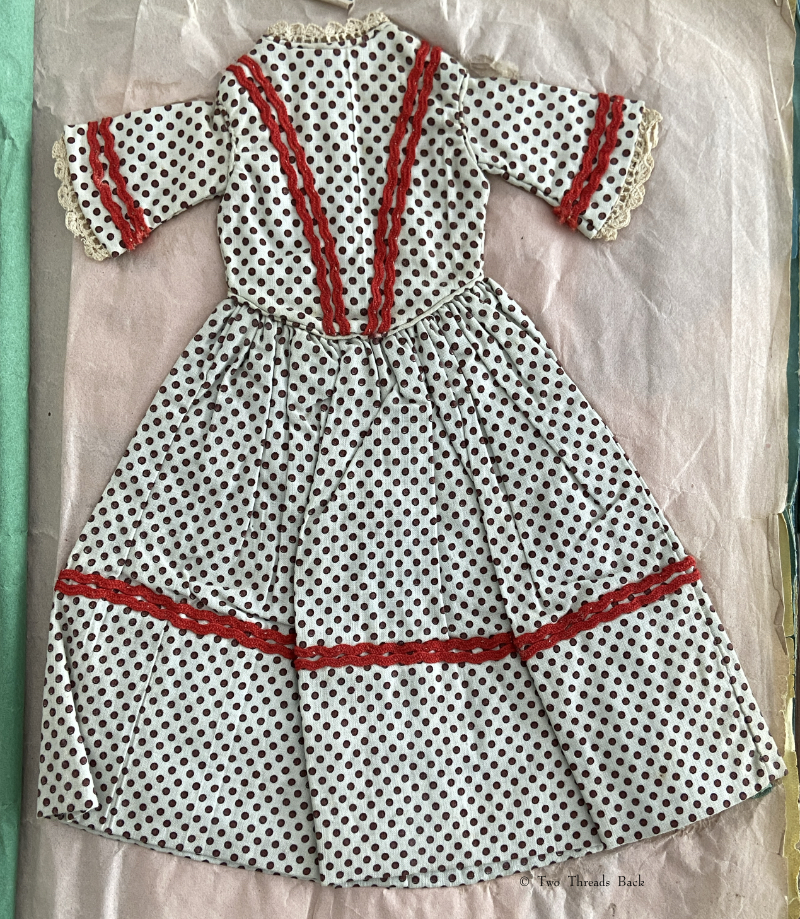
This dress is a simpler style than the sheer one above and it’s made of printed cotton.
Mary sewed this child’s dress with nine tucks in the skirt, gauged gathers, and trim she (probably) made herself.
We can’t forget the MOST important garment in the Plain Sewing repertoire: The Shirt. No course in plain sewing was complete without this accomplishment!
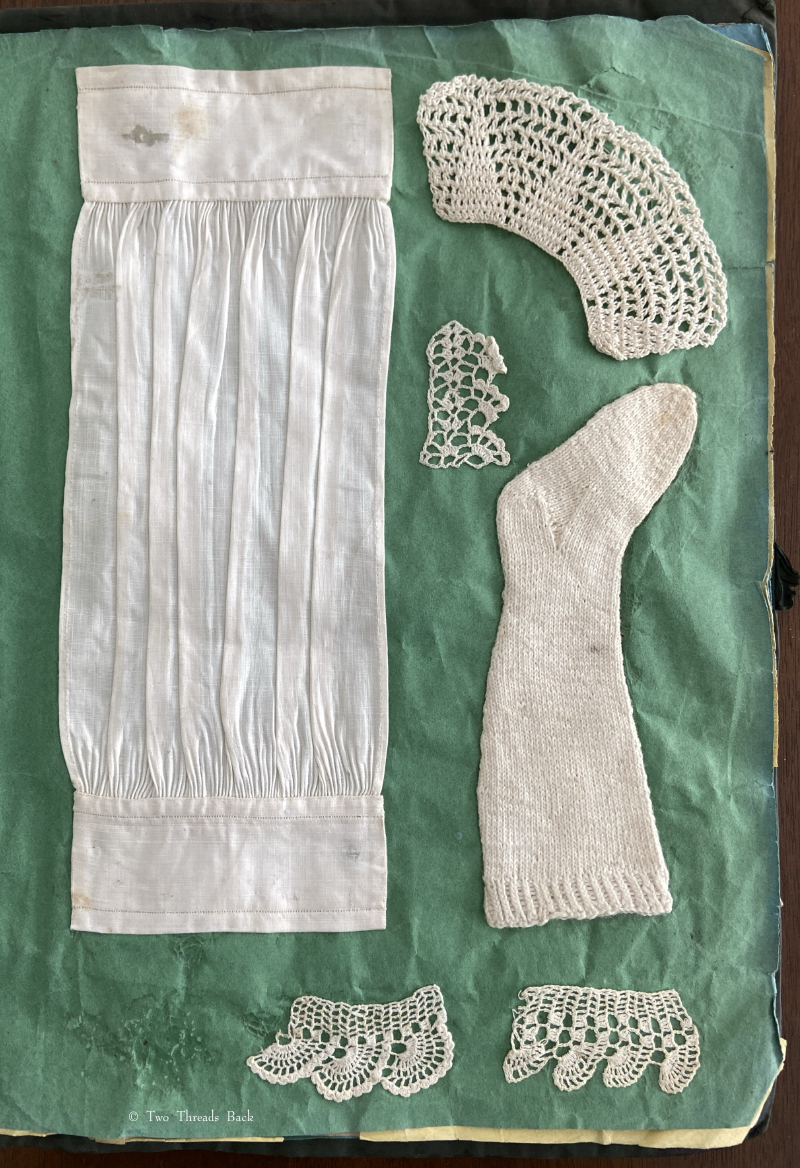
Here’s an example of the practice cuffs or wristbands that would have been worked before she advanced to making the above shirt. Knitting was also an essential needlework skill for women, and most 19th C sample albums included examples. There was a single full-sized stocking tucked into the book also.
Plain and fancy! Mary did all the hemming, seaming, and making buttonholes in her earliest lessons, but she obviously got to learn some fancywork as well. If you get a thrill looking at daguerreotypes of that time (Pinterest is sooo addictive) you might recognize the vandyke collar pattern that was so popular then.
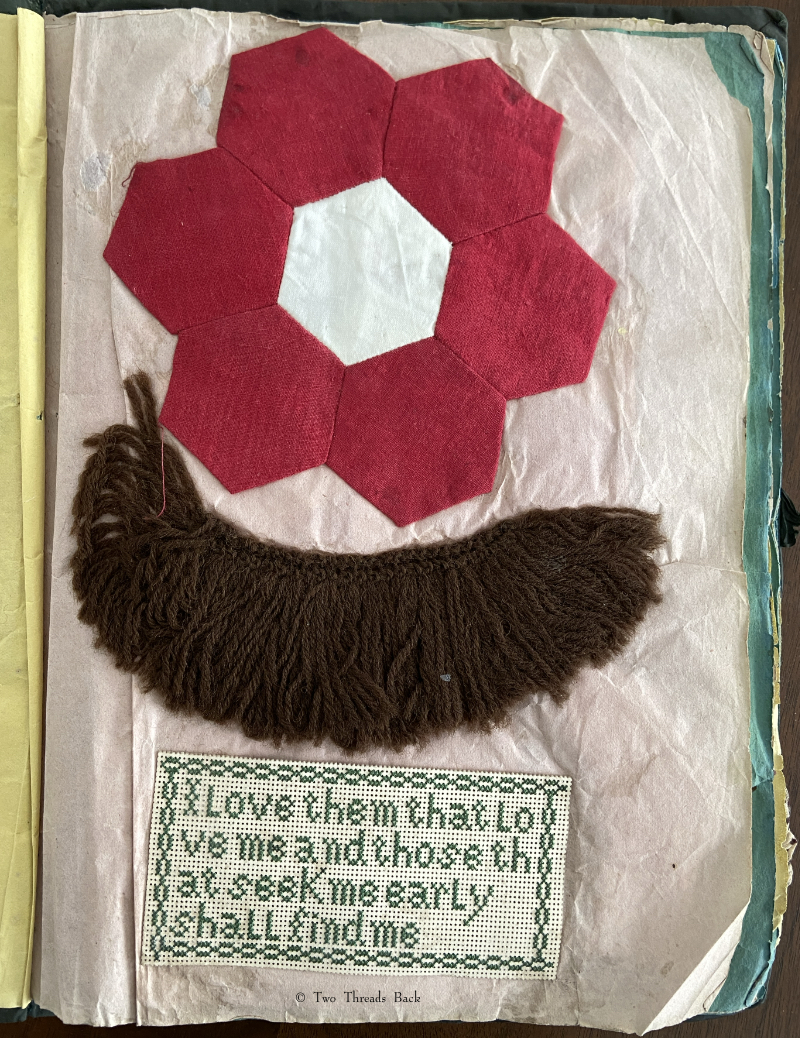
Nope, it’s not a walrus mustache. It’s some pretty (or not!) wool trim, useful for Victorians who didn’t know the meaning of restraint in decor. Mary also made a hexagon quilt patch and worked a scripture verse on punched paper. I don’t understand why 19th C needle workers seem so untroubled by words that run out of roo– m. Why???
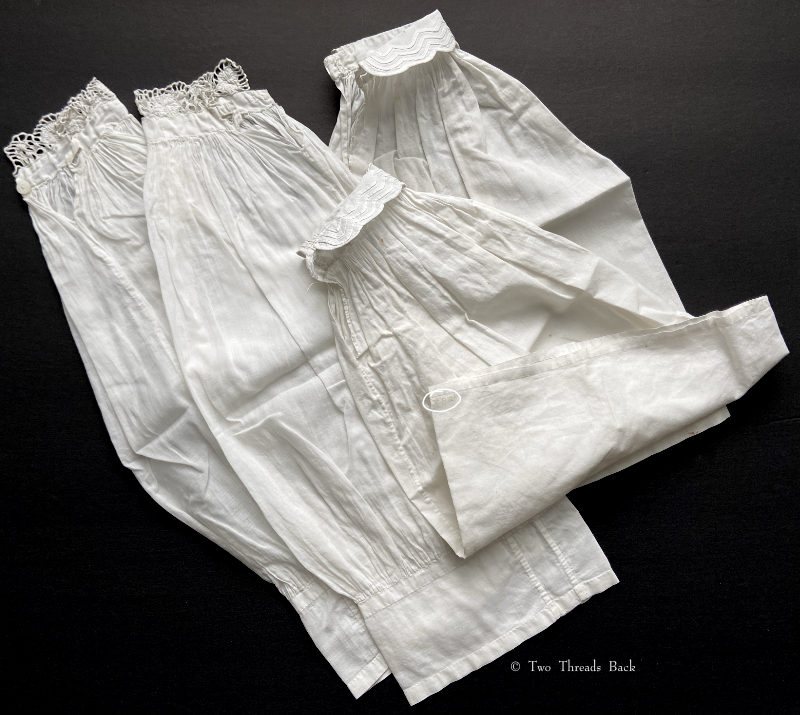
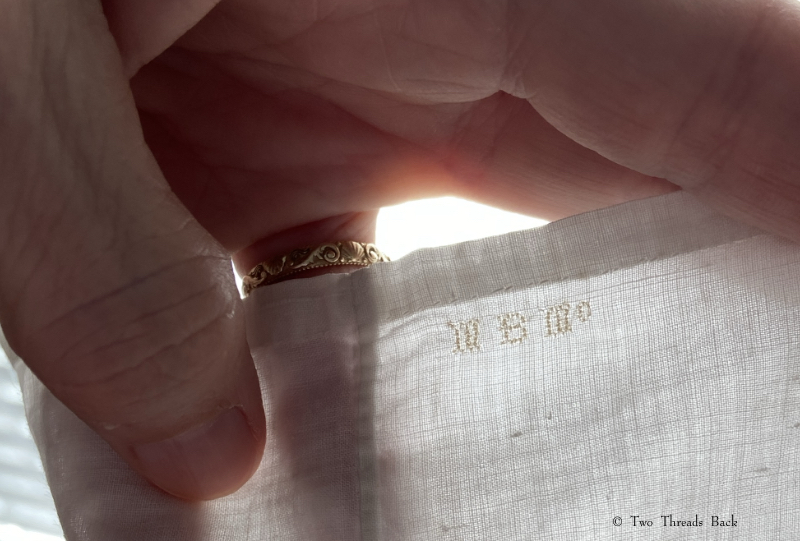
Two pairs of undersleeves were kept with the book. I assume they were Mary’s work because they have her initials marked in cross stitch. I’ve circled them in the photo to show how small they are. The sleeves show wear, so I don’t know if they were part of her sewing instruction or later work that stayed with her album.
The marked initials are less than 4mm tall. I never cease to be amazed at the tiny stitches they could make. The letters look like M B Mc to me. McQuiston?
I wish I knew more about Mary. How old was she when she learned to sew? Did she have daughters who wanted to take the dresses for their dolls? I would have! Did she use her skills for the rest of her life, or pack them away, back “around 1849”?
It’s so sad that girls don’t learn these skills, now. Even when I was young we didn’t learn all those sewing skills… just basics… and making modern simple clothing. I remember, as an adult, looking at antique doll clothes, that had those marvelous tiny, dainty gathers that looked like tiny even pleats. I have since learned that, but they still amaze me!
I agree! I remember learning to make an A-line skirt in high school, super simple with no handwork, and even that was probably the end of an era. My generation may have been the last to even take such a class – I don’t think my younger sister did. It’s good to see the fine work that used to be common and appreciate their skills!







It’s lovely to see the samples, and all the amazing plain and fancy sewing work!
LikeLiked by 1 person
How absolutely amazing. So small and sew delicate and so wonderful. Thank you for sharing.
LikeLiked by 1 person
It’s a pleasure to show off their work – I wish I had a fraction of their skill and patience!
LikeLike
Fascinating!
LikeLiked by 1 person
What an amazing collection of “plain sewing”! What an absolute treasure!
LikeLiked by 1 person
It is, thanks! I just wish it had survived intact. Sadly there are pages with damage or missing samples.
LikeLike
It’s so sad that girls don’t learn these skills, now. Even when I was young we didn’t learn all those sewing skills… just basics… and making modern simple clothing. I remember, as an adult, looking at antique doll clothes, that had those marvelous tiny, dainty gathers that looked like tiny even pleats. I have since learned that, but they still amaze me!
LikeLiked by 1 person
I agree! I remember learning to make an A-line skirt in high school, super simple with no handwork, and even that was probably the end of an era. My generation may have been the last to even take such a class – I don’t think my younger sister did. It’s good to see the fine work that used to be common and appreciate their skills!
LikeLike